
 m. Сміла, Незалежності, 67г. оф, 406/6























IMOU IPC-S6DP-5M0WEB-E27 (5 MP) - WI-FI IP CAMERA WITH E27 SOCKET

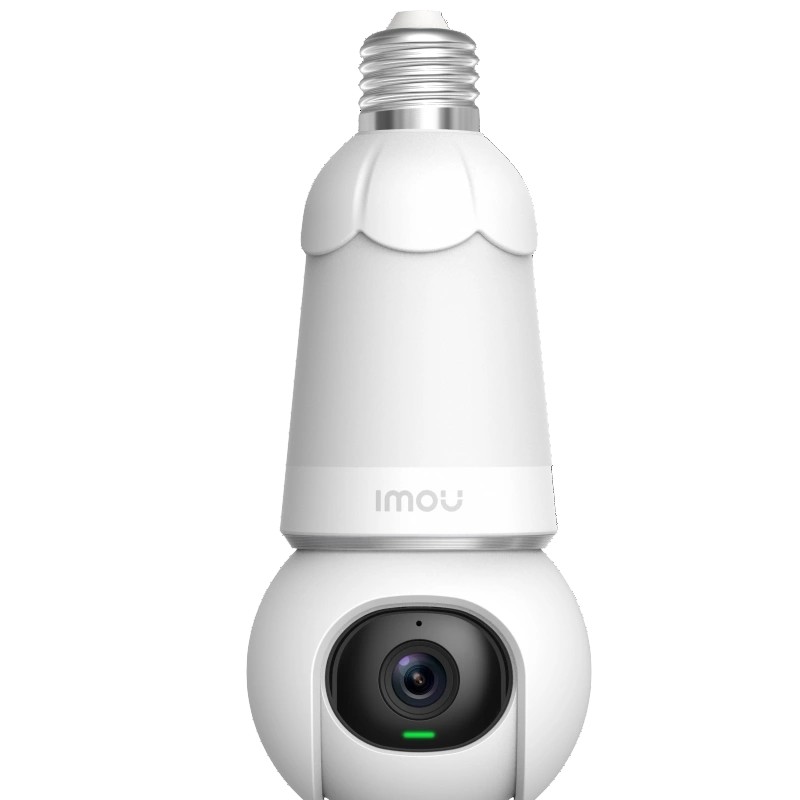
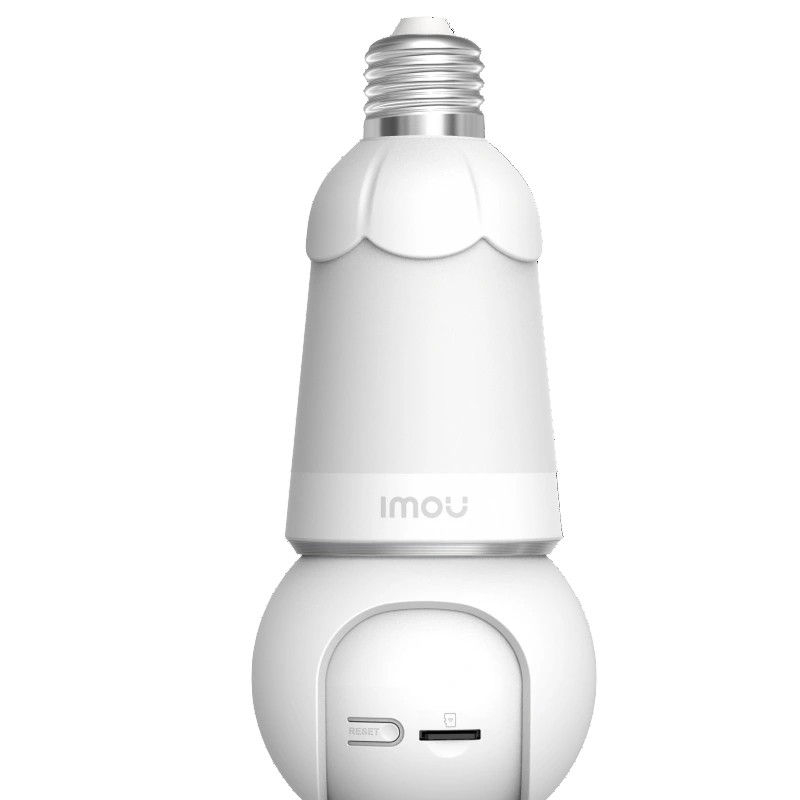
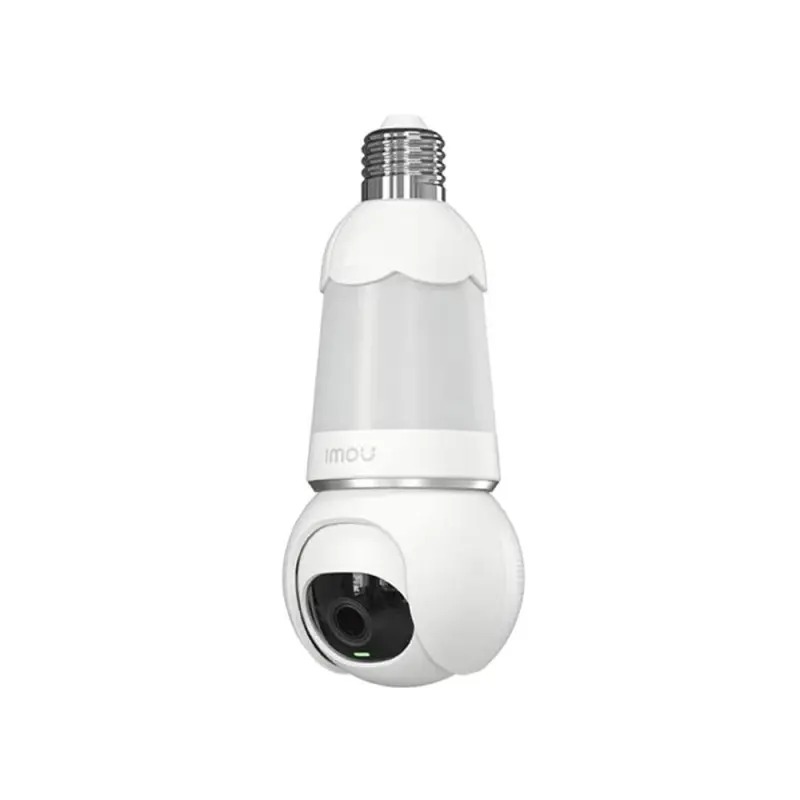

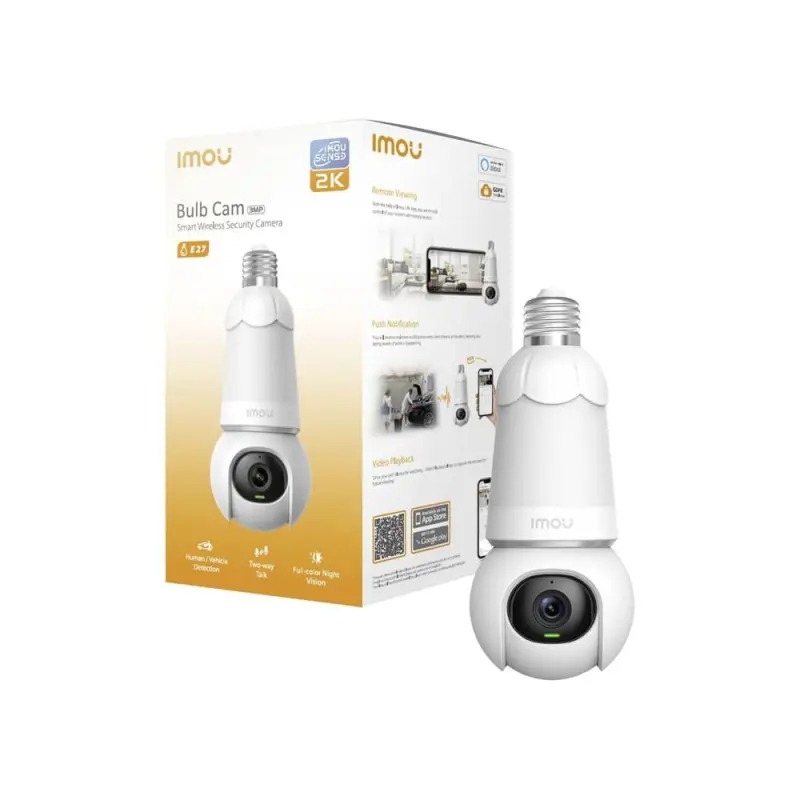


Description Imou IPC-S6DP-E27
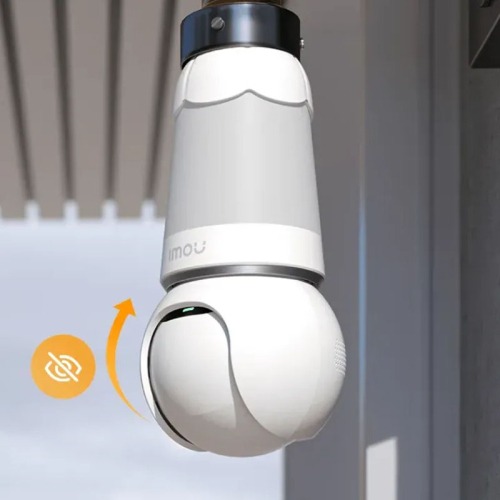
A camera that screws into an E27 socket in place of a bulb
The E27 at the end of the model name is not a marketing suffix but a socket standard: this device screws into an ordinary light-bulb holder and draws its 100-240 V supply straight through that thread. Installation takes a minute and requires no drilling, no separate power adapter and no cable run along the wall — wherever a bulb already hangs, a camera now hangs instead. It is a solution for people who will not renovate a room for the sake of surveillance: a rented flat, a holiday house, a warehouse corridor, a shop back room, a garage with a ceiling fitting. The trade-off is obvious and has to be accepted: the camera looks out from wherever the socket happens to be rather than from the ideal vantage point, so if the fitting sits in the middle of the room the front door will end up far away in frame. The second detail is the wall switch — flip it off and the camera loses power along with the light, so pick a circuit that stays live, or rewire the switch so the socket keeps a permanent feed.
Motorised movement across 340 degrees of pan and 90 of tilt
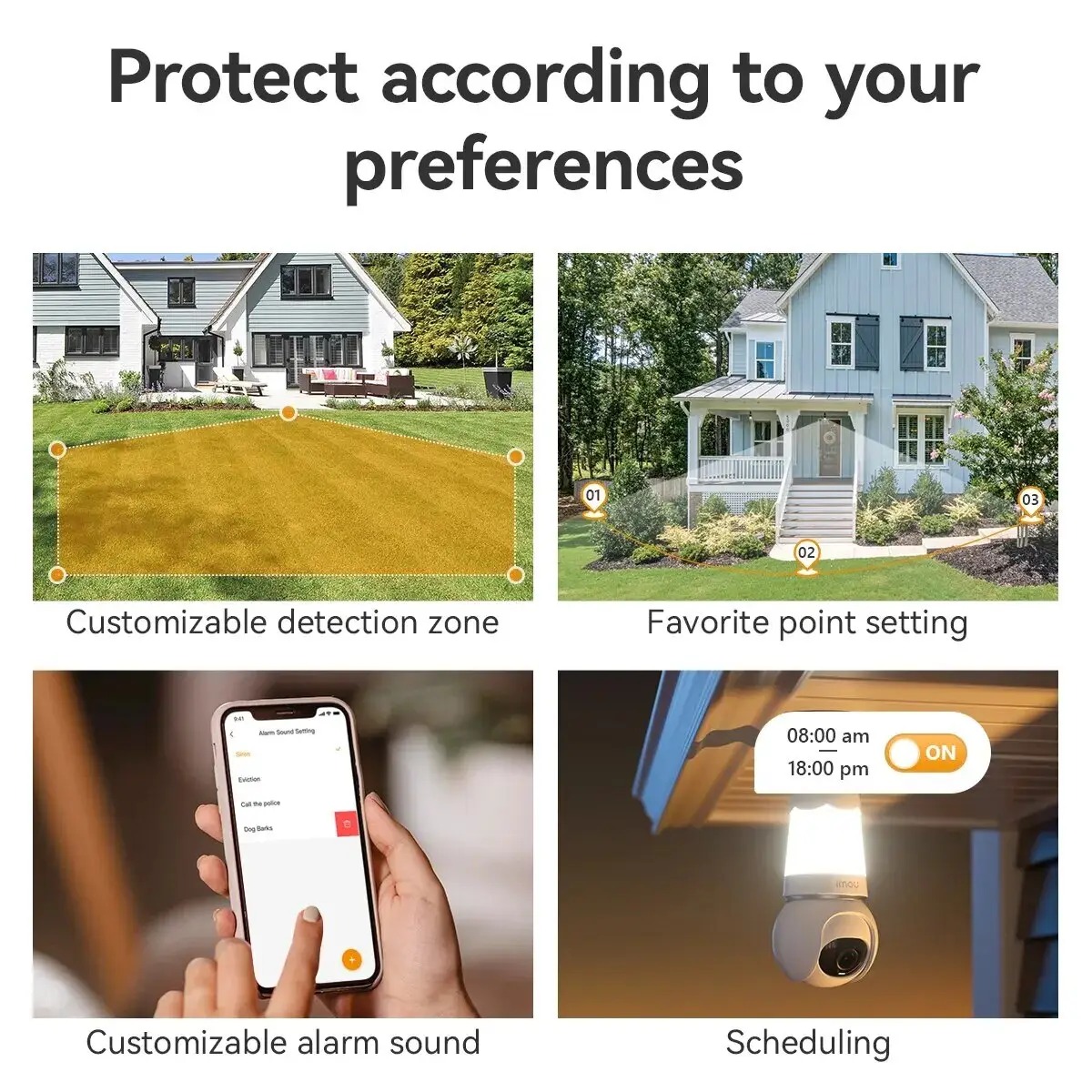
Unlike fixed cameras this one moves: 340 degrees horizontally and 90 vertically, which from a single ceiling position covers virtually the whole room. In the app panning works like a joystick — you steer the lens wherever you want, store a few favourite positions and return to them with one tap. That matters where an event can happen in any corner: an open sales floor, a workshop with several benches, a room with a child or a pet in it. But the mechanics do not turn it into a camera that sees everything at once: there is still only one frame, and while the lens points left, whatever happens on the right never reaches the recording. If the task is to guarantee coverage of one specific spot — a till, a safe, the front door — a fixed camera aimed at it is more reliable than a motorised one that may be looking the other way at the critical moment.
Five megapixels, colour night vision, and an honest word about 15 fps
The 5 MP sensor with its 2880×1620 output is a clear step above the 2 MP typical of budget cameras, and the difference shows precisely when you zoom into a recorded frame: a face three or four metres away stays recognisable instead of dissolving into a smudge. Night vision is rated to 25 metres and includes a full-colour mode, because the camera lights the scene itself, so in darkness you see the colour of a jacket rather than a grey outline. Frame rate here is 15 per second, and that is the model's main compromise: it is enough to document a person's presence and actions, but fast movement will look less fluid than on cameras running at 25. The 8x digital zoom adds no detail whatsoever — it simply enlarges what was already captured, so plan around the optical reach of the 2.8 mm lens and its 89-degree field of view. The practical conclusion: this is a camera for watching a room and the events inside it, not a tool for frame-by-frame analysis of fast action.
Human and vehicle detection plus two-way audio
Unlike the cheapest models in the range, this one lists human detection and vehicle detection rather than a simple reaction to changing pixels. The practical benefit is single but substantial: you can restrict alerts to people and stop receiving a push every time a cat crosses the frame, a curtain stirs in a draught or headlights sweep past the window. The built-in microphone and speaker provide two-way audio — you can hear what is happening in the room and answer: tell a child you are on your way, call the dog, or warn a stranger that the space is monitored. Alerts arrive as push messages and by e-mail, with everything managed from the Imou Life app for Android, iOS, Windows and macOS. Smart-home owners get Home Assistant integration and ONVIF support, so the camera can be folded into an existing system instead of living in an app of its own.
Powered through the socket: 350 lumens of light and the backup question
Besides the camera the housing holds a 5.2 W LED ring rated at roughly 350 lumens, controlled from the phone independently of the video. That immediately corrects the most common expectation: 350 lumens is about what a 35-40 W incandescent bulb produced, meaning gentle background light for a hallway rather than full illumination for a room that previously ran an 800-1000 lumen lamp. Total draw stays under 15 W, and the 37.5 by 175 mm body weighing 265 g fits most ceiling and wall fittings, though inside a closed shade it will be both cramped and hot. A point that matters in Ukraine: the device runs on mains power with no internal battery, so a blackout switches it off at the same moment as the router. If you specifically need coverage during outages, plan a UPS for the router and a backed-up supply line, otherwise the camera becomes an ordinary lamp with good intentions.
Where it belongs and where it clearly does not
The protection class in the specification is listed as indoor, and that defines the whole geography of use: flats, houses, corridors, storerooms, back offices, small shops with pendant fittings, closed garages. It works best where you want general coverage of a room with the absolute minimum of installation work, and especially where drilling the ceiling is impossible or unwelcome — rented accommodation, a freshly finished room, a country house visited once a week. Outdoors the model is simply out of scope: an unglazed balcony, a facade or a porch canopy are all unsuitable, because the housing is not built for rain and frost. Avoid it too where the socket sits deep inside a shade or directly above a doorway — in the first case the fitting's hardware blocks the view, in the second the camera films the tops of people's heads. And one more situation calls for a different choice: if the room already has a socket in the corner you care about, a conventional camera on a bracket will give a better angle for the same money.
How it compares with neighbouring models in this catalogue
The obvious alternative on paper is the Dahua DH-C5A at UAH 1755: the same 5 MP resolution, the same Wi-Fi, the same indoor rating and human detection as well, for 1350 less. The difference is not in the sensor but in how it goes up — the DH-C5A needs a socket and a shelf or bracket, whereas at UAH 3105 you are essentially paying for never having to deal with a cable. The Dahua DH-C4K-P at UAH 3555 costs more and offers only 4 MP, but it is a full camera with a motorised head, Wi-Fi and Ethernet, which makes sense when running a wire is not a problem. The Imou Ranger 2 gen 2 at UAH 1080 is the cheapest way into home monitoring, yet it gives 3 MP and no object recognition at all, so alerts will fire on any movement; meanwhile the Imou 3MP PoE PT at UAH 3195 buys an IP67 outdoor body and a wired connection for roughly the same sum, at the cost of a proper installation. The rule of thumb is simple: if what attracts you is the screw-it-in-and-forget-it mounting, this model is unique in the catalogue; if you are willing to install normally, the same money or less buys more capability.
Send us a sketch of the room showing where the light fitting and the door are, and we will tell you whether one socket position is enough to cover it and which viewing point works best.
Characteristics Imou IPC-S6DP-E27
Reviews about Imou IPC-S6DP-E27 from real users
No reviews found







