
 m. Сміла, Незалежності, 67г. оф, 406/6























IMOU FLOODLIGHT CAM (2 MP) - POE IP CAMERA WITH FLOODLIGHT



Description Imou Floodlight Cam
A 2000-lumen floodlight and a 110 dB siren: a camera that is seen and heard
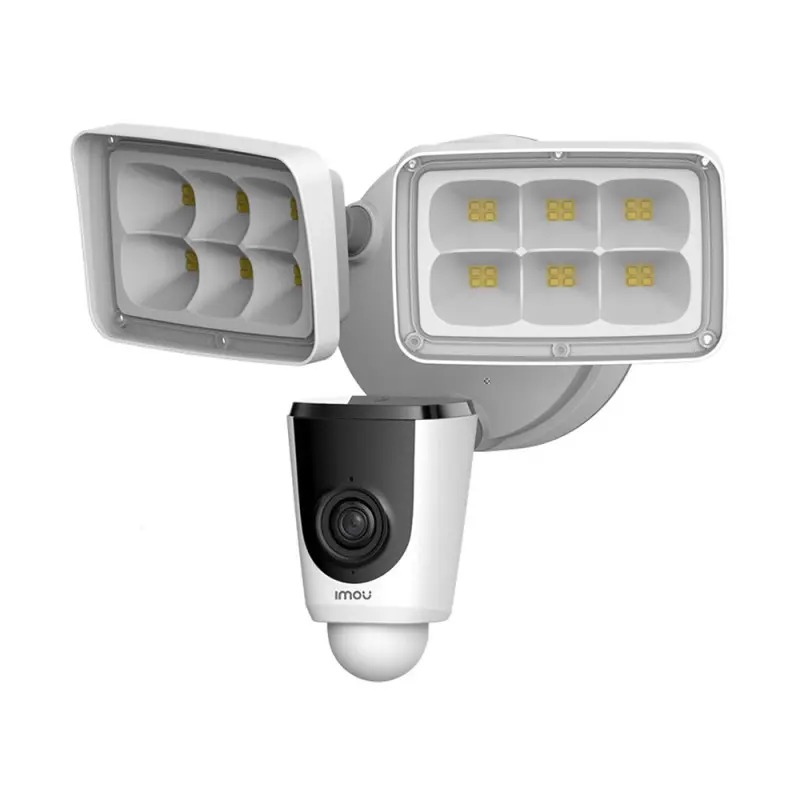
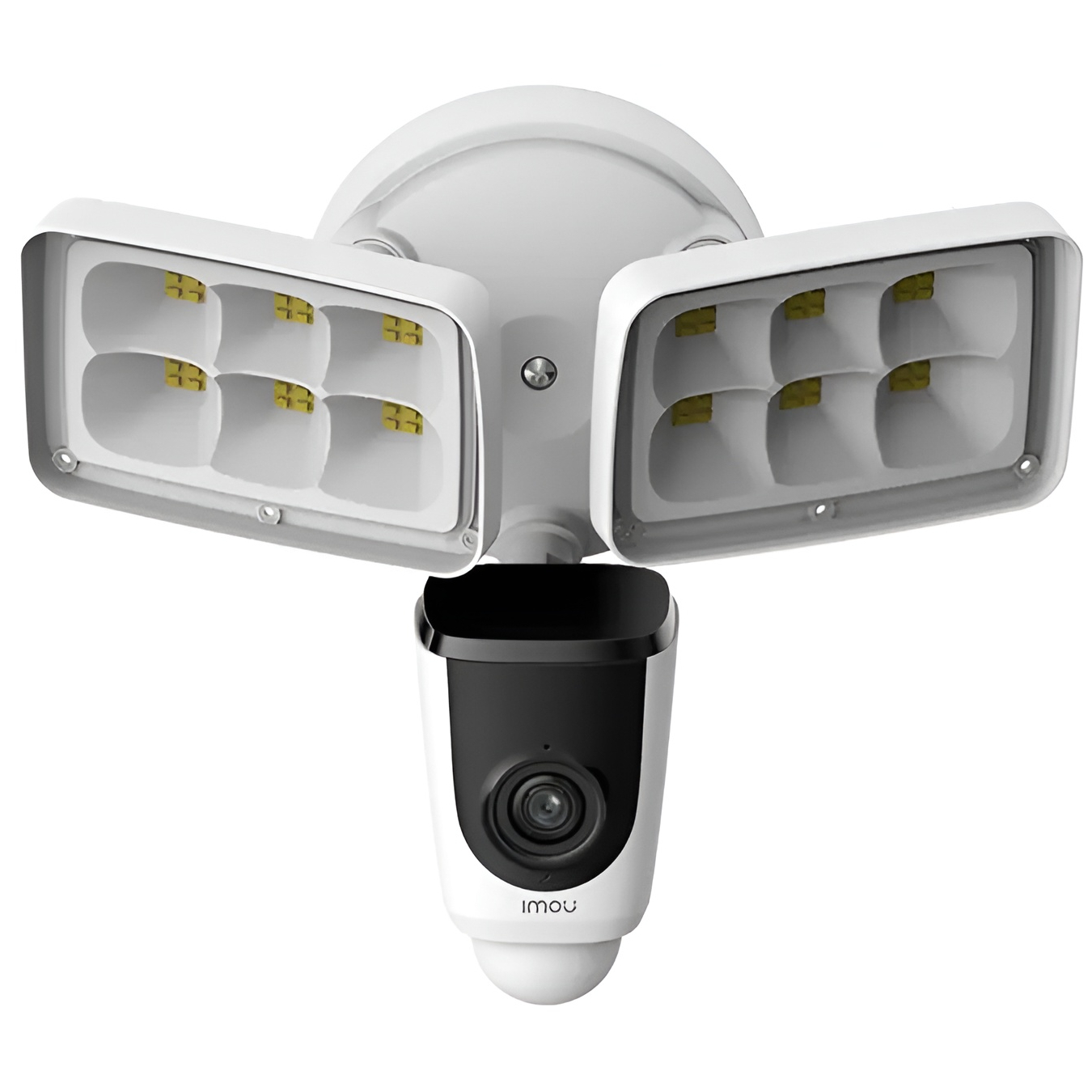
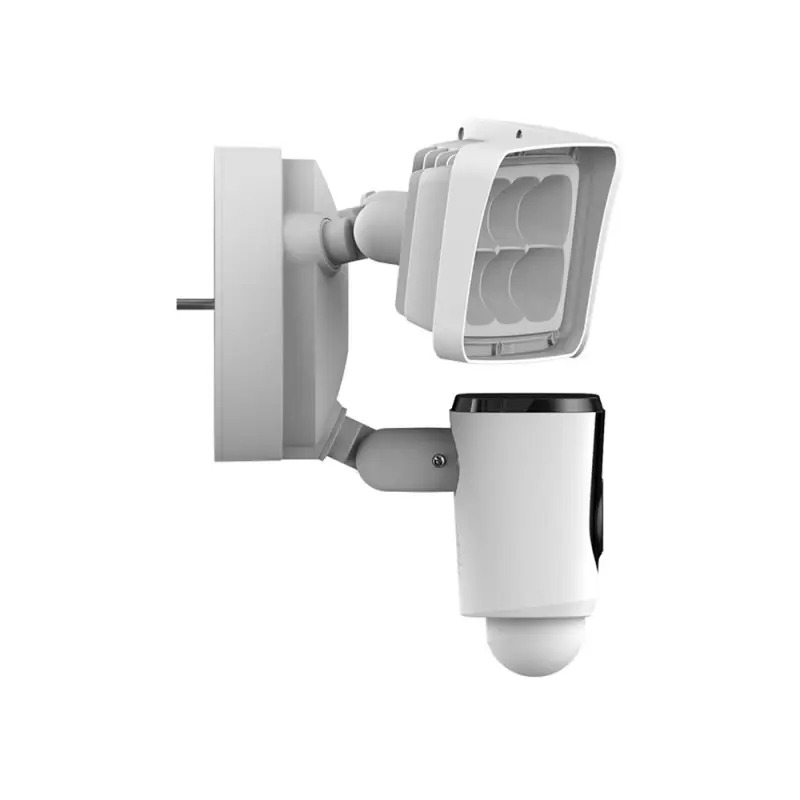
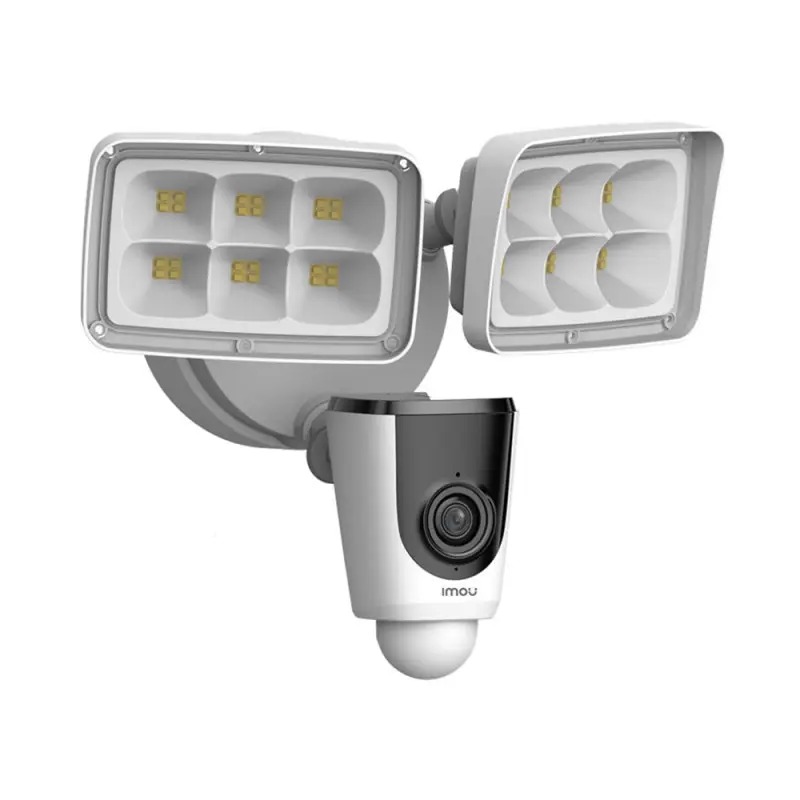
What separates this model from an ordinary outdoor camera is the order of priorities: this is a light fixture with a camera built into it, not a camera with a few helper LEDs bolted on. Two adjustable floodlight heads put out roughly 2000 lumens, enough to light the apron in front of a garage, a driveway or a back yard so well that a person on the recording appears in full colour instead of as a grey infrared silhouette. The lights run in three modes — permanently on, automatically from dusk till dawn, or triggered only when the motion sensor fires — and it is the third mode that most buyers are actually paying for. A burst of bright light at night remains the cheapest form of deterrence there is: a good share of casual visitors turn around before they ever reach the door, and the built-in 110 dB siren adds a sound the neighbours will hear too. There is a flip side worth planning for: the floodlight illuminates exactly where you aim it, so the house across the street will see every flash triggered by a passing cat, which makes the tilt angle something to settle before you drill the first hole.
Why there is no person detection here, and what that changes day to day
The specification for this model lists neither human nor vehicle detection: the camera does not classify what it sees, it simply reacts to movement picked up by a passive infrared sensor covering 270 degrees at a range of about ten metres. In everyday use that means alerts arrive for the person at your gate, for the neighbour's dog, and for the car pulling out of the driveway opposite, because a PIR sensor registers a warm moving mass and has no way of answering the question of who or what caused it. There is an upside that rarely gets mentioned: an infrared sensor largely ignores swaying branches, cloud shadows and rain streaking through the beam, so weather-driven false alarms are less common than on cheap cameras that analyse pixel changes in software. If your requirement is phrased as "notify me only when a person walks up to the house", this model will not deliver it, and the Imou Bullet 3MP at UAH 2115 is the better starting point, since the person and vehicle filter is part of its published specification. Where the Floodlight Cam does belong is any spot where notifications are secondary and the real job is to light the area automatically after dark while recording what happens: a house yard, the apron in front of a warehouse, the loading bay of a small shop.
Two megapixels and a 114-degree field of view: what actually fits in frame
The 2 MP sensor delivering 1920×1080 is entry level, and it deserves an honest assessment: you will clearly see how many people entered the property, what they were wearing and where they went, but reading a licence plate at fifteen metres or identifying an unfamiliar face at the far end of the plot is beyond this resolution. The 114-degree field of view is noticeably wider than the 80 to 90 degrees typical of ordinary outdoor cameras, so a single unit covers the driveway together with part of the lawn and the garage doors, with no blind spot directly beneath it. Colour night footage here comes from the floodlight rather than from an unusually light-sensitive sensor: while the lamps are lit the video is in colour, and the moment they go out the camera falls back to black-and-white infrared. H.265 compression roughly halves file size compared with H.264, which in practice means a memory card holds several times more history than it would in the older format. If what you need is identification rather than a general account of an event, let this model handle lighting and overview, and give the narrow task — a face at the door, a plate at the gate — to a separate camera with a higher resolution and a tighter lens.
Mains-powered at 220 V, and what that means for installation
This is not a battery camera and it does not ship with a plug-in adapter: the Floodlight Cam wires into fixed 100-240 V mains the way an ordinary outdoor light fitting does, with the cable brought inside the housing. For most houses that is actually more convenient than a 12 V camera, because if the facade already has a feed for a lantern, installation becomes a matter of swapping the fixture rather than pulling a separate low-voltage run from a power supply. Where no feed exists, plan the job with an electrician: outdoor 220 V work needs a properly sealed joint and its own breaker in the consumer unit, and it is not something to improvise with twisted wires in the rain. The second non-negotiable condition is constant voltage on that line — if the fixture ends up on an indoor switch that gets flicked off every evening, the camera dies with the lamps and recording simply stops. Because it is tied to the mains, the model copes poorly with power cuts, so in regions with scheduled outages budget for a UPS covering both the camera and the router: without internet the device cannot send a single alert.
Storage: a memory card, optional cloud, and a route into an NVR
The camera records to a microSD card of up to 256 GB, and that is the key fact about running costs: an Imou Protect subscription is optional rather than mandatory, and without one the device keeps recording locally and streaming live video to the app. Cloud storage earns its keep in one specific scenario — if someone can rip the camera off the wall along with the card, a copy of the events survives on the server even after the hardware is gone. For anyone building a multi-camera system a different property matters more: the model supports ONVIF, so its stream can be fed into a recorder such as the Imou NVR-N118-8A0E at UAH 4500 and archived centrally, with far more depth than a card allows. Day-to-day control and playback happen in the Imou Life app for Android, iOS, Windows and macOS, alerts arrive as push messages and e-mail, and there is Home Assistant integration for anyone already running a smart-home setup. One caveat: buy a surveillance-grade card rated for heavy rewrite cycles, because an ordinary photo card used for round-the-clock recording tends to fail within months.
Where to mount it and the jobs it was built for
The natural home for this model is the facade of a house above the entrance, a garage wall or the corner of an outbuilding at roughly three metres, which is the height at which the infrared sensor sees a person best across its ten-metre range. It answers the brief "a dark area that needs lighting and recording at the same time" very well: a driveway, a parking apron, the ground around a side gate, the loading area of a small shop or workshop. IP65 protection and a -30 to +50 °C operating range allow year-round outdoor mounting in our climate, and the housing tolerates direct rain, so a canopy is optional rather than necessary. Indoors the model is both excessive and awkward: 2000 lumens in a living room are blinding, and a body more than thirty centimetres across looks out of place on a flat ceiling. Nor should you expect it to guard a distant perimeter, because the motion sensor will not reach a fence thirty metres away and the floodlight at that distance washes out the foreground instead of lighting the scene evenly.
How it compares with neighbouring models in this catalogue
The closest rival by purpose is the Reolink Lumus Series E430 at UAH 1999: it costs 251 less, offers 4 MP instead of 2 and even lists person detection, but it is a compact cube camera with a modest built-in LED rather than a fixture capable of lighting a whole yard. Inside the Imou range the logical alternative is the Bullet 3MP at UAH 2115 — 135 cheaper, better sealed (IP67 against IP65), rated across a wider -30 to +60 °C span and equipped with an object-type alert filter, yet with no floodlight at all and therefore no active deterrence. The Imou Bullet 3C 3MP at UAH 2970 sits in between: it does have a siren and a spotlight in a compact 12 V housing, but its light output is nowhere near that of a genuine 2000-lumen fixture. If you want colour night video and dependable person and vehicle recognition together, you are looking at a different price bracket: the Ajax TurretCam HL at UAH 6099 does that job properly, costs nearly three times as much and lights nothing. The summary is straightforward — choose the Floodlight Cam when light and deterrence are the point and the footage is corroboration; when precise alerts and image detail matter most, those UAH 2250 are better spent on a conventional camera with analytics.
If you are unsure whether one floodlight will cover your particular yard, send us the plot dimensions and the points where power is already run — we will suggest how many positions you need and what belongs at each of them.
Characteristics Imou Floodlight Cam
Reviews about Imou Floodlight Cam from real users
No reviews found







