
 m. Сміла, Незалежності, 67г. оф, 406/6























IMOU BULLET 3MP (2.8 MM) - WI-FI/ETHERNET IP CAMERA



Description Imou Bullet 3MP
A spotlight next to the IR LEDs: four different night modes
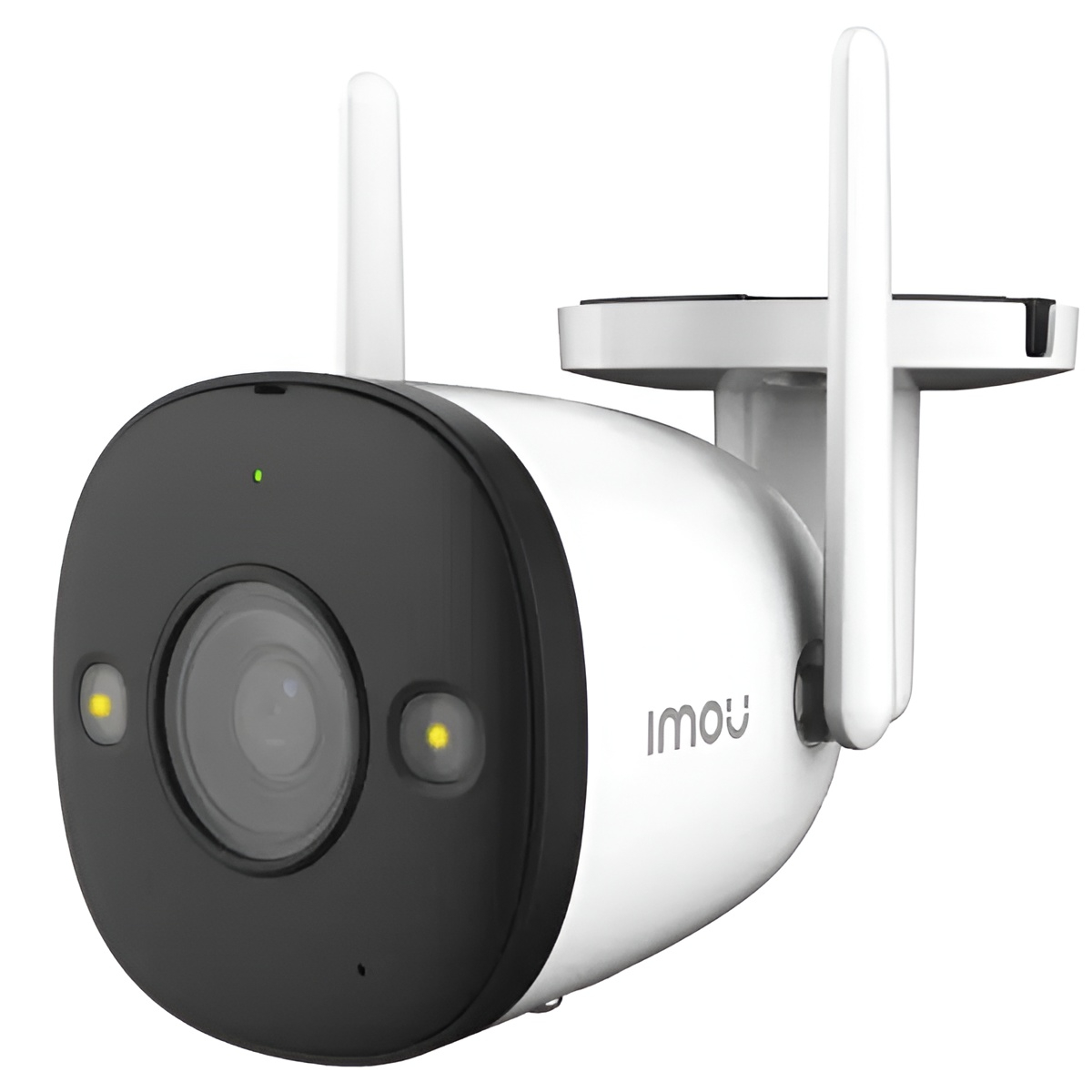
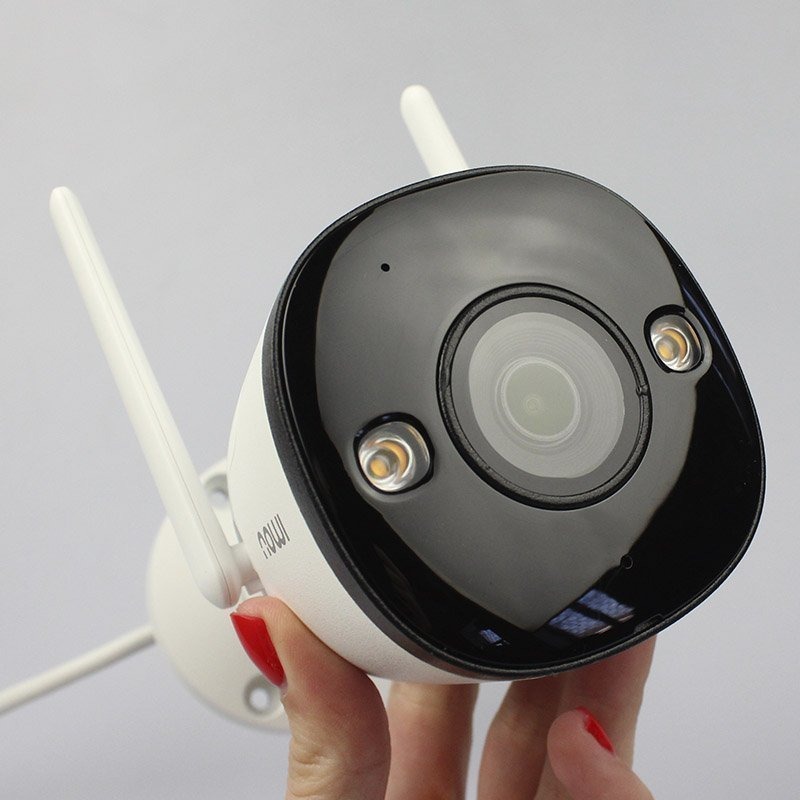
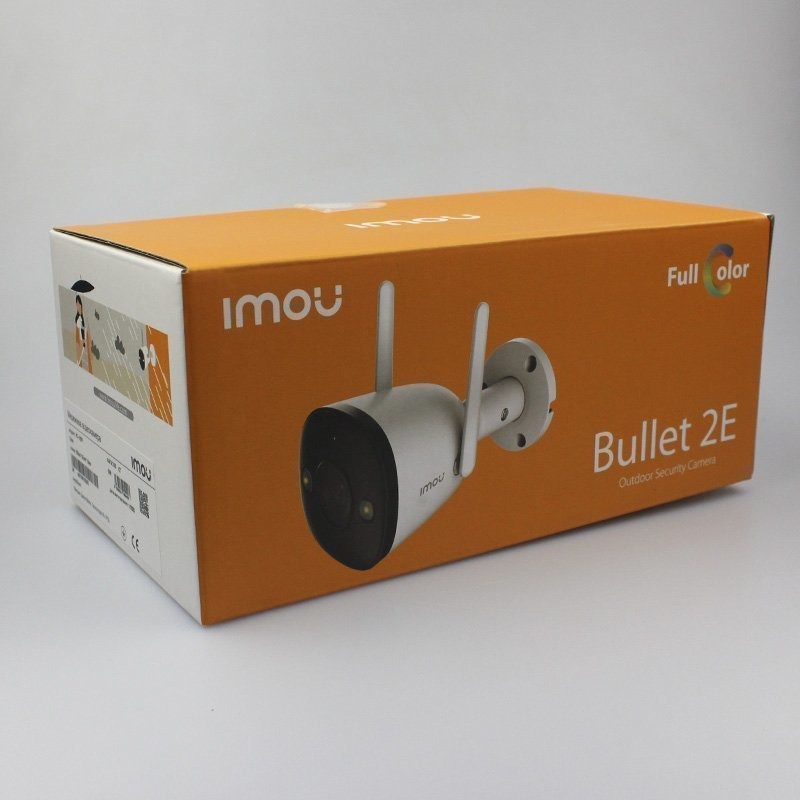
The Bullet 2E carries two light sources — infrared LEDs and a white spotlight — and the Imou Life app lets you decide how the camera behaves after dark: infrared only (discreet, black-and-white picture), permanent white light with full colour, a smart mode that keeps IR running until motion appears and only then fires the spotlight, or no illumination at all. Effective illumination reaches up to 30 metres, which is an honest figure for this class: it covers a yard, a driveway or the front of a small shop, but not the far corner of a large plot. The gap between a monochrome and a colour frame matters precisely when the footage has to be shown to somebody else: infrared gives you the silhouette of a person in a jacket, colour tells you the jacket was blue and the car by the gate was a red hatchback. Colour has a price, and that price is attention — the white spotlight is visible from the street, it gathers insects in summer and it can shine into a neighbour's window, which is why the smart mode usually beats full colour left permanently on. When the goal is to film without advertising the camera, pure infrared remains a perfectly usable option and delivers a steady monochrome image with no hint that anything is watching.
Three megapixels and an 82-degree field: what actually fits in frame
The 1/2.7-inch sensor produces a 2304×1296 frame, roughly one and a half million pixels more than the 2 MP cameras that still dominate this price bracket, and those extra pixels are exactly what saves you when the recording has to be zoomed in. An 82-degree field of view on a 2.8 mm lens is narrower than the 90-110 degrees of neighbouring models, and that is a trade-off rather than a flaw: the scene is smaller, but pixels sit denser on it and edge distortion almost disappears. In practice the camera holds one zone well — a gate with a wicket, a porch, a shop entrance together with the strip of pavement in front of it — while covering a whole yard from a single angle is beyond it. Twenty-five frames per second is enough for somebody walking briskly three or four metres away to stay readable when you step through the recording frame by frame. Treat the 8x digital zoom soberly: it enlarges pixels that are already recorded rather than bringing the optics closer, so confident face recognition works up to about five to seven metres and a number plate should enter the frame no further than eight to ten metres away.
It separates people from vehicles, but it does not know animals
The on-board analytics of this model sorts objects into two classes — human and vehicle — and notifications can be left switched on for only the one you care about. That is the practical line between this camera and the cheapest models that react to any change of pixels: with those, a week of branches, headlight shadows and rain produces several hundred pushes, the owner turns notifications off, and the system stops being security equipment at all. Animal detection, however, is not part of the package here, and it is worth planning around: a dog crossing the yard at night or a cat on the fence will not be classified as an animal and can easily trigger an ordinary motion event. The workaround is simple and genuinely effective — the app lets you draw the detection zone and cut out the strip along the ground or the area around a kennel, and the number of pointless alerts drops several times over. Alerts arrive as app pushes and by e-mail, and because the analytics run inside the camera, basic filtering does not depend on whether you have paid for a cloud plan.
12 V power without PoE, IP67 and a 439-gram housing
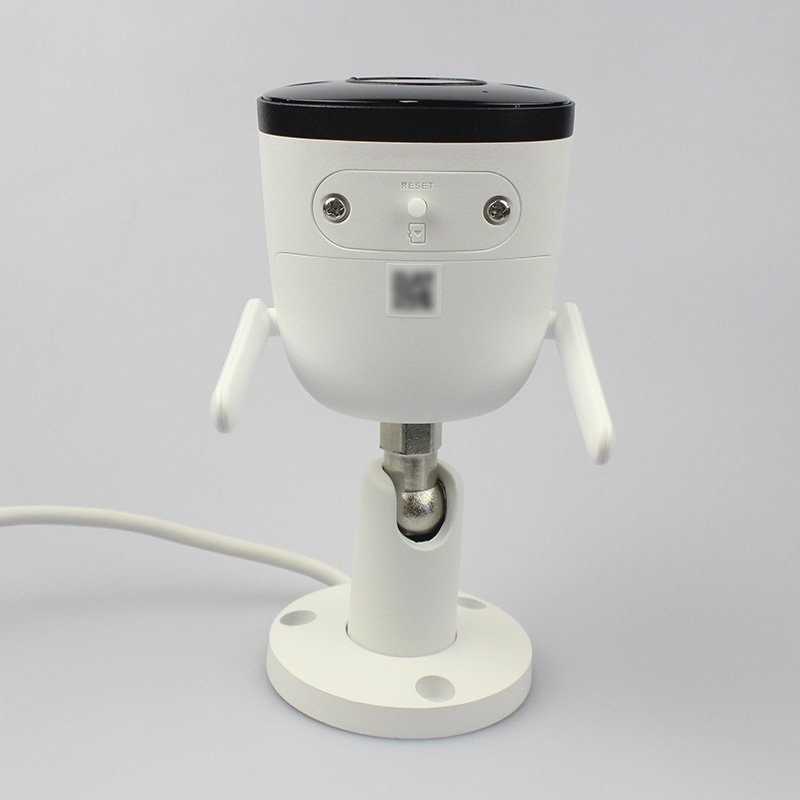
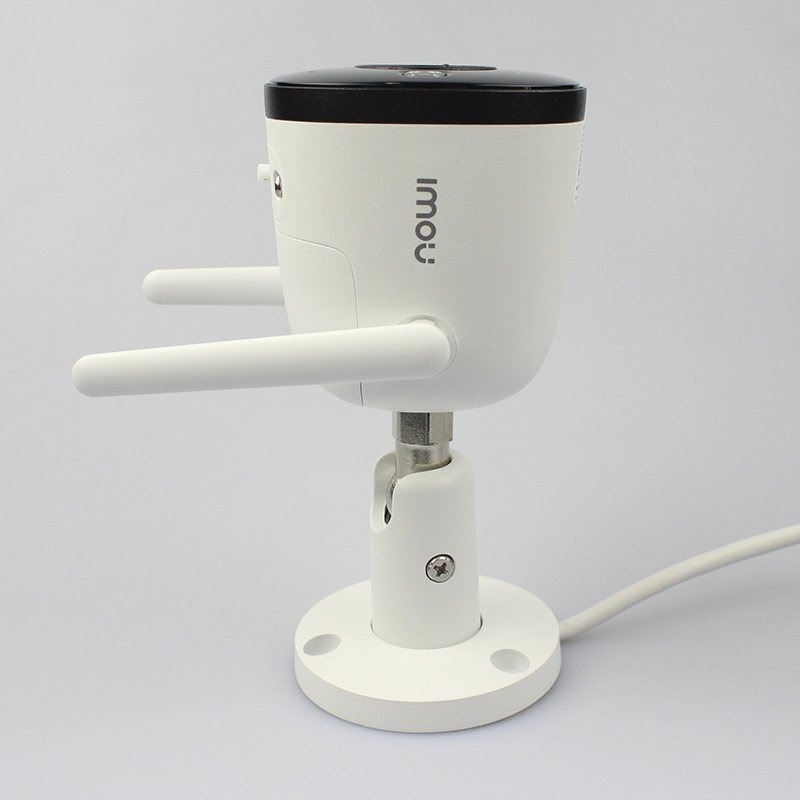
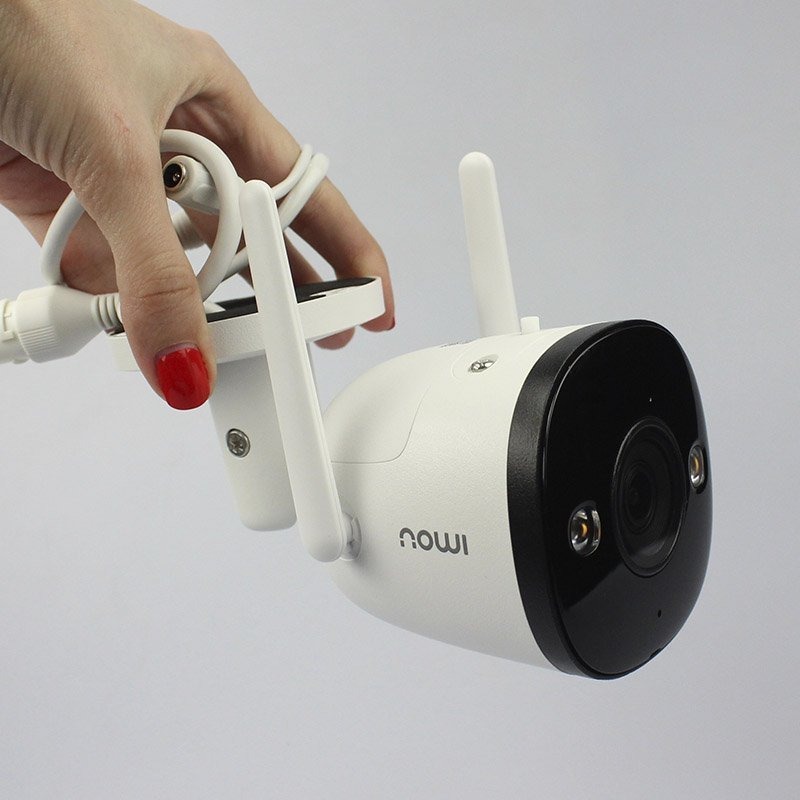
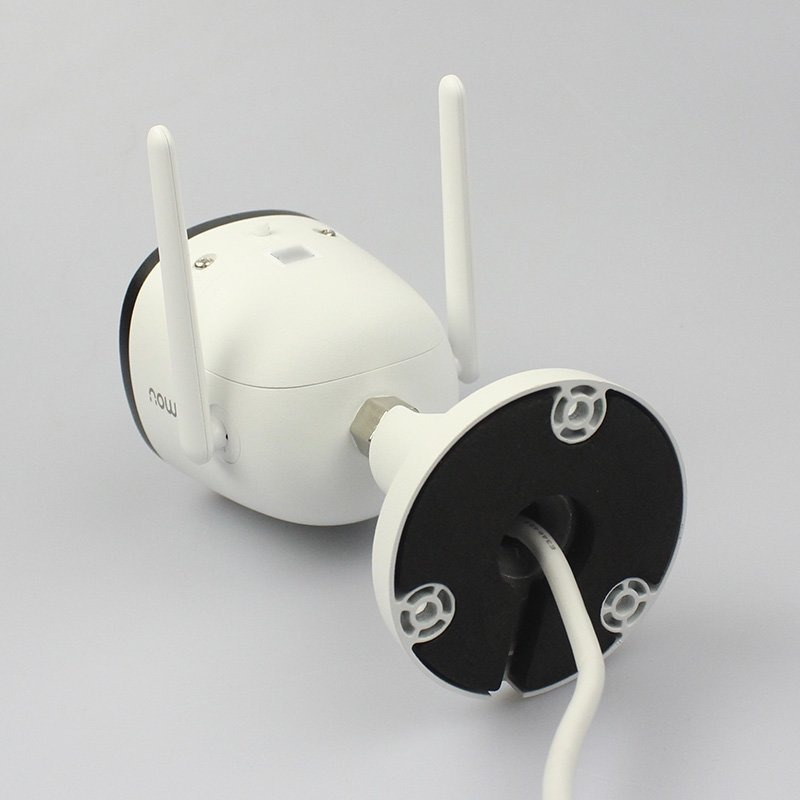
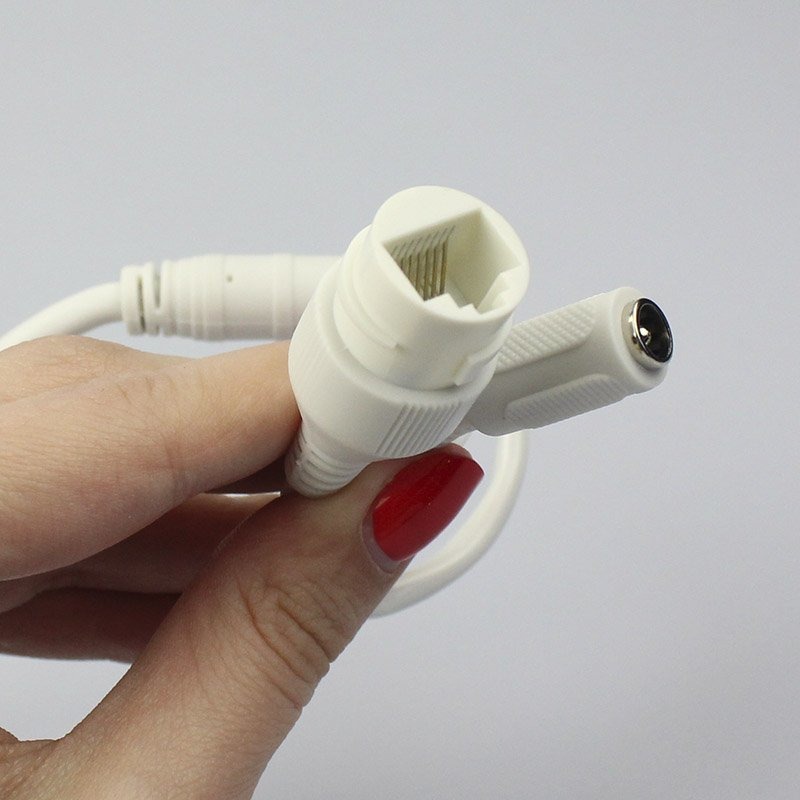
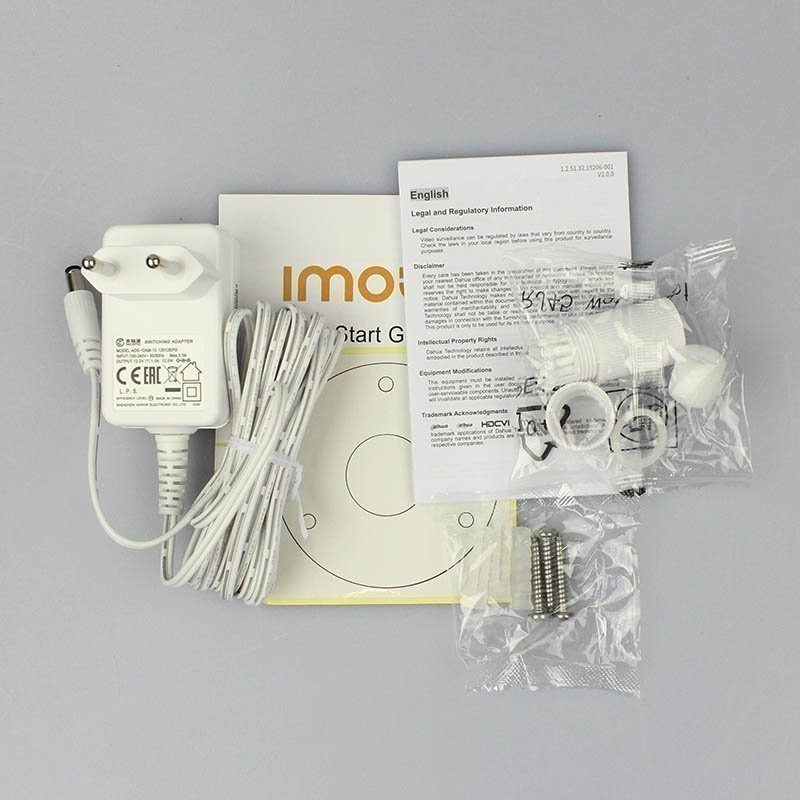
The camera runs from a 12 V 1 A adapter, draws under 0.42 A (roughly 5 W) and has no PoE support, which is the main installation constraint of the model: the mounting point needs a socket or a dedicated power run. Under a porch roof or on a facade next to an existing outdoor light that is a non-issue, but on a distant pole you either pull mains power out to it or move to one of the PoE models in this catalogue. IP67 means complete dust protection and survival of short immersion, which is more than a facade ever demands; the weak spot is not the housing but the cable entry, so route it downwards and seal it properly. The working range of -30 to +60 °C covers a Ukrainian winter with margin, so the camera comes back to life even after a night-time blackout in hard frost. The body is plastic, 164.9 mm long and 439 g with the bracket: ordinary wall plugs hold it without trouble, but that same plastic is the reason not to mount it anywhere a hand or a stick can reach.
Storage: a 256 GB card, continuous recording, FTP and ONVIF
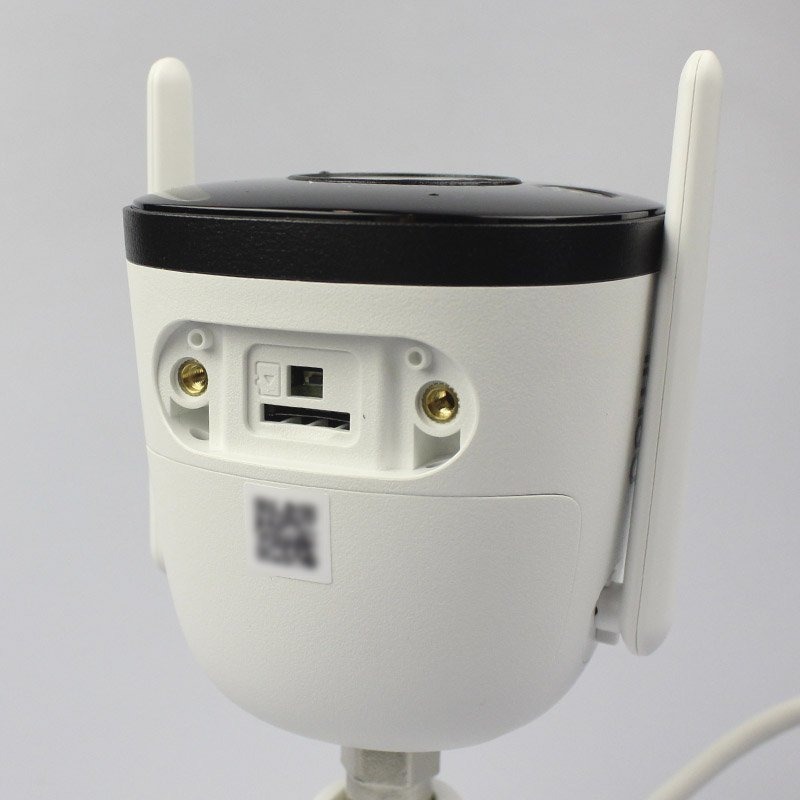
The camera records to its own microSD card of up to 256 GB and supports continuous recording rather than event clips only — an important detail, because a fragmented archive often fails to answer what happened in the five minutes before the alarm. With H.265 a round-the-clock 3 MP stream consumes roughly 15-25 GB a day depending on how busy the scene is, so a 256 GB card realistically gives you somewhere between ten days and two weeks of history. FTP upload, an RTSP stream and ONVIF are supported in parallel, so the camera can be pulled into an Imou recorder, a third-party NVR or a video server and archived centrally. Home Assistant integration is declared separately, which matters for owners who already run a smart home and want motion in frame to switch on a light or start a scenario instead of merely sending a message. Imou cloud is available too, but treat it as a convenience: for day-to-day operation the local card plus ONVIF is entirely sufficient.
Where this camera belongs and what it was built for
This model is at its best watching one specific point of entry: a wicket gate with the ground in front of it, a garage door, the porch of a private house, the door of a shop or workshop plus a section of pavement. The slightly narrow 82-degree field works in your favour there — less empty space in the frame, more pixels on the face of whoever walks up to the door, less distortion at the edges. As a single-angle camera for an entire yard it is a poor fit: on a plot fifteen to twenty metres wide part of the perimeter simply falls outside the field of view, and two cameras facing each other make far more sense. It is also the wrong tool for reading number plates on the approach road, because a 2.8 mm lens resolves plates only at close range and an entrance needs narrower optics on a camera aimed along the drive. One more limit is purely practical: the absence of PoE makes the model awkward for poles and remote points, and completely comfortable on a facade beside an existing socket.
How it compares with the neighbouring models in this catalogue
Its closest relative here is the Imou Bullet 3 3MP PoE (IPC-PS3DP-3M0): same resolution, same class, but power and network arrive on a single twisted pair and there is no Wi-Fi at all. Where cable already runs to the mounting point, that wired model is cheaper cheaper and inherently more reliable — the Bullet 2E earns its place exactly where no cable can be pulled and a socket is nearby. The Imou Bullet 3C 3MP (IPC-S3EP-3M0WE) is the step up: the same 3 MP sensor, plus a 110 dB siren, two-way audio and PoE, so the extra buys active deterrence and freedom of installation. The Imou Turret SE-C costs almost the same money but gives 2 MP and infrared-only nights with no white light — choose it over the Bullet 2E only when you specifically need a dome shape under an overhang and colour at night is irrelevant. The Imou Turret SE 4MP-C takes the opposite direction with 4 MP and a wider 92 degrees, which is the sensible pick when frame detail matters more than colour night vision.
If you are not sure whether 82 degrees is enough for your entrance, send us a photo of the mounting spot with approximate distances and we will tell you what will actually be in frame and whether a PoE model would serve you better.
Characteristics Imou Bullet 3MP
Reviews about Imou Bullet 3MP from real users
No reviews found







