
 m. Сміла, Незалежності, 67г. оф, 406/6























IMOU BULLET 3C 3MP (2.8 MM) - POE IP CAMERA

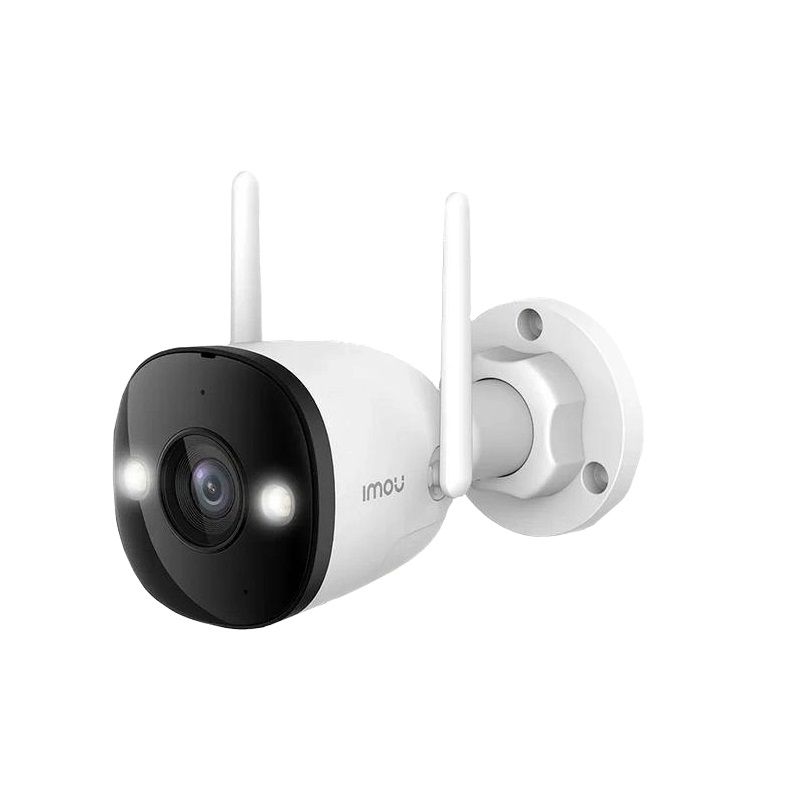
Description Imou Bullet 3C
A spotlight and a 110 dB siren: a camera that intervenes rather than just records
What separates the Imou Bullet 3C from an ordinary budget camera is that it does not stop at logging the event. When its analytics recognise a person in frame, the camera switches on its own spotlight and a siren rated up to 110 dB, and for most opportunistic visitors that is where the story ends, because sudden light and noise mean they have been noticed. A passive camera in the same situation records the back of someone calmly going about their business; active deterrence works before the damage is done rather than after. The response is configurable in the app: light only, sound only, or both, with the option of limiting the hours in which the siren may fire. Keep the practical side in mind — in dense housing a night-time siren affects more than the intruder, so for a balcony or an entrance in an apartment block it is wiser to leave only the spotlight enabled.
IMOU SENSE: person and vehicle recognition inside the camera itself
Object classification is handled by the proprietary IMOU SENSE algorithm running on the camera's own processor, separating people and vehicles from incidental movement. That is a different thing altogether from simple pixel-change motion detection: a branch swaying in the wind, a cloud shadow or an insect crossing the lens will not raise an alarm or trigger the siren at night. Owners feel the difference in the second week of use — that is exactly when a motion-only camera starts irritating with dozens of empty alerts and its notifications usually get switched off for good. The Imou Life app also lets you draw a detection zone so the camera ignores the pavement beyond the fence and reacts only to what happens on your side of it. It is precisely the pairing of recognition with active deterrence that makes this model make sense: light and sound fire at a person, not at every movement.
3 MP and an 88-degree field: a focused view rather than a panorama
A 3 MP sensor behind a 2.8 mm lens gives an 88-degree field of view, noticeably narrower than the 105-110° typical of wide-angle models, and that needs to be understood before mounting. In practice it means the camera will not cover an entire yard from one corner, but within the strip it does see, the pixels per metre of scene are higher than a wide-angle camera with the same sensor would deliver. Its best use is a specific point: a door, a porch, a gate, a garage entrance, a stretch of fence, the way into an outbuilding. If you need a general overview of the yard, either place two of these facing each other or choose a wide-angle model and accept that distant faces will not be identifiable. The 8x digital zoom helps examine detail in a saved clip, but remember that digital magnification adds no pixels — it only stretches the ones already captured.
After dark: illumination to 30 metres and a colour mode
The camera carries dual illumination effective to about 30 metres: infrared for discreet black-and-white recording and the spotlight for a colour picture. The choice between them is not cosmetic — a monochrome frame shows you a silhouette and a direction of travel, while a colour frame gives jacket colour, footwear, the shade of a car, the very markers that make footage worth reviewing. Thirty metres is the length of a typical yard or the drive between two houses, and within that distance the camera produces a usable image with no additional street lighting. Where the camera sits under an existing lamp the illumination will fire less often, which extends the life of the LEDs. If it faces a fully dark yard, plan for event-triggered colour mode from the outset: it yields the most useful detail for the least amount of constant light.
Wi-Fi, ONVIF and Home Assistant: where this camera fits
The primary link is Wi-Fi, so the camera can go where pulling network cable is awkward, provided coverage at the mounting point is solid. ONVIF support means it connects not only to Imou's own cloud but to a third-party recorder or video management system, which matters if you would rather not depend on a vendor cloud or already run an NVR of another brand. Direct Home Assistant integration deserves a separate mention: for smart-home owners it allows scenarios such as turning on yard lighting when the camera sees a person, without third-party bridges. Recording can go to a memory card inside the camera, to the cloud, or to a recorder — combining local and cloud storage is the most robust option, since the footage survives even if the camera itself is stolen. Alerts arrive in the Imou Life app and by email.
IP67 housing and a light body: where it can physically go
The plastic IP67-rated housing handles rain, snow and dust, so the camera is built for outdoor mounting without an extra enclosure. At 147.7×74.2×75.6 mm and 290 grams it is among the lightest in its class: the bracket needs no reinforcement and mounting is realistic even on thin siding or timber cladding. Power comes from a 12 V supply, so when choosing a position account not only for the field of view but for a socket or the option of running a low-voltage line. The white housing is least conspicuous on a pale wall or under a light-coloured eave; against dark brickwork it stands out, which is occasionally useful as a visible sign that the property is monitored. The model carries a 12-month warranty, standard for this tier.
Who it suits and how it differs from its neighbours here
This model is built for a private house, a country plot or a small shop where one vulnerable point needs covering and the goal is not merely to log an incident but to try to stop it. The catalogue also has the Imou Floodlight Cam with a powerful spotlight, but it works at 2 MP and without object recognition, so it will light up at every movement — on a yard with trees that quickly becomes nightly illumination. The Imou Bullet 3MP and Turret SE are simpler and have no active deterrence, and they make sense when the camera merely supplements an existing system and the recorder handles alarms. If the mounting point has neither a socket nor stable Wi-Fi, battery models such as the Imou Cell 3C are the sensible direction, bearing in mind that they record on events rather than continuously. And when what you really need is a wide view of the whole yard with identifiable faces at distance, step up to a wired Hikvision or Dahua model with wider optics connected to a recorder.
Tell us which point you need covered and whether there is a socket and solid Wi-Fi there — we will advise whether one camera is enough or two at different angles make more sense.
Characteristics Imou Bullet 3C
Reviews about Imou Bullet 3C from real users
No reviews found







