
 m. Сміла, Незалежності, 67г. оф, 406/6























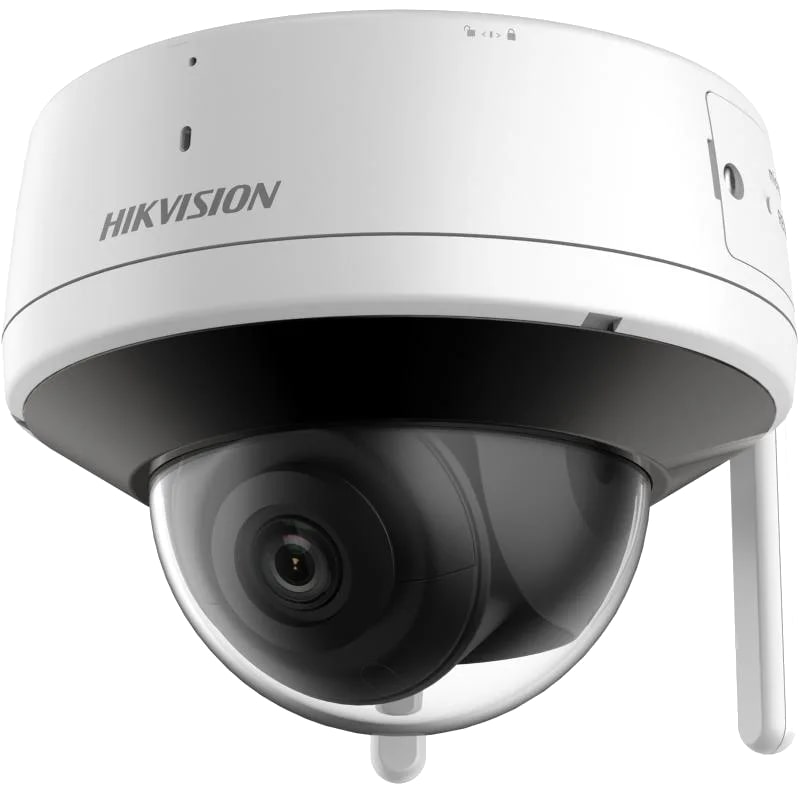
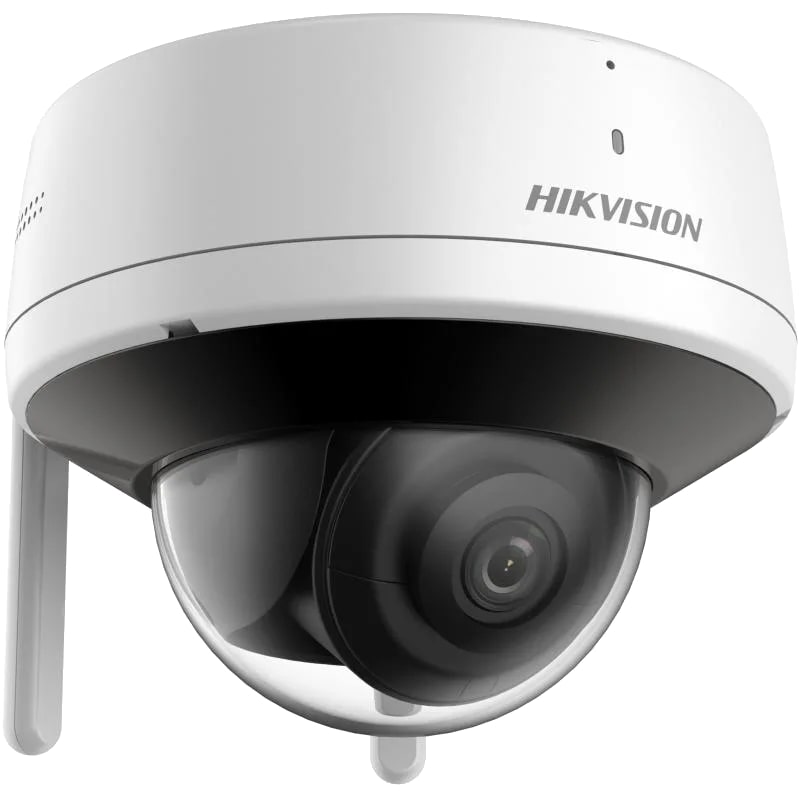
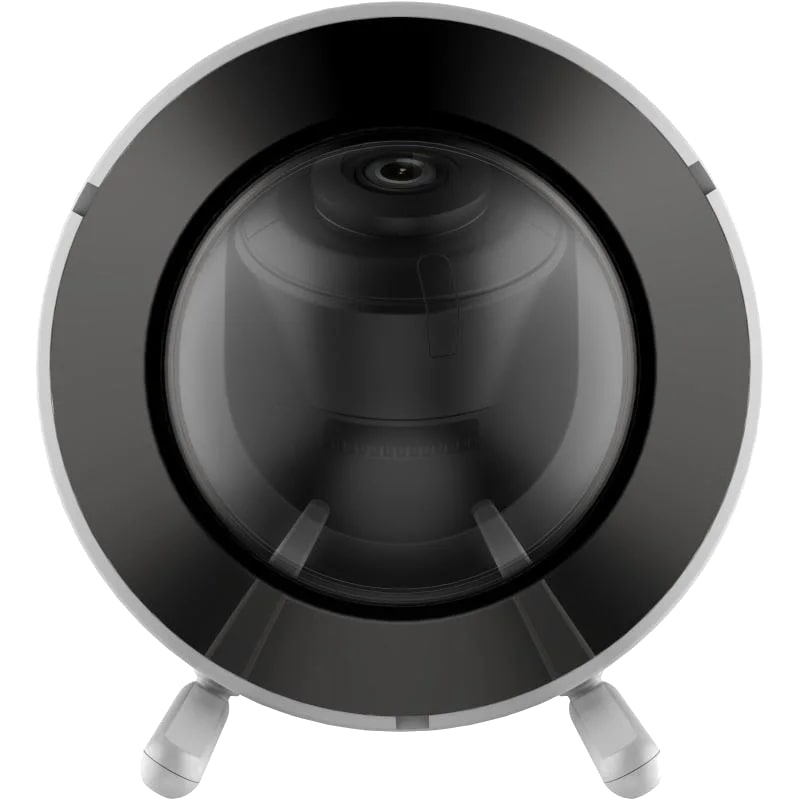
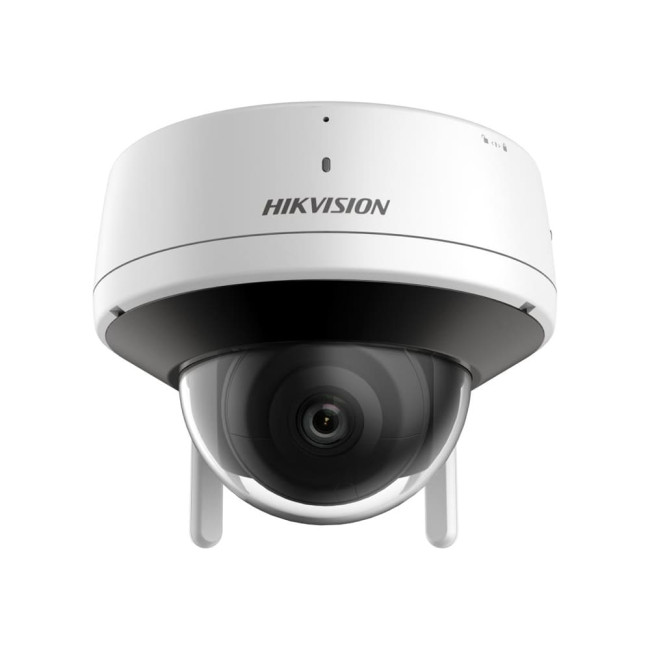
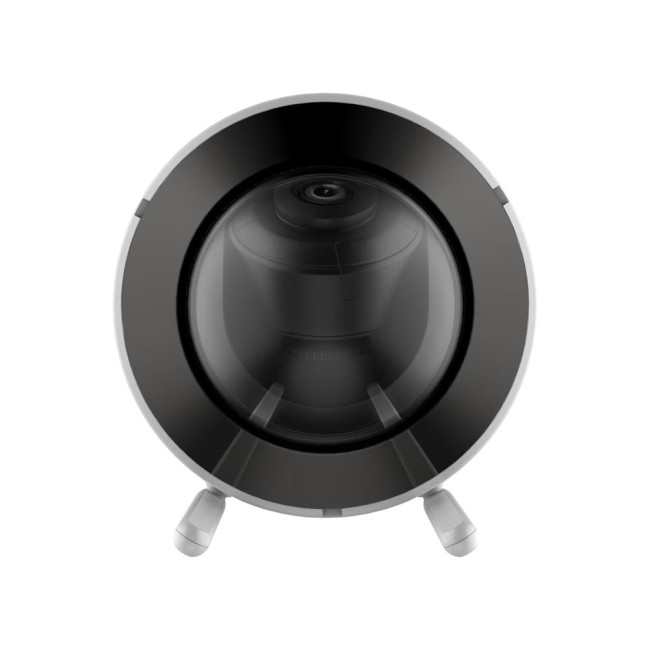
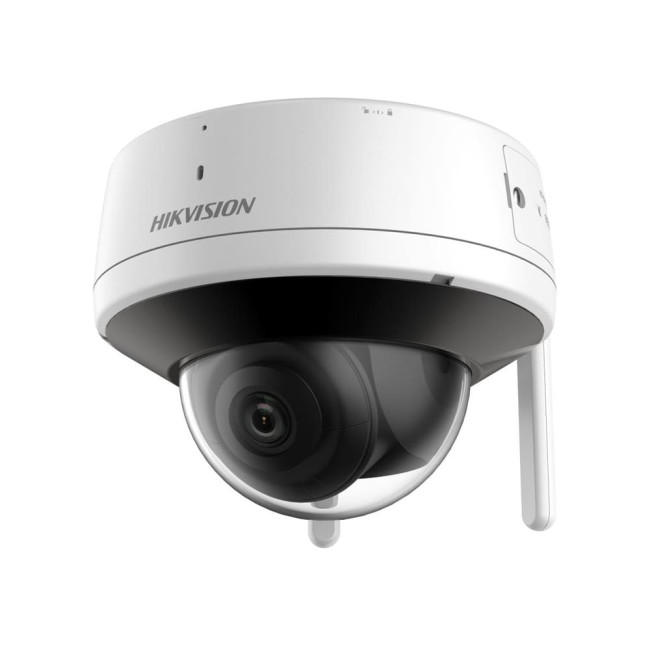
HIKVISION DS-2CV2141G2-IDW (2 MP/2.8 MM) - WI-FI IP CAMERA



Description Hikvision DS-2CV2141G2-IDW
A consumer Wi-Fi camera rather than part of a designed system
The DS-2CV2141G2-IDW belongs to the part of the Hikvision range built for flats and private houses rather than for sites with a designed surveillance project, and that shows in every engineering decision: no power over the network cable and no assumption that an installer with a crimping tool will be on site. It joins the home Wi-Fi network, runs from a separate 12 V adapter and records onto its own memory card, so it is fully usable with no recorder at all — the Hik-Connect app on a phone is enough. That is exactly why it ends up where cable is no longer an option: a finished flat with the decorating done, an attic room, a rented office where drilling the landlord's walls is out of the question. The flip side of that independence is that the archive lives inside the camera instead of a locked cabinet, and whoever takes the camera takes the footage with it, so on premises with a real burglary risk the card should be backed up to a recorder or a NAS. For a four-to-eight-camera installation with guaranteed round-the-clock recording a plain wired PoE model is the more honest answer, while this one makes sense as one or two control points you set up for yourself.
Wi-Fi on 2.4 GHz: what to expect and where it lets you down
The radio works on 2.4 GHz with 802.11b/g/n and a link rate of up to 300 Mbit/s, which leaves plenty of headroom for a 4 MP stream even while you watch live video and download an archive clip at the same time. The quoted range of roughly 120 metres applies to clear line of sight, and inside a real house that figure drops several times over: two load-bearing walls or a reinforced concrete slab between router and camera is the classic cause of dropouts, where the picture breaks into blocks at precisely the moment something happens. Before mounting anything, carry your phone to the intended spot and check the signal there rather than next to the router; if you are left with one or two bars, adding a mesh node or a repeater costs far less effort than relocating a camera and its bracket later. One practical detail is easy to miss: besides the radio the camera has an ordinary RJ-45 port, so you can always move it onto cable, which helps both during first-time setup and as a fallback if the wireless link turns out to be unreliable. And the limitation people discover after their first power cut is that the router goes dark together with the camera, so without a small backup supply for both devices the system records nothing during the very event you care about.
4 MP and a 2.8 mm lens: what actually lands in the frame
The sensor delivers 2560x1440 pixels, roughly twice the pixel count of the common two-megapixel cameras, and the difference shows up precisely when you zoom into footage that has already been recorded. A 2.8 mm lens with a 95-degree field of view takes in a whole room or the area in front of an entrance: one camera covers the door, the window and the approach to both with no blind corners at the edges. A wide angle always works against detail at distance: a face is reliably recognisable out to about five to seven metres, and beyond that you get dependable evidence of the event, clothing and gait rather than a portrait fit for a police report. Number plates are readable with this optic only at close range, so mounting the model on a driveway gate in the hope of capturing plates is a mistake — that job belongs to a camera with a longer focal length. The practical conclusion is simple: bring the entry point you genuinely need to identify closer to the camera instead of relying on digital zoom after the incident.
The G2 generation tells a person apart from a swaying branch
The G2 in the model name is not a revision number but a marker of the generation that carries analytics on board: the camera classifies the moving object itself and reports whether it was a person or a vehicle, instead of reacting to any change of pixels in the frame. The difference becomes obvious by the second day of use, because a G0-generation model in a similar housing sends a push for a branch moved by the wind, for headlight shadows from a car in the street, for an insect crossing the IR beam — and within a week the owner simply switches notifications off. With notifications off the camera stops being a security device and becomes a video recorder on the wall that someone looks at after the fact. Here you can keep alerts for the person category only, so the phone speaks up when somebody really is in the yard rather than when the neighbour's cat walks past at night. It is worth knowing the limits as well: this model has no separate animal category, so a large dog will occasionally be filed under people, and no camera on the market delivers zero false alarms.
Recording to a memory card: independence and its price
The camera has a microSD slot for cards up to 256 GB, which is enough for domestic use: in event-triggered mode a card of that size holds weeks of events, while continuous recording with H.265 gives roughly three to six days depending on the bitrate and stream resolution you choose. There are two workable ways to get a deeper archive: lower the resolution and record on a schedule, or add the camera to a recorder or network storage where it becomes simply one more video source. Buy a card made for surveillance rather than photography, because an ordinary microSD under continuous writing survives a few months and then fails quietly, with the owner finding out at the moment the footage is needed. Checking once a month that recording still works is a dull habit that pays for itself, since a card failure is not always reported in an obvious way. And once more about the central compromise: a single copy of the archive inside the camera is convenient to set up yet unreliable exactly when somebody has an interest in that footage disappearing.
Two-way audio, IP66 protection and 12 V power
The built-in microphone and speaker turn the camera into an intercom: you hear what is happening in front of the lens and can answer, whether that means asking for a parcel to be left by the door or saying the sentence after which an over-curious visitor usually walks away. IP66 protection lets you put the camera in the open rather than keeping it indoors: the housing withstands dust and water jets from any direction, although on a facade without an overhang it is still wiser to choose a spot the rain does not reach at an angle. The lower operating limit of -30 degrees is designed for our winters, so starting up after a January power cut is not the problem it becomes with cheap cameras rated only to -10. Power comes from an external 12 V adapter drawing about 6 W, and this is the main installation difference from PoE models: you need a socket or a separate power run next to the camera, and the budget line is an ordinary adapter instead of a switch. The dome housing mounts on a ceiling or a wall and leaves far less opportunity to twist the camera aside by hand than bullet models on a long bracket do.
Where this camera belongs and where it does not
The most natural scenarios are a flat where you need to see the front door and hallway, the entrance area of a private house, a porch, a terrace, a country-house yard, a small shop or an office: one or two control points with no project drawings and no channelling of walls. It also works well as a peace-of-mind camera: checking whether the child is back from school, whether the courier called, whether something is leaking in the store room, or talking to a repairman who arrived while you were out. It is a poor fit for a long perimeter, for a car park where plates must be read, and for a warehouse needing fifteen to twenty cameras with a guaranteed round-the-clock archive, because the radio link becomes the bottleneck and a crowd of separate adapters turns into chaos. There is also little point in choosing it when the site already has a recorder with PoE ports, since you would be paying for Wi-Fi and a card slot you never use. The rule of thumb is straightforward: when cable is impossible or pointless, this model is the right tool, and when cable exists or will exist, take a wired camera.
How it differs from neighbouring models in this catalogue
The closest relative in spirit here is the DS-2CD2T43G2-4LI, which also has Wi-Fi but is a professional 4 MP bullet in a metal body with 80 metres of illumination, built for a distant perimeter rather than a porch; choose it to cover a long driveway and this one when the control point is close by. Among the wired neighbours the direct competitor by task is the DS-2CD1323G2-LIUF: the same human and vehicle classification and the same wide angle, but PoE power and hybrid illumination with white light, which means colour footage at night, so if you can realistically run cable to the spot its night frame will be better. The noticeably more affordable DS-2CD1321G0-I looks similar from outside but belongs to the G0 generation without target classification, and it is justified only where nobody needs notifications and the camera simply records into an NVR as a precaution. If your real goal is a recognisable night image in the yard rather than a wireless link, look at the 8 MP DS-2CD2083G2-LI with white light: a different class of detail, but it needs both cable and a recorder. In short, the DS-2CV2141G2-IDW is chosen for how it connects rather than for its sensor figures — when you want a camera the owner can install alone in a single evening.
If you are unsure whether the Wi-Fi will reach the spot you have in mind, or whether one camera is enough, send us a floor plan or the dimensions of your yard. We will suggest where to mount it and tell you honestly whether a wired model would serve you better.
Characteristics Hikvision DS-2CV2141G2-IDW
Reviews about Hikvision DS-2CV2141G2-IDW from real users
No reviews found







