
 m. Сміла, Незалежності, 67г. оф, 406/6























HIKVISION DS-2CD2T83G2-4LI (8 MP/2.8 MM) - IP CAMERA WITH 80 M ILLUMINATION

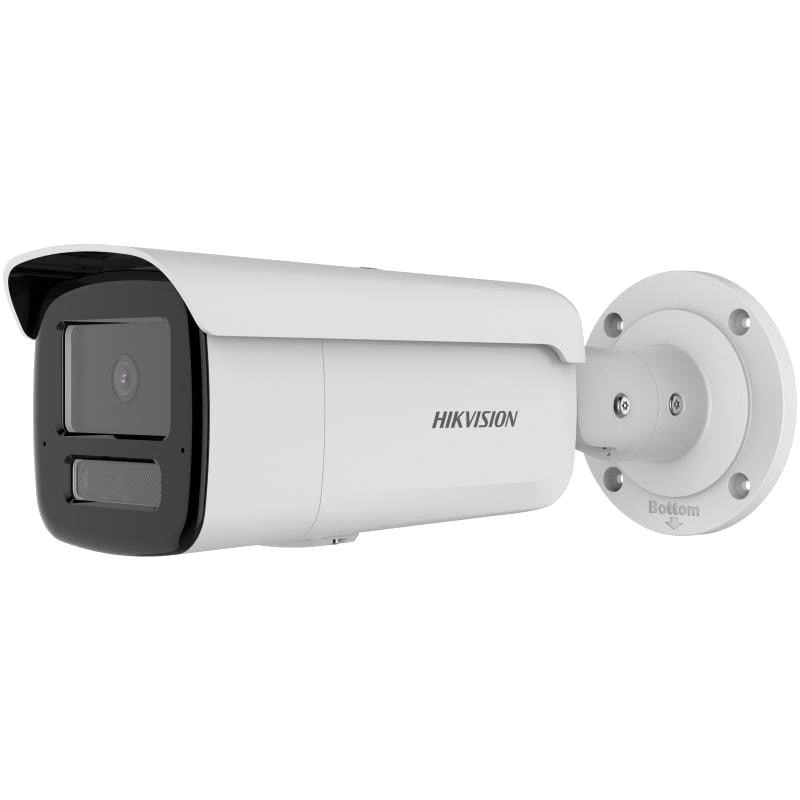
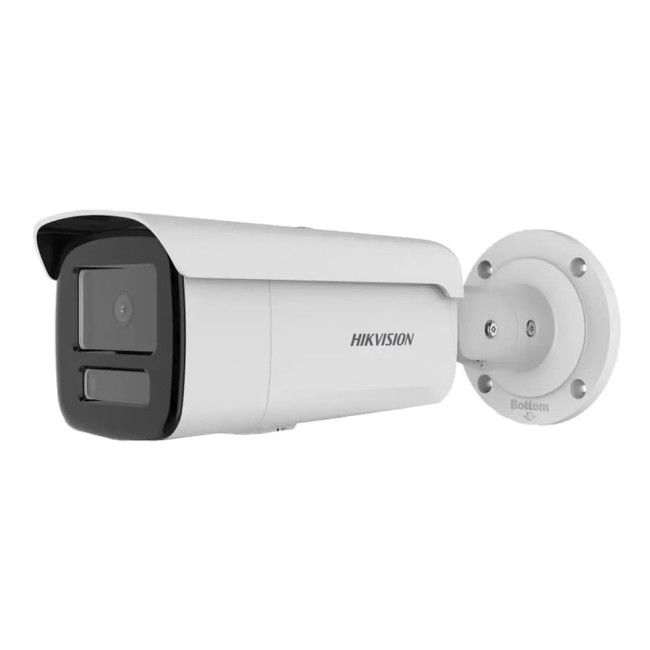
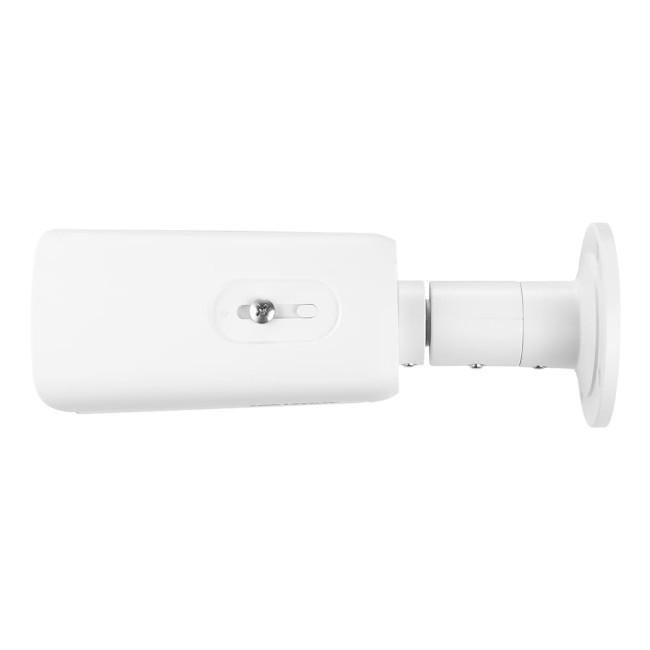
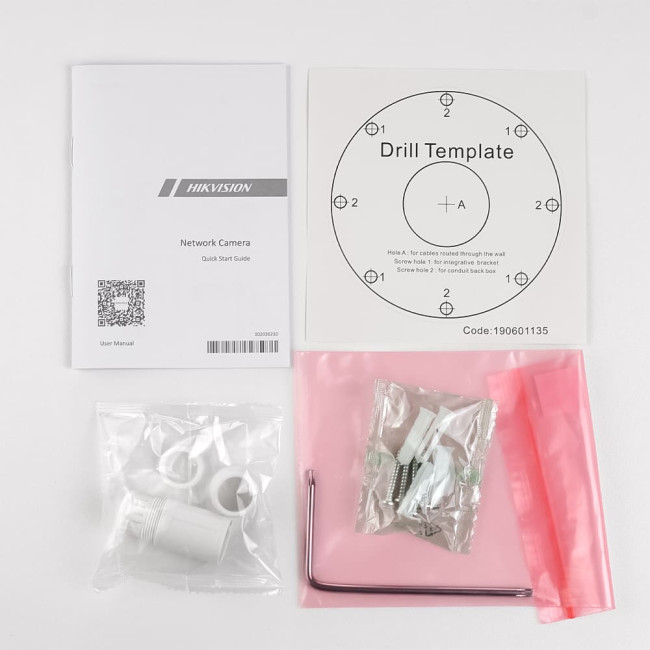
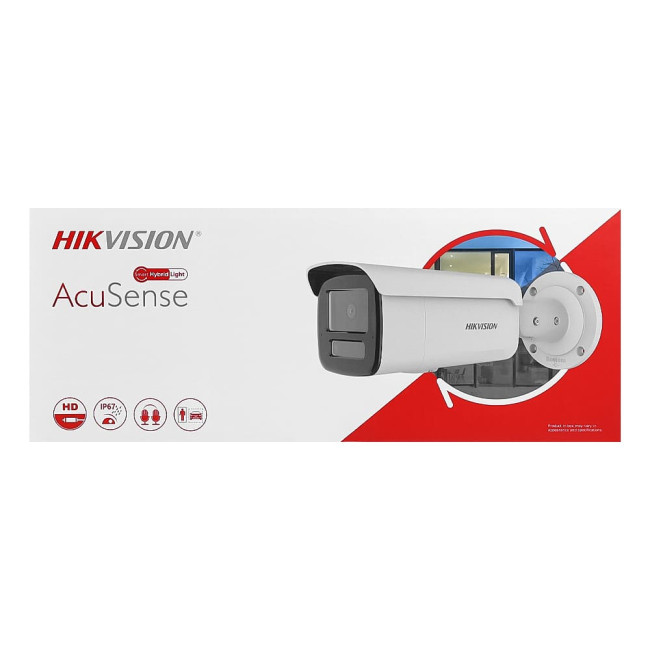
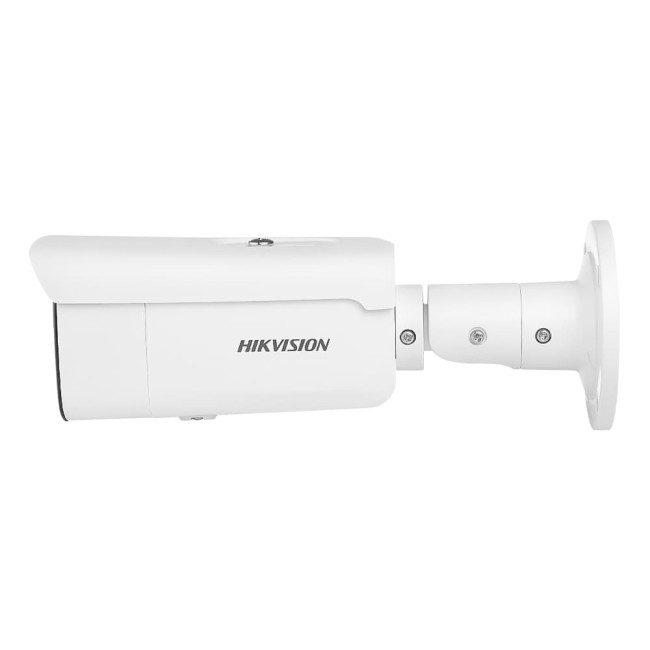
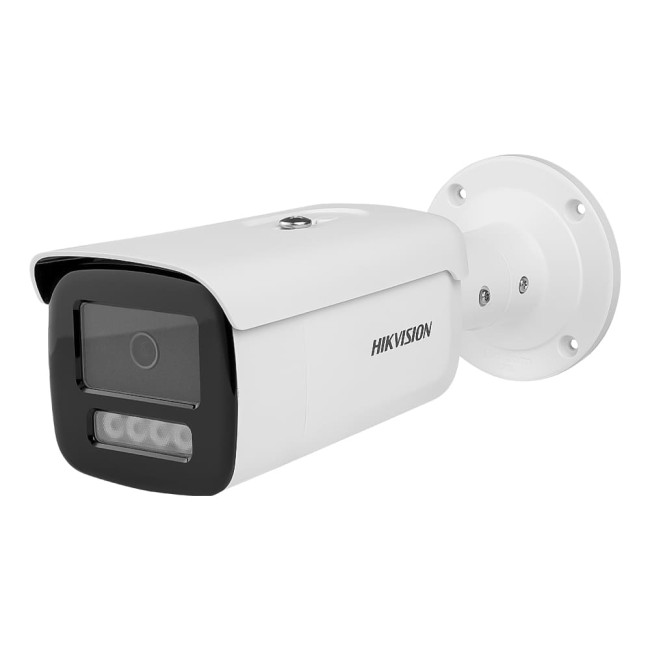
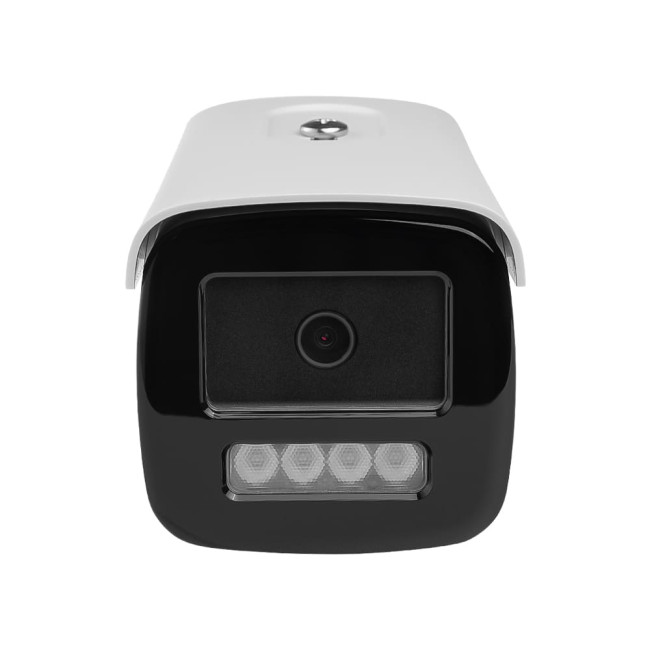
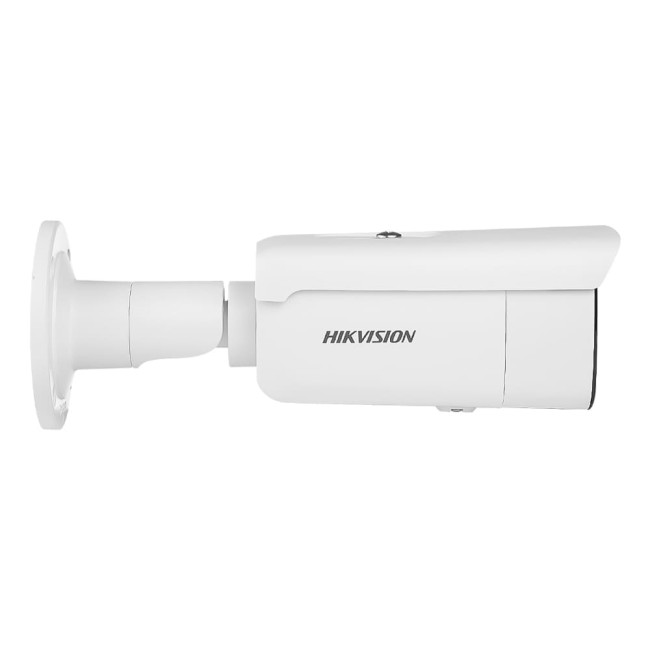
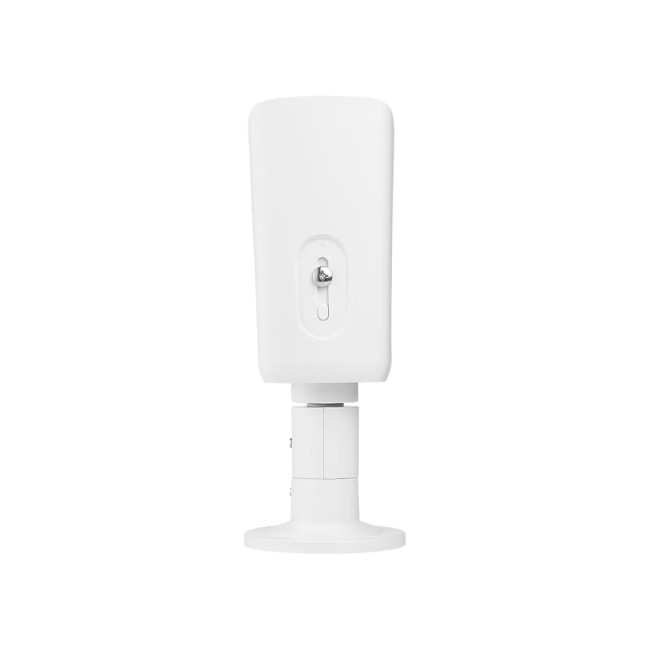
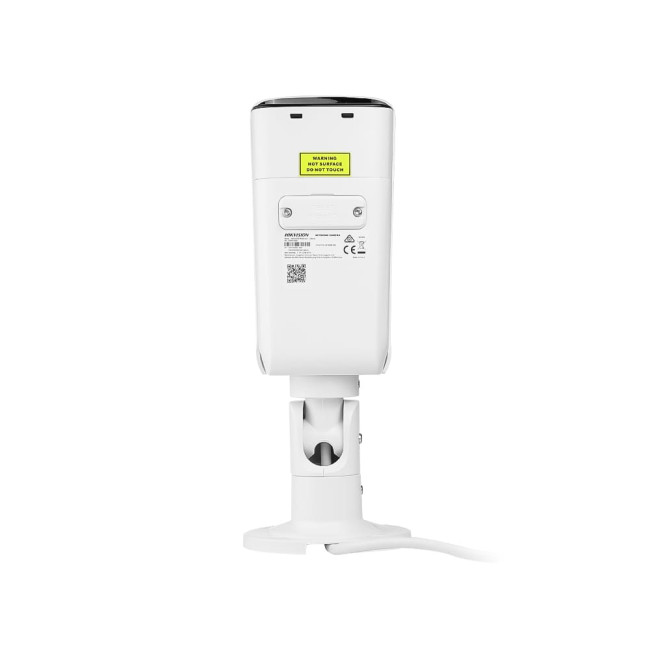
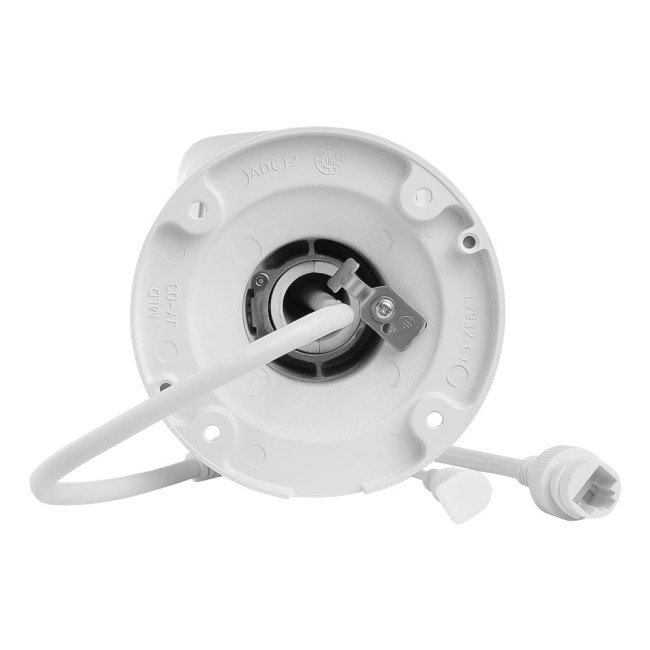


Description Hikvision DS-2CD2T83G2-4LI
Smart Hybrid Light with an 80-metre reach: the longest illumination in this catalogue
The -4LI suffix packs two facts into four characters: the digit 4 marks the longest supplemental light in the family, 80 metres, while LI stands for Smart Hybrid Light, meaning the housing carries both 850 nm infrared LEDs and white LEDs. Hikvision gives you four supplemental lighting modes, and they are a genuine configuration tool rather than a bullet point: keep infrared only and record discreet black-and-white footage, keep the white light permanently on and always record in colour, hand the switching over to the camera, or fire the white light only as a response to an event. The difference matters most when an incident is being reconstructed: a silhouette in a dark jacket adds nothing to a police report, while footage showing a blue jacket and a silver saloon is already a usable description. An 80-metre reach means the camera lights up the whole driveway or the far corner of the plot rather than the first few metres beneath itself, so the night frame does not collapse into a black field with one blown-out patch near the lens. One sober caveat: white light at that intensity is visible to the neighbours too, so if the camera faces someone else's windows, keep infrared as the standing mode and tie the white light to an analytics trigger.
8 MP on a 1/2.8-inch sensor: what you actually see at each distance
The progressive-scan 1/2.8" sensor tops out at 3840 x 2160, roughly four times the pixel count of the common 2 MP cameras, and that headroom is what lets you zoom into a recorded frame instead of guessing from a blur. The official DORI figures for the 2.8 mm version read: detection up to 84 m, observation up to 33 m, recognition up to 16 m and identification up to 8 m, which translates as seeing that someone appeared almost a hundred metres away but being able to identify them only close to the camera. A horizontal field of view of 108 degrees and 127 degrees diagonally covers a typical house plot or a shop forecourt in a single frame with no blind wedges at the edges. Here is the trade-off that rarely makes it into product copy: at full 3840 x 2160 the camera delivers 20 frames per second, and 25 fps becomes available at 3200 x 1800 and below, so for points with moving vehicles it is often smarter to drop the resolution deliberately and gain smoother motion. The second piece of physics: 8 MP on a 1/2.8" chip means smaller photosites than a 4 MP camera on the same sensor size, and in deep dusk without any supplemental light the noise will be more visible, which is precisely why the hybrid illuminator is part of the design rather than an extra.
AcuSense: alerts on people and vehicles instead of on every moving branch
In Hikvision naming the G2 generation is not a revision number but the presence of AcuSense: a neural network running inside the camera classifies the object and separates humans from vehicles. Line crossing and intrusion detection are built on that classification, and even plain motion detection can be restricted to a chosen target type, so wind, tree shadows and cats stop generating alarms. The practical effect is blunt: an owner who used to receive forty notifications a night and switched them off within a week now gets two or three and actually reacts to them. Events can be uploaded to FTP, NAS or the memory card, sent to a surveillance centre or by e-mail, and can trigger recording and snapshots, which means the camera keeps an event archive even with no recorder in the system. The limits are worth knowing up front: this model does not separate animals as their own class, licence plate recognition and people counting are not part of it, and face detection here only registers that a face is present without matching it against a database - plate capture and access scenarios need either a recorder with its own analytics or a different class of camera.
Power: PoE 802.3af Class 3 or 12 VDC, and how to budget a switch for several units
The official datasheet lists two supply options - PoE IEEE 802.3af Class 3 with a 12 W maximum, or 12 VDC through a 5.5 mm coaxial jack with reverse-polarity protection - while the shop specification mentions only the 12 V route, so state clearly when ordering that you intend to run PoE. Twelve watts is noticeably more than the 6-7 W a plain outdoor camera draws, and the reason is simple: white LEDs rated for 80 metres consume power exactly while they are lit. In project terms, four of these cameras peak at around 48 W and eight at around 96 W, so an eight-port switch with a 60-65 W total budget - perfectly adequate for simpler models - is already at its limit here and may drop a port on a cold night with the light engaged. Choose a switch with headroom, from roughly 120 W across eight ports, and keep the 100-metre twisted-pair limit in mind, because distant positions need an intermediate switch or a media converter. The 12 V option stays relevant where a network exists but no PoE switch does: the camera then runs off a local supply, at the cost of a second cable to every position, which makes the installation more expensive and gives it one more thing to fail.
Metal, IP67 and IK10: why this body ends up on facades and poles
The housing is metal, long at 88.7 x 93.1 x 286.7 mm, and weighs about 1160 grams, so this is not a discreet unit for a cornice and plasterboard anchors will not hold it; you need a load-bearing surface or a pole with a proper clamp. IP67 means complete dust protection plus survival of temporary immersion, so wind-driven rain and a pressure washer are not a threat, and on an open facade without an overhang that matters more than it sounds, because water arrives from below and from the side. The second rating, IK10, is usually absent from cheaper spec sheets: it certifies resistance to a 20-joule impact, which is the logical companion to the whole idea of mounting a camera above a driveway where a thrown stone is a realistic scenario. The operating window of -30 to +60 degrees Celsius at up to 95 per cent humidity covers a Ukrainian winter without a heater, and cold start at -30 is stated separately, which is the part that matters after a winter blackout: a camera must not only keep running in frost but come back from zero. Weight and length also shape the choice of position: a camera this size is visible from a distance, which both deters casually and makes it the first target, so plan to mount it above three metres.
Archive: a card up to 512 GB, ANR, and honest storage figures
Inside there is a microSD/SDHC/SDXC slot taking cards up to 512 GB, and that is a working local archive rather than an emergency buffer: with H.265+ continuous 8 MP recording consumes roughly 60-70 GB a day, so a 512 GB card holds about a week continuously and a month or more in event-only mode. The more valuable feature is ANR, Auto Network Replenishment: if the link to the recorder drops, the camera records to its card and then automatically back-fills the missing segment into the main archive once the network returns, which closes the classic hole of "the power was out for two hours and those two hours simply do not exist". NAS over NFS and SMB/CIFS is supported directly, so a small site can be built with no recorder at all: camera, storage, app. For a system with an NVR the arithmetic is straightforward: eight of these cameras recording continuously produce roughly 500-560 GB a day, so thirty days of depth calls for 16-18 TB of disk, and this is usually the point where event-based recording wins over buying bigger drives. Use a high-endurance card: an ordinary consumer microSD rarely survives a year of round-the-clock overwriting, and with Hikvision's own cards the camera can additionally monitor card health and encrypt the data.
Where this camera belongs and what it is built for
This model is a tool for long open perspectives: a driveway running along a fence, the entrance group of a house, a storage yard, a car park, the perimeter of a depot or industrial site - anywhere the night image is needed 40 to 70 metres out rather than directly underneath. On such sites the 80-metre hybrid light and the 8 MP sensor work as a pair: movement registers far away, and closer in the same frame carries enough detail to describe a person and a car. The second strong scenario is a large retail floor or workshop with a 4-6 metre ceiling: 108 degrees covers the space and the resolution headroom lets you extract a usable crop after an incident. What it should not be asked to do is cover a narrow passage - a gate, a shop door, a stairwell entrance - because the wide 2.8 mm lens spreads a face across too few pixels, and a dome model or the same family with a 4 or 6 mm lens is the right answer there. It is equally out of place in a flat or a small office: a 30-centimetre body with an 80-metre floodlight indoors looks absurd and washes the frame out with light bouncing off the walls.
How it differs from the neighbouring Hikvision models in this catalogue
Its closest relative here is the DS-2CD2T43G2-4LI: identical body, the same 80-metre hybrid light and the same AcuSense, but 4 MP instead of 8; if the camera watches a 20-30 metre driveway and you only need to describe a person and a vehicle, the junior model covers it and gives smoother 25 fps at full resolution. The DS-2CD2083G2-LI is also 8 MP with AcuSense, but it is a more compact cylinder with a 40-metre light and lower consumption - a sensible pick for a yard or facade where the far perspective is irrelevant and paying for 80 metres of light buys nothing. The DS-2CD2T47G3-LIY ColorVu works on a different principle: its very fast optics record in colour permanently instead of firing white light on an event, which often wins on an approach road with city light spill, at the price of lower resolution (4 MP) and a shorter 60-metre reach. If the task is different again - an entrance, a till, a corridor - look at the dome DS-2CD2343G2-LI2U or DS-2CD2143G2-LIS2U from this same catalogue: compact, vandal-resistant and equipped with audio. One last thing to settle before ordering: in this family a built-in microphone exists only in the /2U versions, so if sound matters, confirm the exact variant - the plain -4LI records video only.
If you are unsure whether 8 MP and 80 metres of light are what your site actually needs, send us the plot dimensions, the distances to the points you care about and the type of cable already installed, and we will pick the focal length and size the PoE budget with you.
Characteristics Hikvision DS-2CD2T83G2-4LI
Reviews about Hikvision DS-2CD2T83G2-4LI from real users
No reviews found







