
 m. Сміла, Незалежності, 67г. оф, 406/6























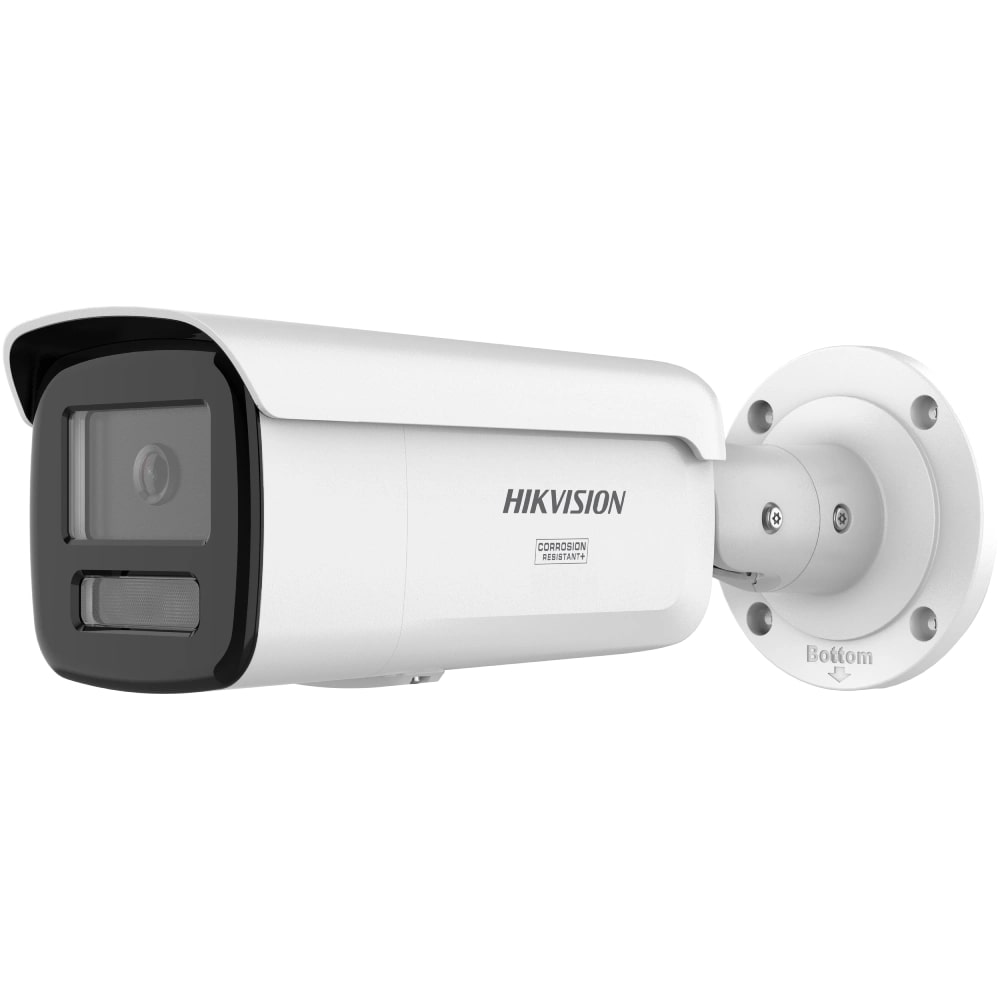
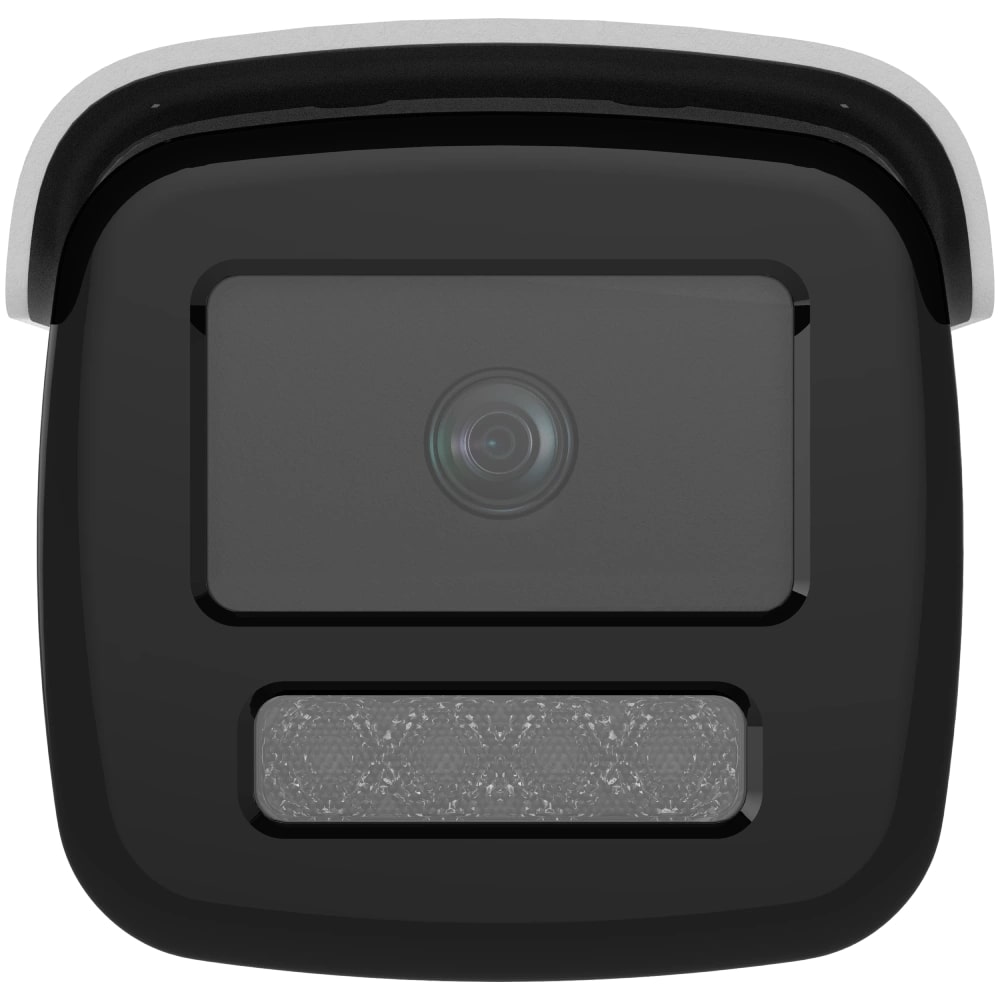
HIKVISION DS-2CD2T47G3-LIY ColorVu (4 MP/2.8 MM) - PoE IP CAMERA



Description Hikvision DS-2CD2T47G3-LIY ColorVu
A 1/1.8″ sensor and an F1.0 aperture: at night pixel size beats resolution
This model is built on the opposite principle to the megapixel race: its 4 MP (2688×1520) sit on a large 1/1.8″ sensor, so every pixel is physically bigger and gathers more light than a pixel on an 8 MP camera with a 1/2.8″ chip. The second ingredient is a fast lens with an F1.0 aperture, which passes roughly two and a half times more light than the common F1.6. Together they produce a rated minimum illumination of 0.0001 lux in colour and 0 lux with the white light on: in practice the camera still delivers colour where an ordinary model has already switched to monochrome IR — on a street with a single distant lamp, say, or in a yard lit only by the windows of the house. That is exactly what the ColorVu label means, and that is what the premium buys: not the 4 MP, but the fact that at two in the morning you can see the colour of a jacket and the colour of a car instead of a grey silhouette. The trade-off is honest and obvious: in daylight this camera loses on fine detail to 8 MP models of the same class, so if enlarging fragments of daytime footage is the main job, the choice should go their way.
Smart Hybrid Light to 60 metres: three modes and when to use each
The camera carries both infrared and white LEDs with an effective reach of 60 metres, and they can be driven in three supplemental lighting modes: IR only, white light only, or the hybrid scheme in which IR runs continuously and white light fires on a recognised object. For a private yard the third option is usually the right one: nothing glows at night to draw attention, but the moment analytics sees a person or a vehicle the area floods with white light and the recording turns full colour. Permanent white light makes sense at a warehouse entrance or a loading bay, where the illumination serves not only the camera but also the people working there. Sixty metres is noticeably more than the 30 metres typical of the budget segment, and that changes the installation layout itself: one such camera covers a driveway or a long fence line where an ordinary unit would need two. The limitation is worth knowing too: white light at 60 metres cannot be aimed strictly at your own property, so if the camera faces a neighbour's window or the public road, it is better to leave it in IR mode and accept monochrome footage.
4 MP, a 111° angle and 25 fps: what actually fits in the frame
The fixed 2.8 mm lens gives 111° horizontally — a wide view, enough to watch the pedestrian gate, the vehicle gate and most of the courtyard from one position without blind corners at the edges. The camera delivers 2688×1520 at 25 frames per second with no drop in resolution, so fast movement — someone running, or a car crossing the yard — does not break into visible steps when you step through the footage. Digital zoom lets you enlarge a fragment of an already recorded frame, but the limit must be understood: 4 MP spread over 111° give roughly half the pixel density per metre of 8 MP at the same angle, so a detail the 8 MP unit would still resolve turns to mush here. The same geometry rules out plate reading at a distant gate: wide optics physically cannot put enough pixels on a plate at 20-25 metres, and no setting changes that. If plates matter, the model also exists in a 4 mm version — a narrower angle, higher pixel density in the centre of the frame and a considerably longer confident-recognition distance from the same sensor.
AcuSense: alerts for people and vehicles only
Object classification runs inside the camera on a deep-learning engine, so the split into person, vehicle and everything else happens before an event ever becomes a notification in the app. Configurable rules — line crossing, intrusion, region entrance and region exit — can be tied to the target types you actually care about rather than to any pixel change, and that is what saves your nights: a downpour, a branch in the wind and headlights from the road stop being events. Alerts arrive by push and e-mail, and their value depends directly on this filtering — a camera that pings thirty times a night stops being a security device in its second week, because the owner mutes it. There is no separate animal classification here, so your own dog or the neighbours' cat will register as plain motion; in a yard with a pet the right answer is to draw the detection line along the fence instead of across the whole plot. Analytics and ColorVu work as a pair: it is the object classification that triggers the white light, meaning the camera lights up the scene for a person or a car rather than for every stir of grass.
Integration: ONVIF Profile S, T and G, ISAPI, SDK and Home Assistant
Unlike many cameras in this class, this one supports not only ONVIF Profile S (streaming) but Profile T and Profile G as well — which means the full H.265 stream and the analytics events are handed over to a third-party NVR or VMS instead of staying inside the vendor's own app. Practically, you can attach it to a Dahua or Reolink recorder, or to any server-based VMS, and keep human and vehicle detection as a recording trigger — a rare property that makes this model a safe choice for a mixed system. ISAPI, SDK and ISUP are available for deeper integration, and the confirmed Home Assistant support is enough to bind a camera event to a smart-home scene — switching on the porch light or messaging a specific member of the household. The archive can live locally on a microSD card of up to 512 GB, which insures the recording against a network break or a recorder shutdown, and the system can be managed from Windows, macOS, iOS and Android. One caveat for anyone already inside the Hikvision ecosystem: these same functions are more convenient to configure through a native recorder, and when the camera runs over ONVIF part of the service settings remain reachable only from its own web interface.
12.5 W of power, a 1.2 kg body and what that means for mounting
A draw of 12.5 W at roughly 1 A is the highest of any Hikvision camera in this catalogue, and it is the direct consequence of that 60-metre illuminator. The figure deserves attention at the design stage: the 802.3af PoE standard delivers about 13 W to the device, so the camera runs close to the edge of the specification, and on a long run of cheap CCA cable with real losses it may reboot at the moment the white light comes on. For a system of four such cameras plan a PoE switch with a total budget of at least 60-65 W and proper copper cable — this is the case where saving on cable creates a fault people then hunt for weeks. The housing is metal, rated IP67, and runs from -30 to +60 °C, but it is large: 286.7 mm long and 1200 g, so the bracket has to be rigid and brittle siding or thin external insulation is a poor base for it. A side effect of the size is visibility from a distance: a plus for deterrence, a minus for discreet observation, and in the latter case a compact dome model is the more logical pick.
Where this camera belongs and the jobs it does best
This is a camera for situations where the important things happen in the dark: the driveway of a house, a long fence line, an office car park, a warehouse entrance or a yard with no proper lighting where colour is exactly what you need at night. The typical arrangement is along a driveway: 60 metres of illumination and a 111° angle give both distant coverage and a wide near view, while a person event triggers the white light, which simultaneously lights the frame and tells an uninvited visitor that he has been seen. On a small warehouse or in a workshop the model covers a loading area well, where people and machinery work side by side at night and colour helps tell your own staff from strangers. Where it is surplus: indoors under constant lighting, in a stairwell or on a porch, where a 60-metre illuminator hits the wall, washes out the frame and ruins the very thing you bought the camera for; dome models with illumination up to 30 metres are the choice there. Nor should it be the only camera on a site that needs daytime recognition of small detail — document data, article numbers on boxes, plates: 4 MP across a wide angle is fundamentally not enough for that.
How it differs from the neighbouring models in this catalogue
Its direct rival here is the DS-2CD2083G2-LI: 8 MP with the same AcuSense, but a 1/2.8″ sensor, an F1.6 aperture and 40 metres of illumination; it wins in daylight on detail and on consumption (7.5 W against 12.5), while our model wins at night and at distance, so the choice between them reduces to a simple question — when do events happen on your site. The DS-2CD2T43G2-4LI is also a 4 MP bullet, with an even longer 80-metre illuminator, but it belongs to the earlier G2 generation without ColorVu optics: the IR beam reaches further, yet the night frame stays monochrome — take it if maximum range matters and colour does not. The DS-2CD1047G3H-LIUF from the same catalogue is the junior Value line: the same 4 MP resolution and hybrid lighting, but a 30-metre reach, a lighter body and a thinner set of service features — a markedly more affordable alternative for a yard whose furthest point is under twenty metres. And if the camera is to look down at an entrance rather than along a perimeter, the dome DS-2CD2343G2-LI2U is the more sensible catalogue pick: less conspicuous, tougher by shape and designed for short distances.
If you are torn between this model and an 8 MP one, tell us when events tend to happen on your site and how far the furthest point you need to see is — we will recommend a specific configuration.
Characteristics Hikvision DS-2CD2T47G3-LIY ColorVu
Reviews about Hikvision DS-2CD2T47G3-LIY ColorVu from real users
No reviews found







