
 m. Сміла, Незалежності, 67г. оф, 406/6























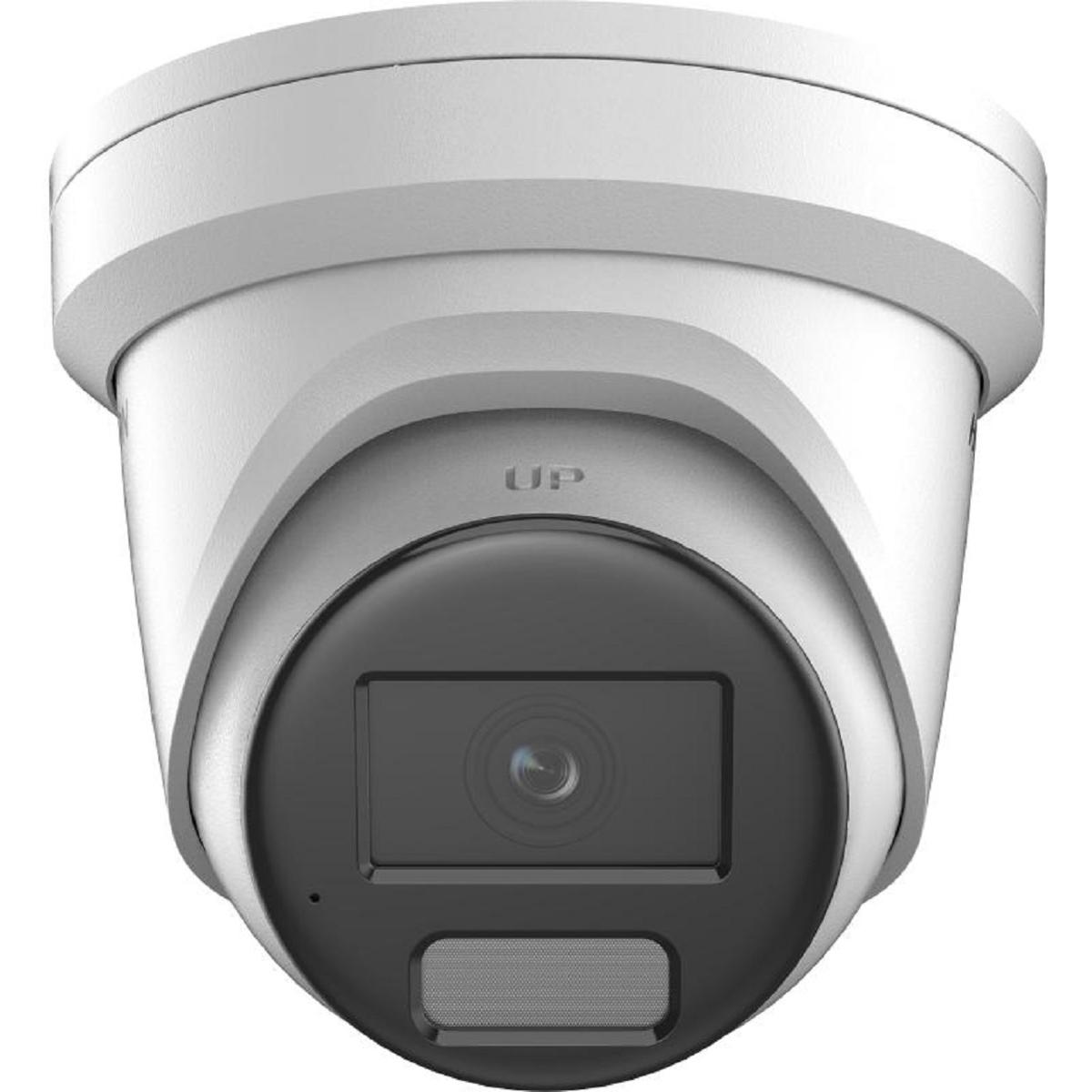
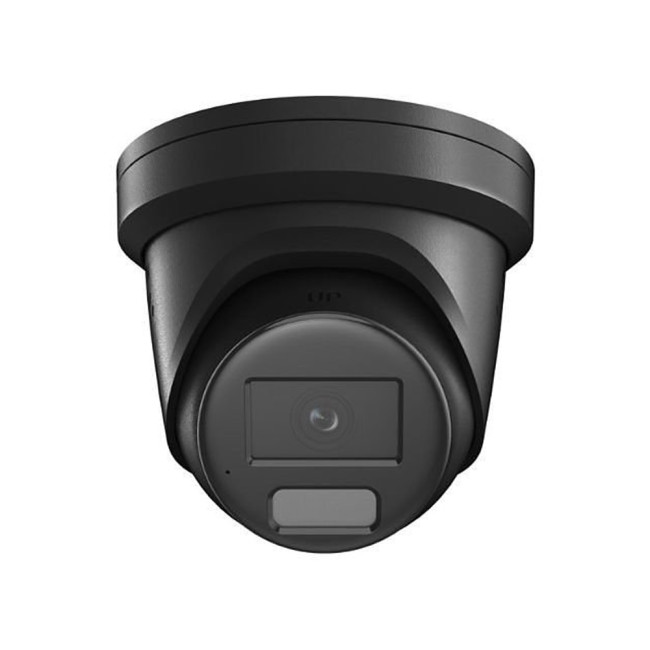
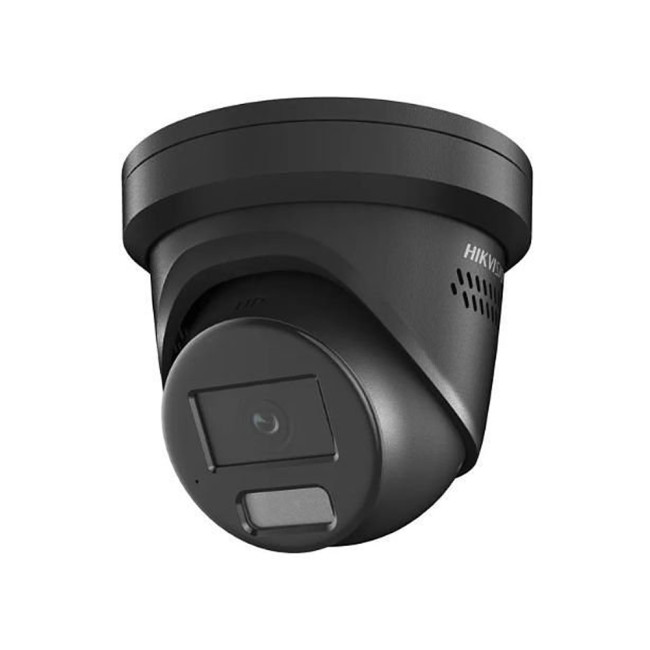
HIKVISION DS-2CD2347G2H-LIU (4 MP/2.8 MM) - DOME PoE IP CAMERA



Description Hikvision DS-2CD2347G2H-LIU
ColorVu and a 1/1.8-inch sensor: colour at night without a floodlight
What separates this model from an ordinary outdoor camera is the fast F1.0 lens paired with a large 1/1.8-inch sensor, and that pairing is what Hikvision markets as ColorVu. A rated sensitivity of 0.0005 lx means in practice that a street lamp twenty metres away, or a lamp above the porch, is already enough light for a full-colour picture with no extra illumination at all. You see the difference on the very first night recording: where a conventional camera drops into black and white and captures a grey silhouette, this one shows the colour of the jacket, the body type and colour of the car, the bag in someone's hand. The big sensor pays off in daylight too, because a physically larger pixel collects more light, so these 4 MP are visibly cleaner than the same 4 MP on a 1/3-inch sensor from the budget lines, especially at dusk and in rain. The honest limit is worth knowing up front: ColorVu does not create colour out of total darkness, and in a yard with no light source at all the camera will still switch to infrared or turn on its own white LEDs.
Smart Hybrid Light: three illumination modes and why you should choose between them
The letter H in the G2H index stands for the hybrid illuminator: the camera carries both 850 nm infrared LEDs and white LEDs, each rated up to 40 metres. There are three modes and the choice should be deliberate rather than left at the factory setting. Classic infrared gives light invisible to the eye and a monochrome frame, permanent white light gives round-the-clock colour at the cost of lighting the yard like a street lamp, and the smart mode keeps infrared on standby and fires the white LEDs only when the analytics has actually recognised a person or a vehicle. That third mode is the sensible default on roughly nine out of ten private properties: the yard stays dark at night, the neighbours do not complain about glare through their window, yet the moment somebody steps into frame the white light comes on and the recording turns colour. The side effect often turns out to be the main one, because sudden light tells an intruder plainly that he has been seen, and a fair share of attempts to climb onto a property end right there. If the camera looks along a wall with bedroom windows, leave permanent white light switched off entirely, since that is the case where the technology works against the owner.
AcuSense: named rules instead of a generic motion alert
This is a Pro-series body with the G2 index, which means full AcuSense on board: neural-network analytics that classifies the object in frame as a person or a vehicle before the event ever becomes a notification. You get more than a detection filter here, you get real rules such as line crossing, region entrance, region exit and intrusion into an area. In practice that turns "motion in frame" into "a person crossed the fence line from the street side", so a branch swaying in the wind, a cloud shadow or a cat on the path stop raising alarms. The gap against a camera with no AI is not cosmetic: there, every change of pixels produces a notification, within a week there are hundreds of them, the owner turns push off, and the system stops being security and becomes an archive you only look at after the fact. To get the rated behaviour, mount the camera at roughly 2.5 to 4 metres and aim it along the direction of travel rather than straight down, because from a five-metre shop ceiling a person becomes a blob and the classifier starts making mistakes.
130 dB WDR: when there is bright light behind the person
Wide dynamic range of 130 dB is the spec that usually gets a formal mention in descriptions, while on a real site it is often the one that decides whether the camera is useful at all. The classic situation is a camera facing the entrance gate with a sunlit field or an open gateway behind the visitor: a sensor without WDR gives you either a blown-out white background with a black silhouette, or a correct background and a completely dark face. WDR assembles the frame from several exposures and pulls both zones up at once, so the licence plate in the sun and the face in the shade under the canopy are readable in the same image. The second typical scene is an indoor camera aimed at the door, because in daytime the doorway behind a visitor works like a spotlight and without WDR nobody in that picture can be identified. For a shop floor, a stairwell or any camera pointed at a door or a gate, this matters more than one extra megapixel of resolution.
Power, housing and storage: what to budget for
The camera runs either from PoE 802.3af or from a separate 12 V supply and draws around 6 W, a modest appetite that lets even an inexpensive eight-port PoE switch with a 60 W budget carry eight of these without strain. The housing is metal, Ø138 by 115 mm and about 770 grams, so it needs a proper bracket rather than a plastic tab, and on thin siding the mounting point is worth reinforcing. IP67 protection and a -30 to +60 °C operating range are meant for year-round outdoor duty, including the January frost in which cheap cameras simply fail to boot after a power cut. The microSD slot takes cards up to 512 GB, which is a standalone archive for the moment the link to the recorder drops, not a replacement for the recorder, because flash wears out and eventually fails. Video goes out over ONVIF profiles S, T and G, ISAPI and RTSP, so it registers in Hikvision recorders, third-party VMS platforms and Home Assistant alike, although not every AcuSense rule will carry across into a foreign system.
Where this camera belongs and what it is built for
The 2.8 mm lens gives roughly 111 degrees horizontally, which is a general-view frame that comfortably holds the yard of a detached house, an entrance group with gate and wicket, a small car park or a shop floor ten to twelve metres wide. The turret shape, a ball seated in the base, lets you aim precisely after mounting and leaves an intruder almost no way to twist it aside by hand, unlike bullet models on a long arm. Its strongest single scenario is the driveway and porch of a private house with weak street lighting, where ColorVu delivers a colour record and the smart white light doubles as a deterrent. What this optic will not do is read number plates from 25 metres, because a wide angle smears fine detail with distance and plates need a separate narrower lens aimed along the drive. It is also the wrong choice for a long narrow warehouse aisle, where most of those 111 degrees stare at the walls and the useful range is wasted.
How it compares with the neighbouring Hikvision models in this catalogue
Its closest relative in behaviour is the DS-2CD1327G2H-LIUF from this same catalogue: it also has fast optics and a hybrid illuminator, but a 2 MP sensor instead of 4 MP, 30 metres of light instead of 40, and a Value-series body, which means human and vehicle filtering is there while proper line and zone rules are not. If you simply want fewer false alerts on a small plot, the junior model covers it; if you specifically need zones, lines and colour footage you can zoom into, the step up to this one is justified. The DS-2CD2343G2-LI2U is a Pro-series neighbour with the same AcuSense and the same 4 MP, but without the large 1/1.8-inch sensor and without hybrid light of this reach, so it is exactly at night that it falls behind in a dark yard. The DS-2CD2T47G3-LIY in a bullet housing carries a 60-metre illuminator and suits a long perimeter or a driveway better than a compact yard. Conversely, if your site is well lit around the clock and all you need is the fact of a recording, the DS-2CD1321G0-I from this catalogue does that far more cheaply, with no analytics at all and in black and white after dark.
If you are not sure how many cameras and which lenses your site actually needs, send us the perimeter length, the number of entrances and whether a recorder is already installed, and we will draw up a layout showing what each camera will see.
Characteristics Hikvision DS-2CD2347G2H-LIU
Reviews about Hikvision DS-2CD2347G2H-LIU from real users
No reviews found







