
 m. Сміла, Незалежності, 67г. оф, 406/6























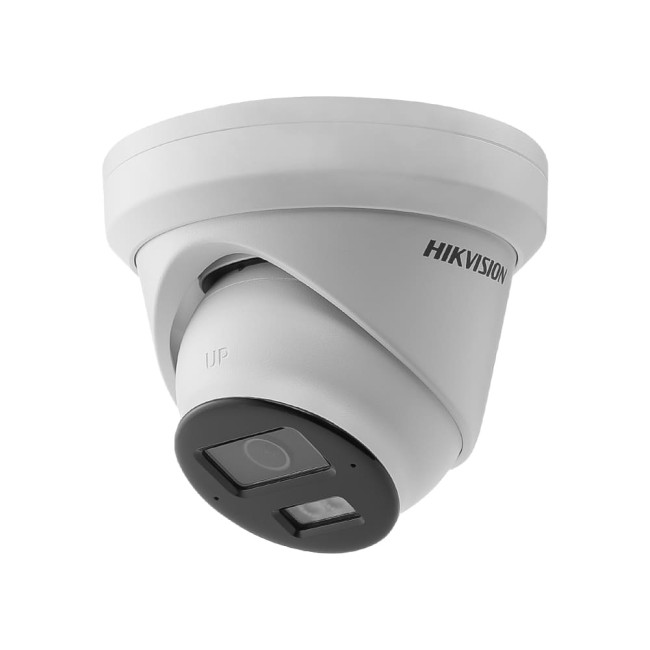
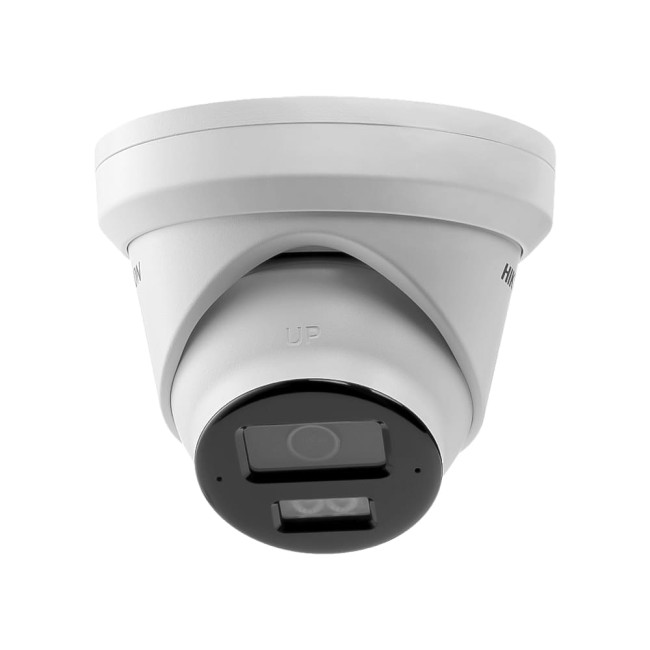
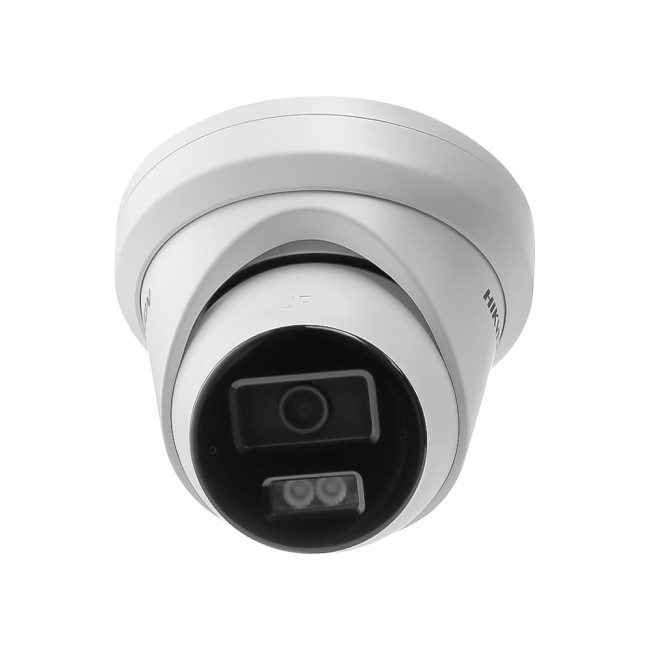
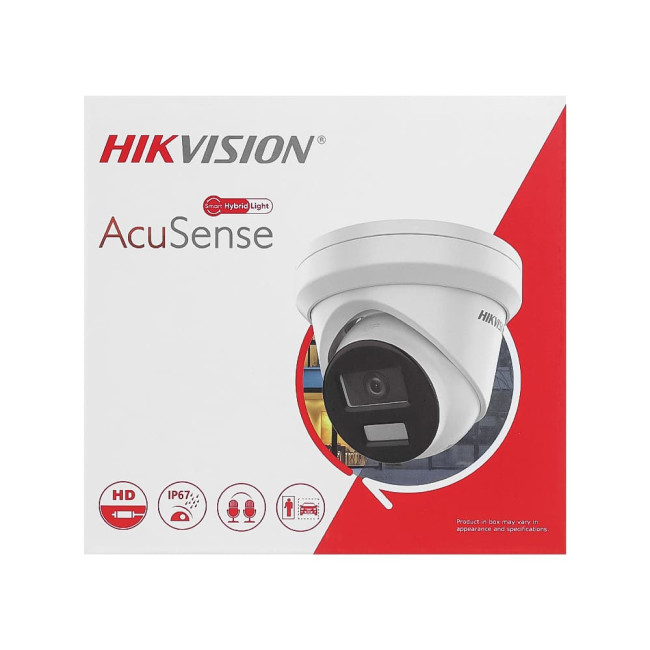
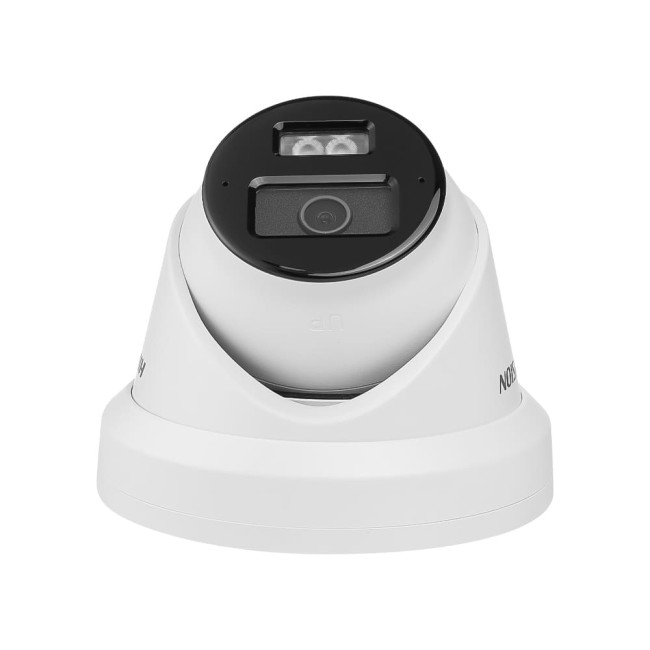
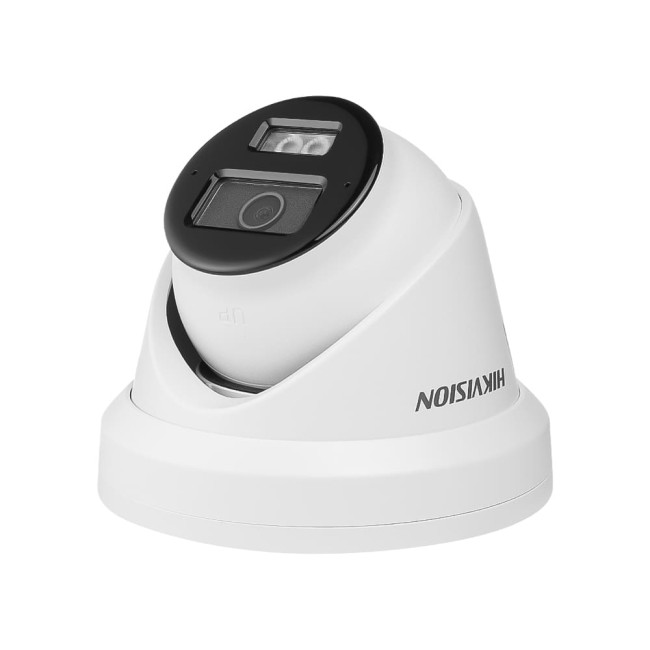
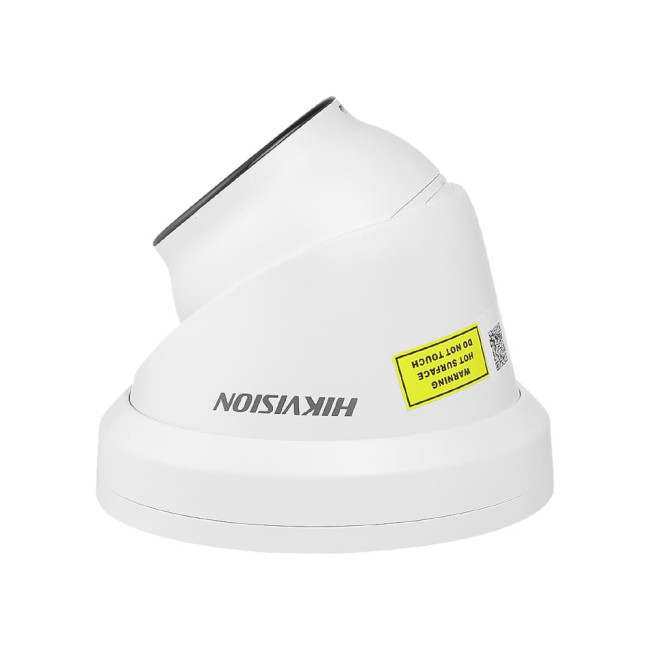
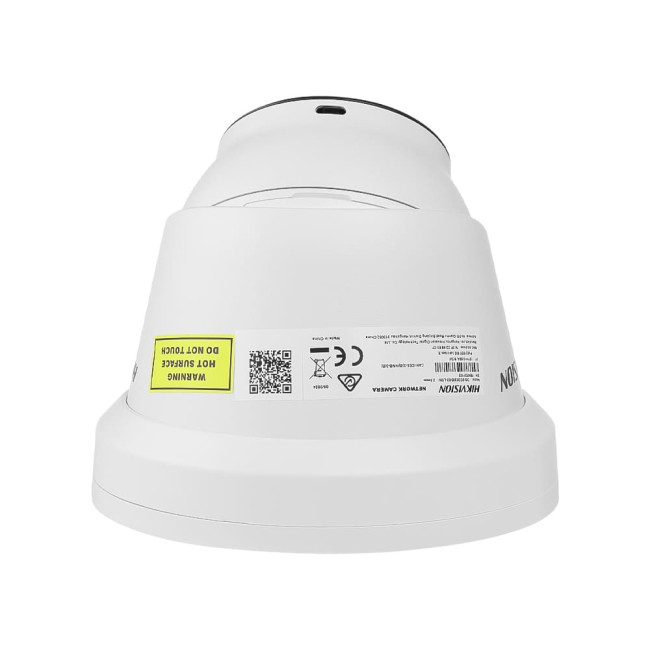
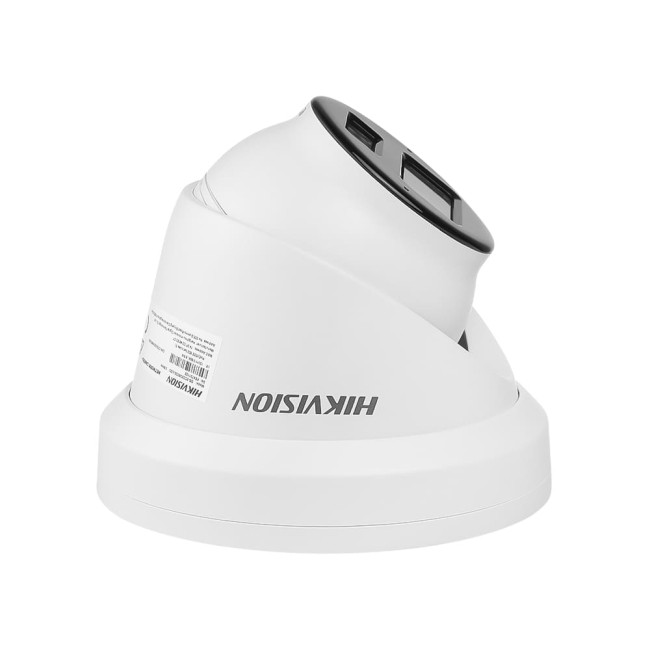
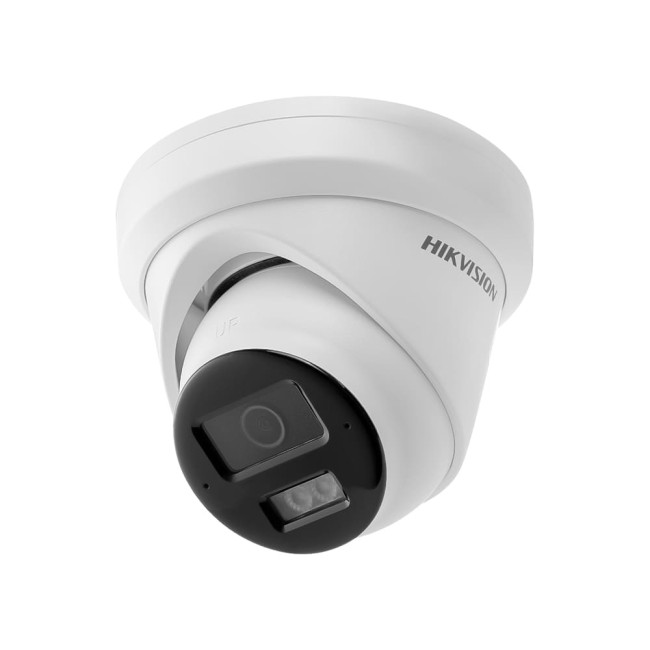
HIKVISION DS-2CD2343G2-LI2U (4 MP/2.8 MM) - DOME PoE IP CAMERA

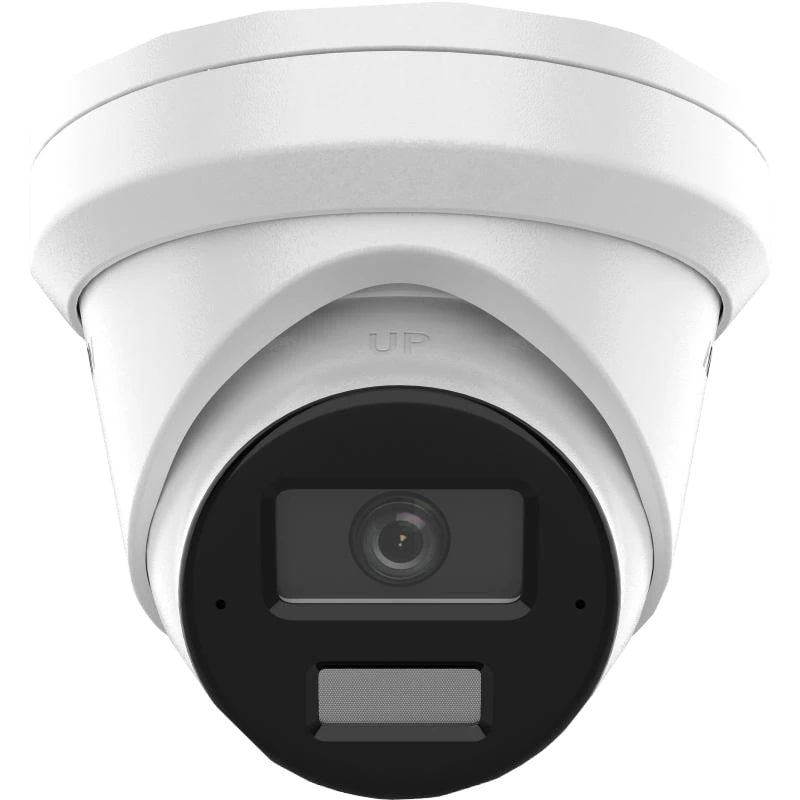
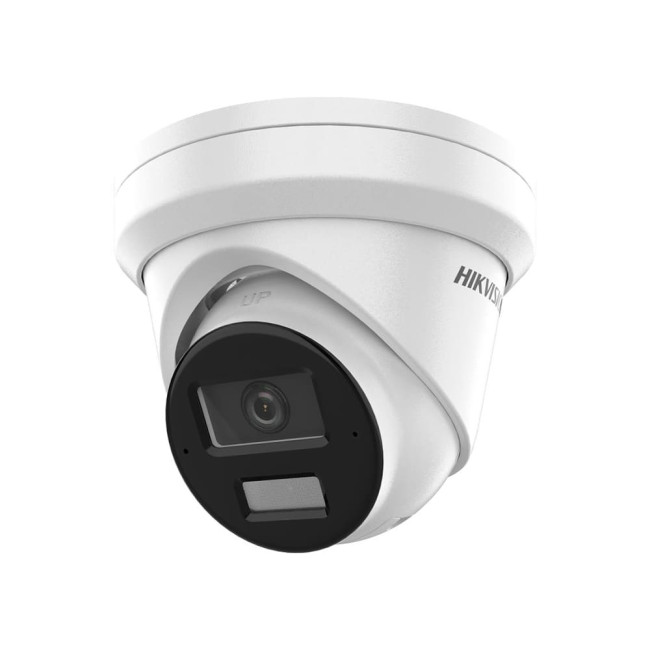
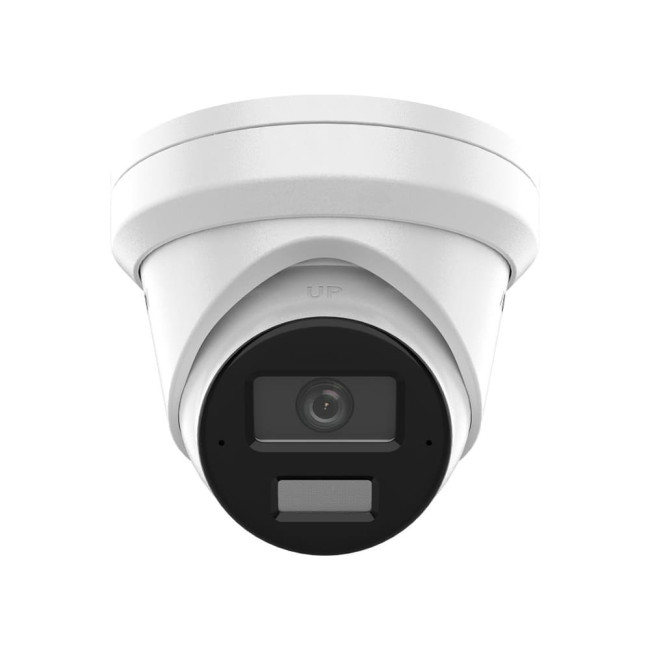
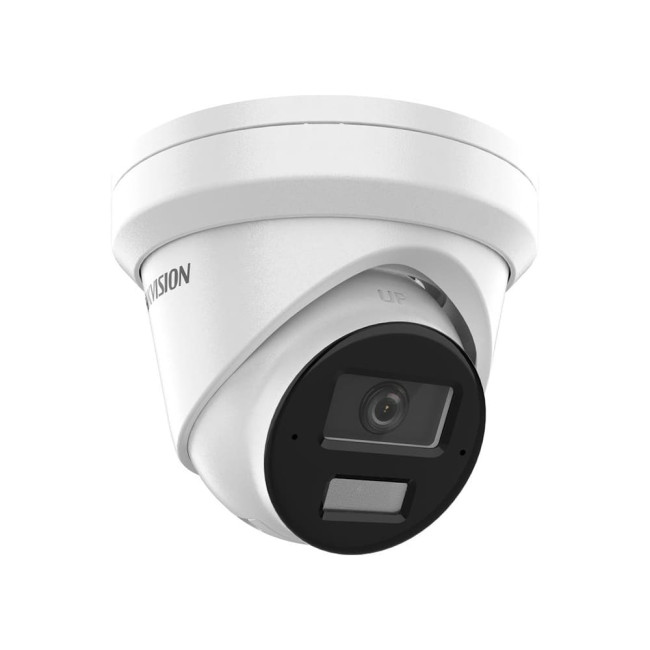


Description Hikvision DS-2CD2343G2-LI2U
Where this camera belongs and the jobs it actually closes
The turret body with a 104-degree field of view and a fixed 2.8 mm lens covers a private yard, a driveway gate, a small shop floor, a till area or an entrance lobby in a single frame, which means it suits places where everything important happens within roughly 20-25 metres of the mount. Hikvision publishes DORI figures for this focal length: a person is detected up to 63 m, observed up to 25 m, recognised as a familiar figure up to 12 m, and reliably identified by face only up to 6 m. The practical consequence is worth planning around: pull the actual passage point (the gate, the shop door, the stairwell entrance) into the first six or seven metres, and the recording will give you a face that is worth attaching to a police report. Indoors the model behaves well under a 3-4 metre ceiling, because the turret base rotates through 360 degrees and the tilt covers 75 degrees, so you aim the frame precisely without moving the bracket. Two things it should not be asked to do: guard a 50-80 metre perimeter, where DS-2CD2T83G2-4LI or DS-2CD2T43G2-4LI with their 80-metre illuminators belong instead, and read number plates, because licence plate recognition simply is not part of this model.
Smart Hybrid Light: 30 metres of IR plus white light in four working modes
The LI suffix stands for Smart Hybrid Light, so the housing carries both 850 nm infrared LEDs and white light LEDs, with a stated supplementary range of up to 30 metres. Four modes are available and they are a genuine configuration tool rather than a bullet point: keep infrared only and record discreet black-and-white footage, keep white light permanently on and always get colour, hand the switching to the camera, or fire the white light as a reaction once the analytics sees a person. Sensitivity is quoted as 0.005 lux at F1.6 and zero lux with the illuminator on, so in complete darkness you get an image either way; the only question is whether it is monochrome or colour. That distinction matters at exactly the moment the footage is needed for an investigation, because a silhouette in dark clothing describes nobody, while a frame showing a red jacket and a grey estate car is evidence. One honest caveat: 30 metres is light for a yard and a walkway rather than for a distant scene, and bright white light on a narrow street annoys the neighbours, so in such a spot it is wiser to leave infrared running permanently and tie the white light to a person entering the zone.
Sensor, lens and the near focus limit: what lands in frame and what stays a blur
Inside sits a 1/3-inch progressive scan sensor with a maximum resolution of 2688 by 1520, and the full 25 frames per second are available at that maximum rather than only at a reduced setting. The camera serves three streams at once: a main H.265+ stream up to 8 Mbps, a sub-stream for the phone app and a third 10 fps stream for a monitoring wall, so watching from a mobile does not eat into the recording channel. An F1.6 aperture with a depth of field running from 1.4 metres to infinity carries a mounting consequence that rarely gets mentioned: anyone walking right up against the lens will be out of focus, so hang the camera so that the working area starts at least a metre and a half away. The 104-degree horizontal and 122-degree diagonal coverage gives a genuinely wide general view with no dead wedges at the edges, and the usual price applies, because the wider the angle the fewer pixels land on each metre of the scene. If the task is narrower, say watching only the path to the door or the checkout, the same model exists with a 4 mm lens, where the angle tightens to 84 degrees and DORI stretches to 78/31/15/7 metres; there is no optical zoom in any version, only digital magnification.
AcuSense and 120 dB WDR: alerts about people, and a readable frame against the sun
In Hikvision naming, the G2 generation is not a revision number but the presence of AcuSense, a neural network running inside the camera that classifies the object and separates a human from a vehicle. Line crossing and intrusion detection are built on that classification, and even plain motion detection can be told to trigger only on a chosen target type, which stops wind, branch shadows and cats from producing alarms. The effect shows up on the first night: an owner who used to receive forty notifications and switched them off within a week now receives two or three and actually reacts, which is the difference between a camera and a security system. Events can be pushed to FTP, a NAS or the memory card, sent to a surveillance centre, mailed out, and linked to recording and snapshot capture. The limits deserve equal honesty: animals are not a separate class here, there is no people counting and no plate recognition, and face detection only registers that a face is present without matching it against any database; what you do get is true 120 dB WDR together with HLC, BLC and 3D DNR, which solves the classic entrance problem of a glass door facing the sun where an ordinary camera returns a black blob instead of a visitor.
A dual microphone array: what audio adds and what this body lacks
The 2U index in the name refers specifically to the audio section: the housing contains an array of two microphones with ambient noise filtering, support for G.711, G.722.1, G.726, MP3 and AAC-LC, and sampling rates up to 48 kHz. In practice sound supplies what the picture cannot show, such as a conversation at the counter, breaking glass, a shout in the yard or the words of whoever is knocking at the gate, and very often it is the audio track that explains what the video merely implies. A two-microphone array differs from a single capsule in holding speech intelligible against street noise, which is a visible advantage in a shop or at a reception desk. Now the boundaries you should know before installation: the interface list for this model contains only one Ethernet port, a memory card slot and a reset key, which means there is no line out, no alarm input and no relay output. So there is no two-way talk and no siren triggered from the camera, and if you need either, the catalogue also carries DS-2CD2143G2-LIS2U, where the S stands for exactly those audio and alarm interfaces; one more point is legal rather than technical, because recording sound in a public space has its own rules, so a shop should display a notice about video and audio surveillance.
Housing, power and how to size the switch for several cameras
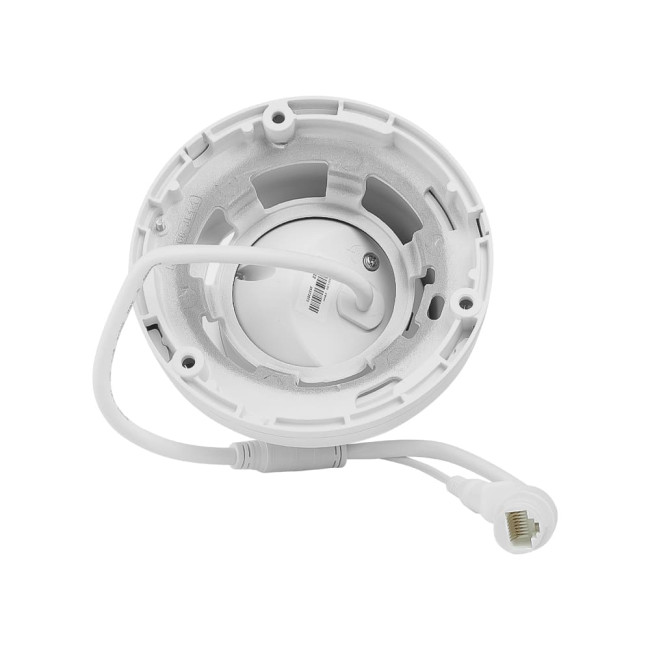
The housing is metal, 127.3 mm across and 96.3 mm tall, weighing about 515 grams, which makes it a compact camera suited to a wall under an eave or to an indoor ceiling, though a plasterboard plug will not hold it and a load-bearing base is required. IP67 means full dust protection and resistance to brief immersion, so wind-driven rain and a hose jet are not a threat, while the -30 to +60 degree range at up to 95 percent humidity covers a Ukrainian winter without a heater, and cold start at -30 is specified separately, which matters after a winter power cut. One line in the documentation deserves attention: under Hikvision's anti-corrosion classification this model sits at the no specific protection level, so a seafront, a dock or a yard next to a chemical plant calls for a camera with reinforced coating instead. Power comes two ways, either PoE to IEEE 802.3af class 3 with a 9 W maximum, or 12 V DC through a 5.5 mm coaxial plug with reverse polarity protection, drawing 0.58 A for up to 7 W. Translated into a project, eight of these cameras peak at roughly 72 W, so an eight-port switch with a 60-65 W budget runs at its limit and may drop a port on a frosty night; allow from 120 W across eight ports and remember the 100 metre limit per twisted pair segment.
Storage: a 512 GB card, ANR and honest disk arithmetic
The camera takes a microSD, SDHC or SDXC card of up to 512 GB, and that is a full local archive rather than an emergency buffer, because continuous 4 MP recording in H.265+ consumes roughly 25-30 GB per day, so a 512 GB card holds about two and a half weeks of round-the-clock footage and over a month of event-based recording. ANR is even more valuable: if the link to the recorder drops, the camera keeps writing to its card and, once the network returns, automatically backfills the missing segment into the main archive, which closes the familiar hole of two hours missing because the power was out. Network storage over NFS and SMB/CIFS is supported as well, so a small site can be built with no recorder at all, using the camera, a NAS in the cabinet and an app. If there is a recorder, the arithmetic is simple: eight such cameras recording continuously produce around 200-240 GB per day, so thirty days of depth means roughly 6-7 TB of disk, and this is usually the point where event-based recording wins over bigger drives. Buy a high endurance card, because a consumer microSD rarely survives a year of continuous overwriting, while Hikvision cards additionally let the camera monitor their health and encrypt the data.
How it differs from the neighbouring Hikvision models in this catalogue
Its closest relative here is DS-2CD2143G2-LIS2U: the same Pro series, the same 4 MP, the same 30-metre hybrid light and the same microphone array, but the S adds audio and alarm interfaces, so if you need a siren, a button or talk-back, that is the model to order rather than this one. If the budget is tight and the job is simply to have a picture with human and vehicle classification, look at the Value series DS-2CD1143G2-LIUF, which offers the same hybrid light and the same person and vehicle detection; true 120 dB WDR and the dual microphone array belong to the 2000 series, so for a sunlit entrance or a shop floor with audio the step up to Pro earns its keep. Cheaper still are DS-2CD1341G0-I and DS-2CD1141G0-I, which are G0 generation with no AI at all: they record the same 4 MP picture but react to any movement, so they make sense only where footage goes into a recorder as insurance and nobody reads the notifications. From this same batch it is worth comparing DS-2CD2063G2-LI, a bullet with 6 MP and a 40-metre illuminator that sees further and leaves more headroom for digital zoom, although the base version without the 2U index does not list a microphone and the long body looks bulky indoors. And if the lighting at your point is awkward, say a driveway with headlights, compare it with DS-2CD2347G2H-LIU, which combines a 40-metre illuminator with the faster H-series optics, even though its audio path is simpler than this dual array.
If you are unsure whether your spot needs 2.8 mm or 4 mm, send us the distance from the mounting point to the gate or door and the mounting height, and we will work out what will actually be in the frame.
Characteristics Hikvision DS-2CD2343G2-LI2U
Reviews about Hikvision DS-2CD2343G2-LI2U from real users
No reviews found







