
 m. Сміла, Незалежності, 67г. оф, 406/6























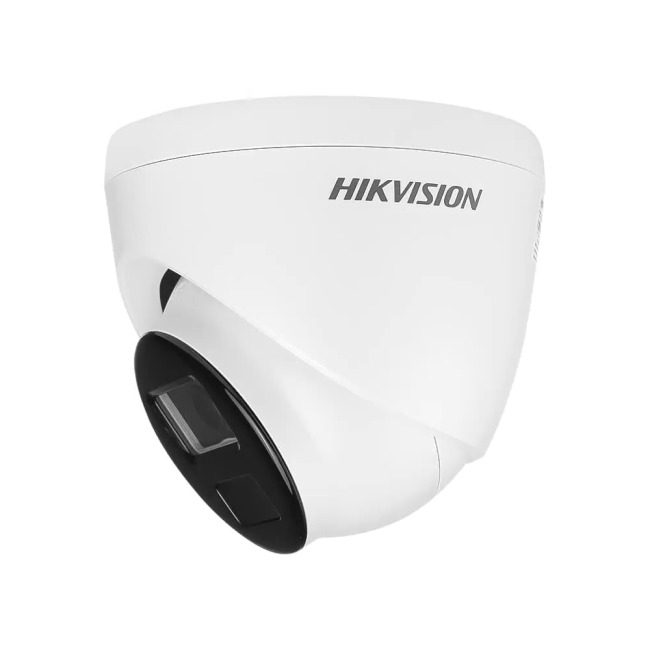
HIKVISION DS-2CD1321G0-I (2 MP/2.8 MM) - DOME PoE IP CAMERA

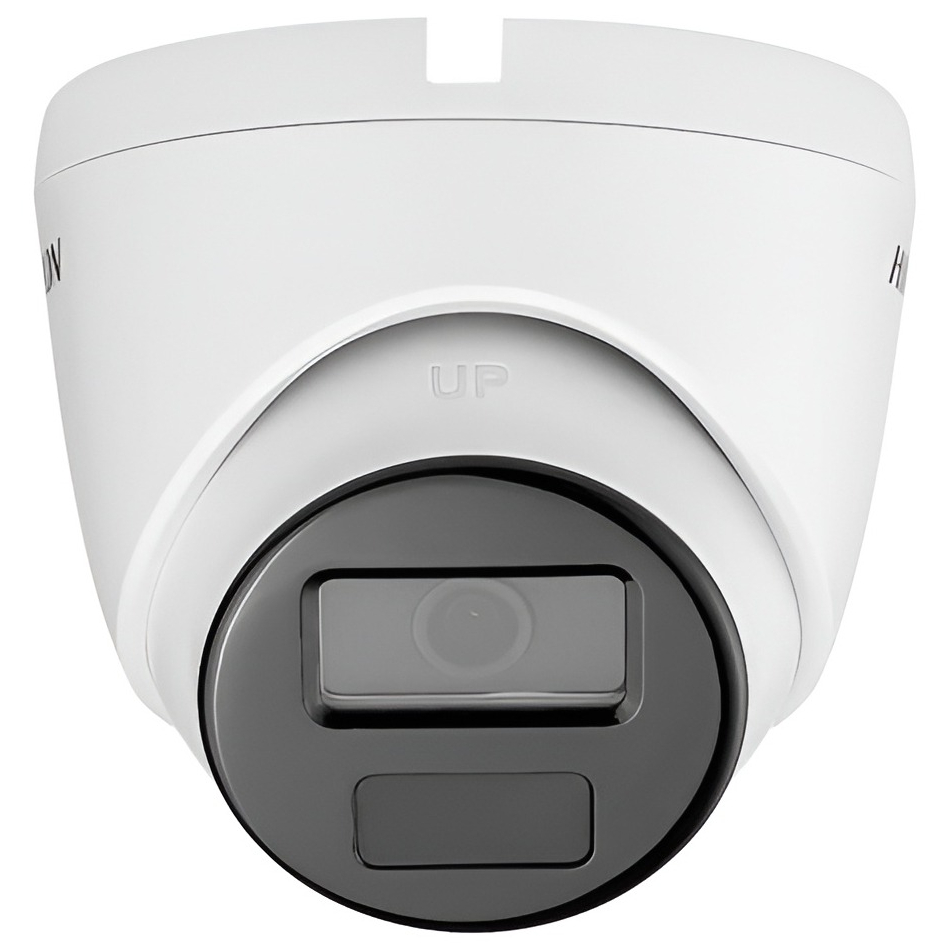
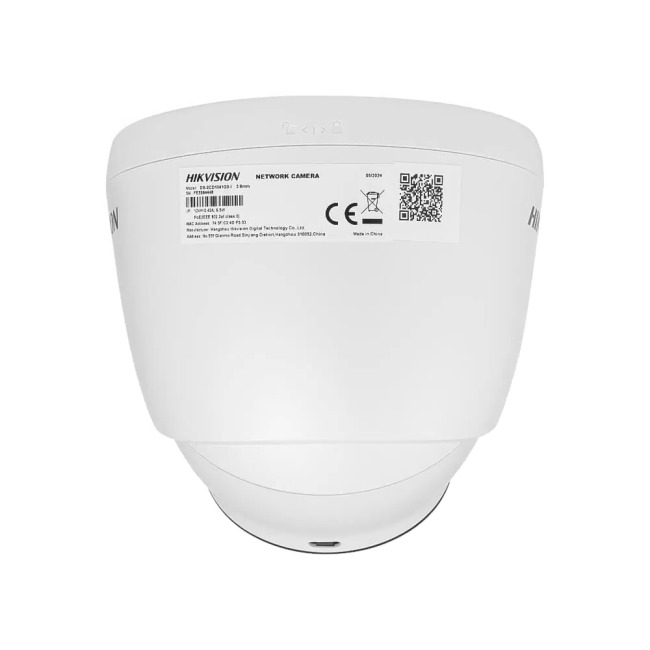
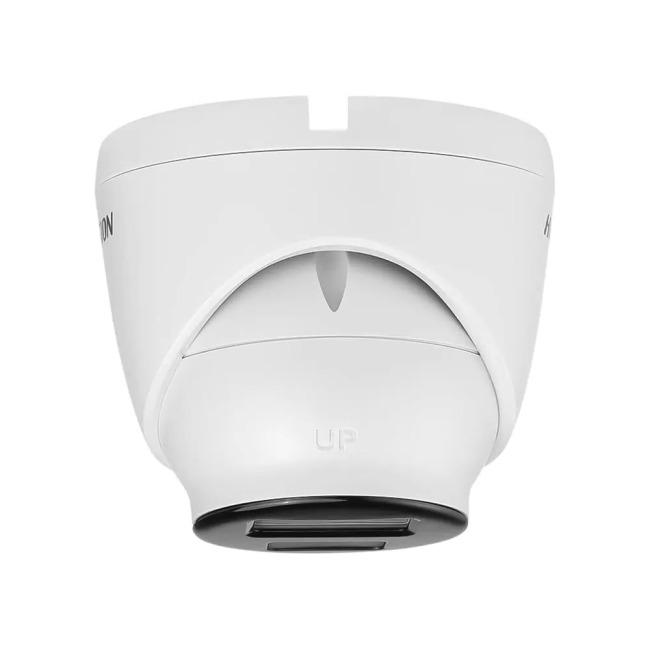
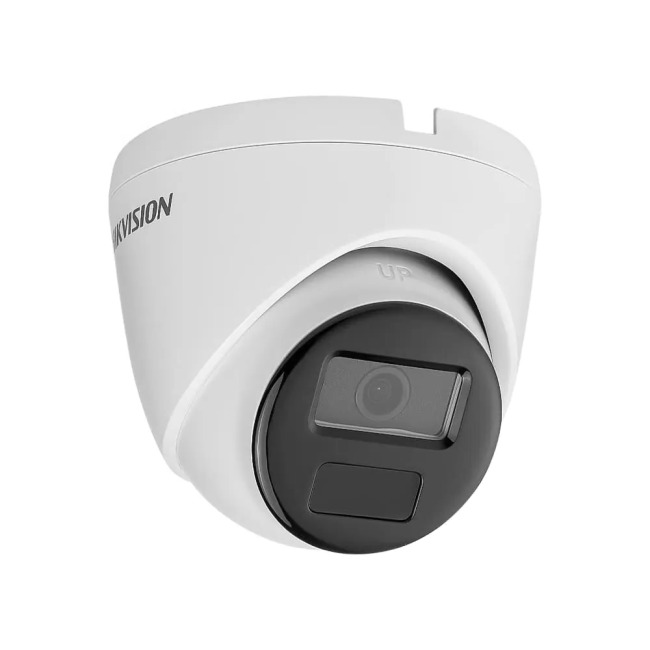


Description Hikvision DS-2CD1321G0-I
The G0 generation: why this camera cannot recognise people
The G0 in DS-2CD1321G0-I is not a version number but a generation marker for the absence of built-in AcuSense analytics, and that single fact accounts for most of the price gap inside this series. In practice the camera sees motion as a change of pixel brightness inside a chosen zone and cannot say what changed: a person, a car, a cat, a branch in the wind, a band of rain in the IR beam or a spider that has webbed the lens. What follows is predictable and familiar to every installer: in week one the owner enables notifications, collects a few dozen of them per night, and in week two switches them off — at which point the security function disappears and only an archive for after-the-fact review remains. That is the honest headline limitation of this model, and it should be bought with eyes open: as a recording camera, not as a source of alarms. If alerts you will actually act on are the point, this catalogue carries G2-generation models with human and vehicle filtering, and you will notice the difference on the very first night.
How to set up motion detection so that it still earns its keep
No AI does not make motion detection useless — it makes it demanding about setup, and four techniques remove most false triggers. First, shrink the detection zone to the part of the frame where movement genuinely means an event, such as the path to the door or the strip in front of the gate, and exclude sky, tree crowns and the public road. Second, raise the sensitivity threshold and the minimum object size so that small movement in the background is ignored. Third, use a schedule, because a yard always has movement during the day and alerts only start making sense between ten in the evening and six in the morning. Fourth, avoid pointing the camera at bushes, a flag, a swing or a road with passing traffic — correct aiming beats any firmware here, and half an hour spent on configuration turns a device that bothers you several times an hour into one that bothers you a few times a week.
EXIR 2.0 and night mode: thirty metres of monochrome
Illumination here is classic infrared built on EXIR 2.0: instead of a cluster of small LEDs there is one powerful emitter behind a lens that spreads the beam evenly across the frame. That directly solves the old cheap-camera disease of a bright blob in the middle and black corners, and it shows most on a wide angle, where the edges would otherwise fall away into darkness. Working range is up to 30 metres, which covers a yard, a porch, a stairwell or a small courtyard, but not a long perimeter. It is important to be clear that night here is strictly black and white: there are no white LEDs and no fast ColorVu optics, and a minimum illumination of 0.01 lux at F2.2 means colour survives only while the scene has light of its own. The recording will give you a silhouette, a height, a gait and the fact of an event, but not the colour of the jacket or the car — that is the direct trade you make for the price of this model.
Two megapixels, a 94° angle and what actually fits in frame
A 1/2.9-inch sensor at 1920×1080 behind a 2.8 mm lens gives roughly 94 degrees horizontally — slightly narrower than the hybrid models of the same series, but with correspondingly less distortion at the edges of the picture. That angle covers a typical yard, a two- or three-car parking bay, a porch with its path, or a small sales floor, and mounted at about three metres a person in the far corner of the frame stays recognisable by clothing and posture. Twenty-five frames per second keeps playback smooth instead of turning a step-through review into a slideshow. Digital WDR and 3D noise reduction pull back scenes with moderate backlight and cut nighttime grain, but these are software algorithms rather than the hardware WDR of the senior ranges: against direct sun in frame the camera will still wash out. One more honest trade-off: two megapixels on a wide angle let you recognise a person you already know, but will not read a number plate beyond ten or twelve metres.
Plastic housing, 6.5 W and a two-year warranty
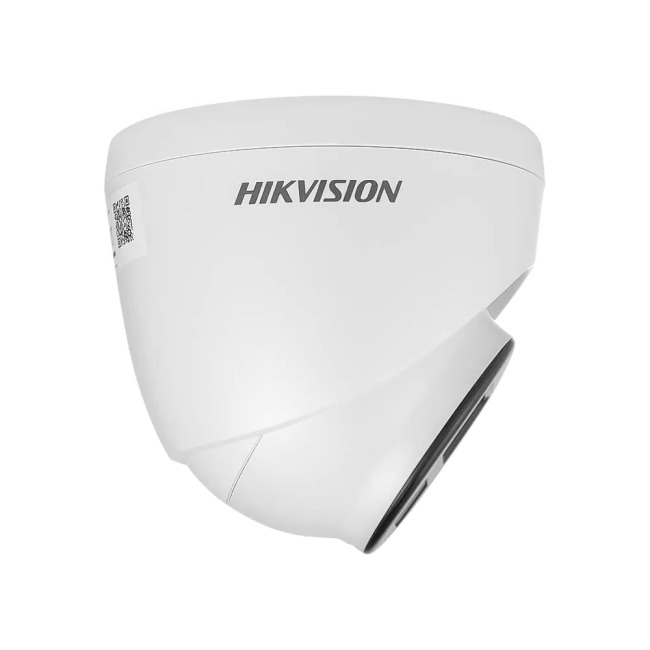
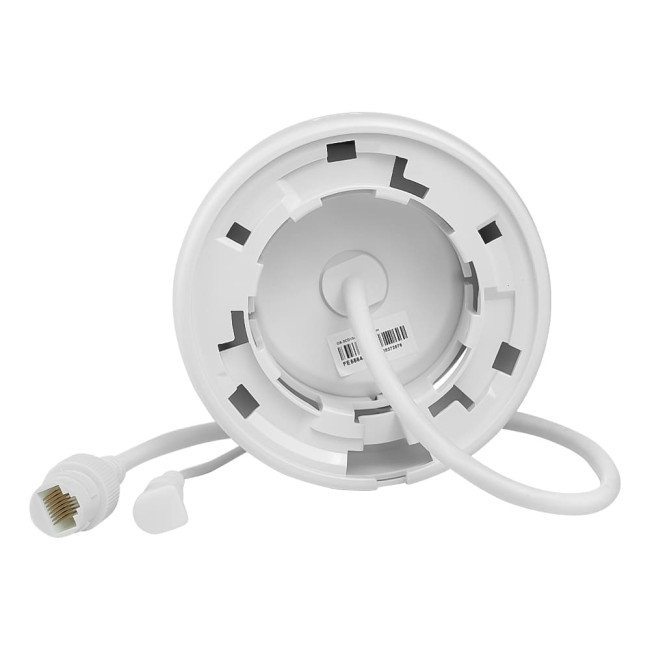
The body is plastic, about 300 g at 109.9×103.6 mm, and that is a trade rather than a flaw: plastic is lighter, cheaper and immune to corrosion, but sheds heat less well and takes an impact less gracefully than the metal used further up the range. IP67 sealing and a -30…+60 °C range allow year-round outdoor mounting, while the turret shape with a ball in the base holds its aim once set and resists being twisted by hand. Power comes either from a 12 V external supply or over PoE 802.3af on the same cable that carries the data, at just 6.5 W and around 0.5 A. That makes it one of the thriftiest cameras in its class: a kit of eight draws roughly 52 W in total and fits comfortably inside the budget of an ordinary eight-port PoE switch, with no need to step up to a pricier one. Worth noting separately is the 24-month warranty, twice the twelve months typical of most positions in this catalogue, which is a solid argument for a budget device.
The archive lives on the recorder: what that means at design stage
This model's specification lists no memory card slot, so all recording happens on an NVR or network storage and the camera depends entirely on whatever sits at the other end of the cable. The installation consequence is concrete: if the cable is cut or the recorder loses power, that stretch of footage simply does not exist, which is why the recorder and its disk belong in a protected spot behind a small UPS. The camera supports RTSP and FTP snapshot upload, so it fits into a Hikvision recorder and into third-party video management software alike rather than being locked to one app. For retention planning a simple benchmark helps: four 2 MP cameras in H.265 recording continuously consume about a terabyte every ten to twelve days, so a 4 TB disk gives roughly a month and a half, and switching to event recording stretches that by a factor of two or three. Within this catalogue the natural partners are recorders with built-in PoE — the eight-channel DS-7108NI-Q1/8P(D) or the four-channel DS-7604NXI-K1/4P(D) — because then no separate switch is needed.
Where this camera belongs and where it does not
This is a workhorse for jobs where the record of what happened matters more than an instant alarm: an apartment-block entrance, a corridor and landing, a warehouse with staff on site, a small shop, a workshop, a few parking bays, a yard watched by its owner. It also works well as a second-tier camera in a larger system, filling in perimeter stretches for continuous coverage while AI-equipped models hold the critical points. The turret body is compact and unobtrusive, and its low weight allows mounting on light bases and suspended ceilings without reinforcement. It is the wrong choice wherever protection is built on notifications — a weekend house with nobody living there, a remote site, grounds full of trees and animals — because unfiltered motion detection there becomes a false-alarm generator. It is equally unsuited to gate control with plate capture and to long driveways, where 30 metres of illumination leaves half the frame in darkness.
How it differs from the neighbouring Hikvision models in this catalogue
Its closest pairing here is the DS-2CD1321-I: essentially the same camera from an earlier revision with the same body, the same 30-metre IR and the same lack of AI, so for a buyer the gap between them is minimal. The DS-2CD1121-I and DS-2CD1141G0-I offer the same generation and the same feature set in a classic ceiling dome, the latter with four megapixels instead of two, which makes them a choice of shape and detail rather than a step up in capability. The comparison that really matters is with the DS-2CD1323G2-LIUF and DS-2CD1327G2H-LIUF from this same catalogue: identical Value family, identical mounting, but a G2 generation with human and vehicle filtering and hybrid illumination that fires white light for colour at night. Plain advice: if the camera watches a stairwell, a corridor or a staffed warehouse and exists so you can review incidents afterwards, take this model and do not overpay. If instead it has to guard a home while you are away and wake you at night, the step up to G2 is justified, because without target filtering the notifications will end up switched off anyway.
Tell us how many points you need to cover and whether a PoE recorder is planned — we will put together a kit and say where this model is enough and where an AI camera is the better call.
Characteristics Hikvision DS-2CD1321G0-I
Reviews about Hikvision DS-2CD1321G0-I from real users
No reviews found







