
 m. Сміла, Незалежності, 67г. оф, 406/6























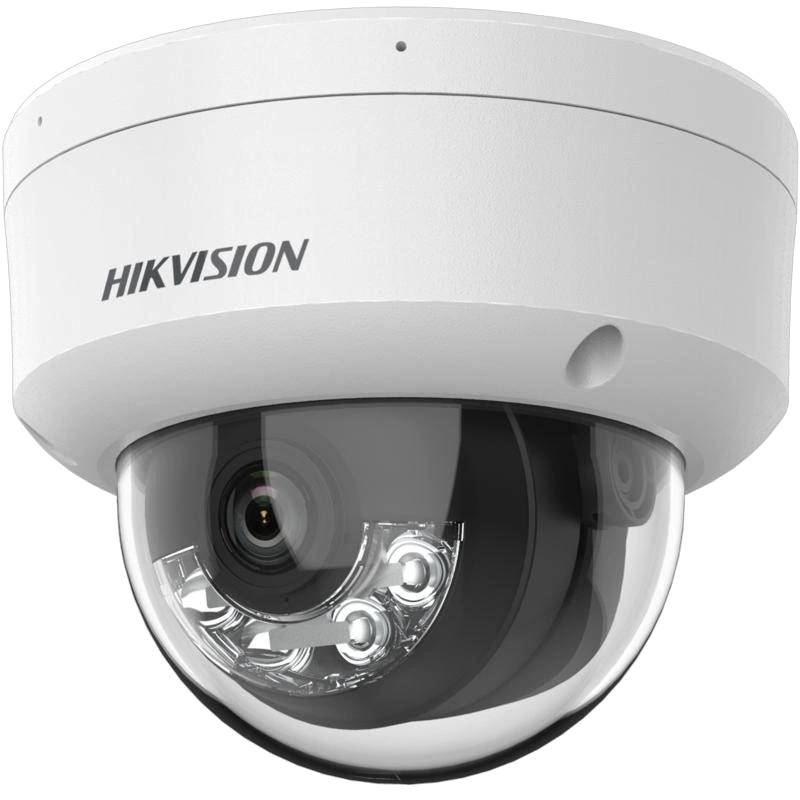
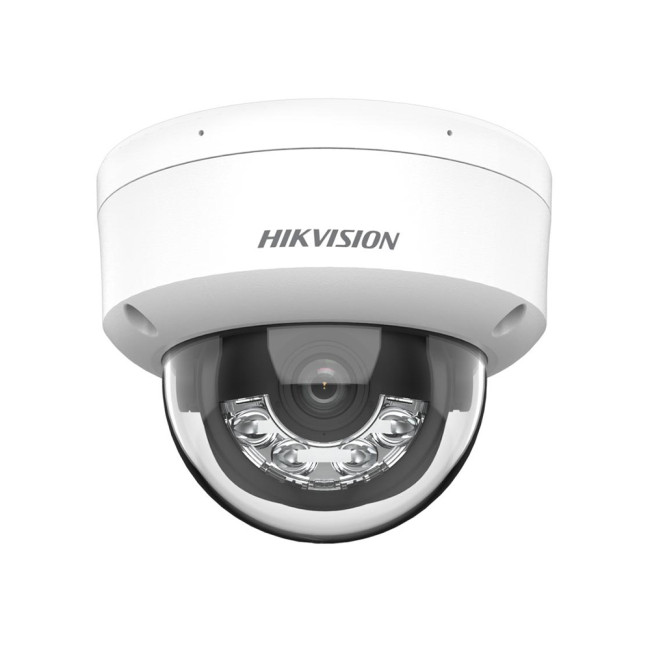
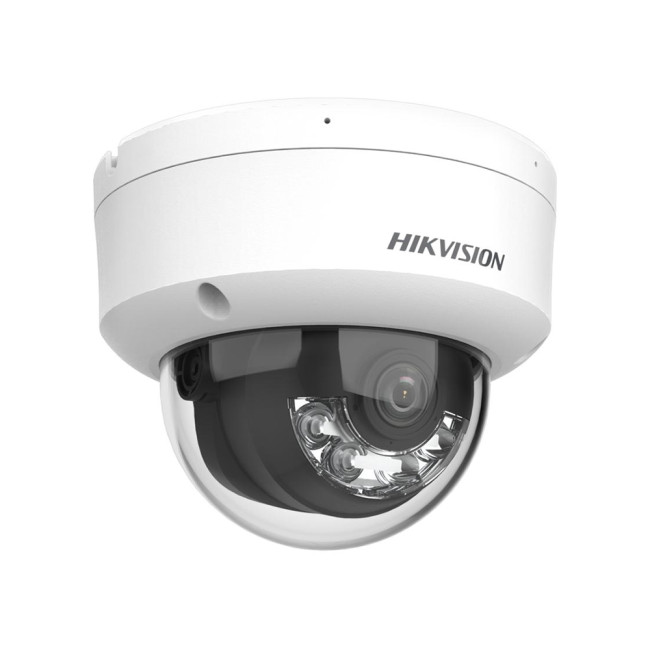
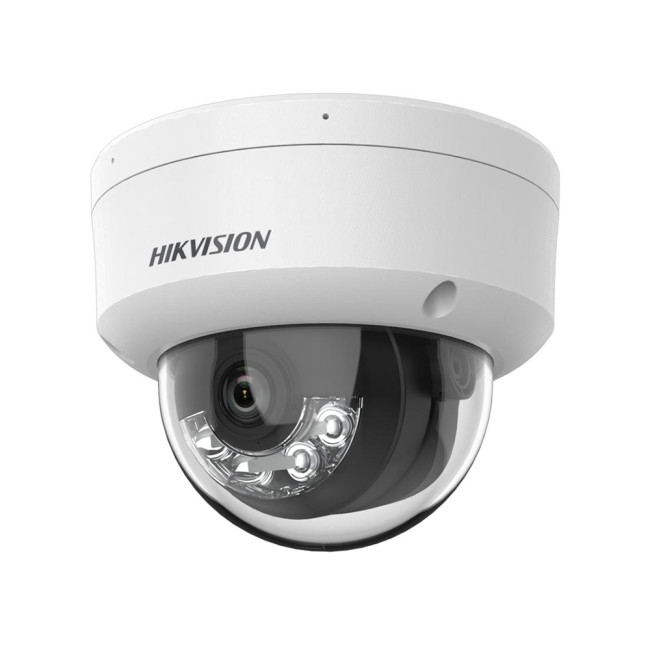
HIKVISION DS-2CD1143G2-LIUF (4 MP) - VARIFOCAL DOME PoE IP CAMERA

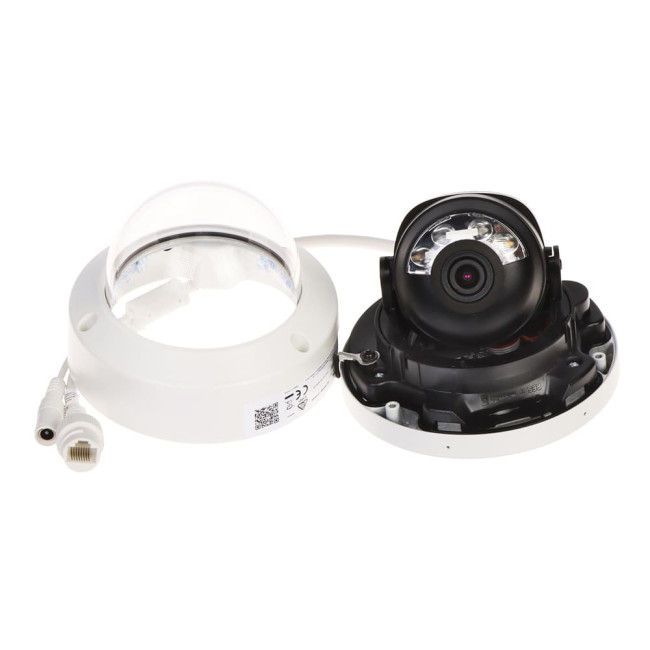
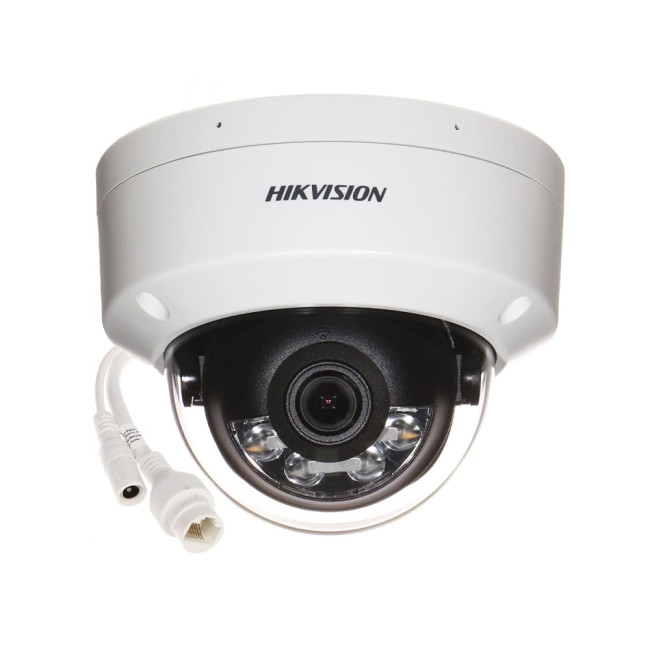


Description Hikvision DS-2CD1143G2-LIUF
The G2 index in the model name: why the generation matters more than megapixels
The G2 in DS-2CD1143G2-LIUF is not a housing revision number — it marks the generation in which Hikvision's budget 1-series gained on-board AcuSense object classification. The camera itself separates a person and a vehicle from everything else moving in the frame, and it only raises an alert for the categories you have switched on. Compared with the earlier G0 generation the difference shows up not in image quality but in the number of pointless alarms: a model such as DS-2CD1141G0-I from this same catalogue simply reacts to changing pixels — a branch, a cloud shadow, rain in the IR beam, a cat on the fence. Every installer knows what follows: the owner collects several dozen push notifications a night, switches them off within a week, and the system stops being a security system — what is left is an archive to browse after something has already happened. That is exactly why a G2 camera belongs where alerts are actually read and acted on, and not where only the recording itself matters.
LIUF explained: hybrid illumination, colour at night and a built-in microphone
The LIUF suffix describes the night mode and the audio: the camera carries both infrared LEDs and white LEDs (Smart Hybrid Light), while the U stands for the integrated microphone. In the standard night mode the invisible IR light works and the recording is monochrome; the moment the analytics classifies a person or a vehicle in the frame, the white light fires and the picture turns full colour. The gap between those two recordings is the gap between "a silhouette in a dark jacket" and "a man in a red jacket next to a grey hatchback" — between footage that proves nothing and footage worth taking to the police or to an insurer. Effective illumination reaches up to 30 metres, which covers a house yard, the area in front of an apartment entrance or a shop floor, but falls short on a long driveway, a deep warehouse or a stretched-out fence line. There is also a side effect that customers often value above the colour itself: a sudden burst of white light tells an intruder plainly that he has been seen, and a fair share of attempts to enter a property end right there.
4 MP and a 98° field of view: what you really see and where recognition stops
The 1/3-inch sensor delivers 4 MP, or 2688 × 1520 pixels — roughly twice the pixel count of the widespread two-megapixel cameras, and that headroom is what lets you zoom into a saved clip instead of guessing. The 2.8 mm lens with a field of view of up to 98 degrees is deliberately wide: one camera takes in a yard, a gate area or a small sales floor as a whole, with no blind wedges at the edges. It is worth converting that into pixels per metre, the figure by which usable identification is measured: 2688 pixels spread across 98 degrees give about 125 pixels per metre — the threshold at which a familiar face becomes reliably recognisable — at a distance of roughly 9 to 10 metres from the lens. Beyond that line you will still see that somebody is there, what they are wearing and which way they are heading, but you will not identify an unfamiliar face or read a licence plate. The practical conclusion follows directly: bring the point where people pass close by — a gate, a front door, a till — nearer to the camera, and leave the far field for general overview. Trying to cover both overview and identification with a single wide lens is the most common mistake in a three- or four-camera design.
Microphone, a card up to 512 GB and the protocol list: autonomy and compatibility
The built-in microphone adds an audio track, and in practice it often turns out to be the decisive part of the evidence: a conversation at the gate, the sound of breaking glass or an engine running in the yard are captured even when the source stayed outside the frame. The microSD slot takes a card of up to 512 GB, so the camera can record locally — continuously or on events only — and a brief network dropout or a recorder reboot no longer leaves a hole in the archive. H.264 and H.265 give you the choice between compatibility and economy: at the same picture quality H.265 needs roughly half the space, so one card holds twice the retention and the link to the recorder is loaded half as hard. The declared protocols are ONVIF Profile S and Profile T, ISAPI and SDK, which is enough for the camera to work not only with Hikvision recorders but with third-party NVRs and video servers as well. One limitation is better known in advance: Profile G, the profile responsible for remote control of recording on the device itself, is not on the list, so do not count on a third-party NVR pulling footage off this camera's SD card — for that scenario the camera should stay inside the Hikvision ecosystem.
PoE power, the dome housing, IP67 and a -30…+60 °C range
Power comes either from 12 V DC or from PoE 802.3af, with consumption of about 7.5 W at roughly 0.6 A, and that number feeds straight into the choice of switch. Eight of these cameras add up to some 60 W of useful load, so the popular eight-port PoE switch with a 60-65 W budget will be running at its limit: on the coldest days, when heating adds to the draw, cameras start rebooting one after another, which is why a 20-30% reserve belongs in the plan from the start. The housing is a plastic dome, 121 × 98 mm and 550 g — light enough to go onto ordinary plugs in concrete or onto a standard mounting box, with no reinforced base and no heavy bracket. IP67 means complete dust protection plus survival of short immersion in water, so the camera can go out onto an exposed façade rather than only under an eave or a canopy. The -30…+60 °C range is written for a Ukrainian winter: cheap cameras rated only from -10 °C either refuse to start after a January power cut or lose focus as the plastic of the optical block deforms with temperature. A 24-month warranty is the exception rather than the rule in the budget segment, and it is part of what you are paying for when you choose Hikvision over a no-name camera.
Where to install it and which jobs it genuinely fits
The core scenario for this model is a private house yard, a gate area with a pedestrian door, the apron in front of an apartment block entrance, a small sales floor or a workshop — places where you need the whole picture within 10 to 12 metres and colour rather than a silhouette at night. The dome shape helps for two reasons: it is hard to twist by hand from below, unlike a bullet on a long bracket, and it is far less shouty on a façade when the owner does not want the house to look like a guarded facility. For a driveway where plates have to be read this model is the wrong tool — a wide 2.8 mm lens will not render a legible plate beyond ten metres, and the right answer is a separate camera with a narrower lens aimed along the drive. It is equally excessive inside a flat: 30 metres of illumination in a hallway serves no purpose, and a compact indoor model makes more sense there. If the site is elongated — a long fence, a narrow passage between buildings — two of these facing each other work far better than one in the corner: a person moving in either direction stays in at least one frame, and always on the lit side.
How it differs from the neighbouring Hikvision models in this catalogue
Its closest relative here is the DS-2CD1143G2-LIUF Smart Hybrid Light with a 4 mm lens: the same camera and the same analytics, but a narrower angle and a noticeably longer recognition distance, so a long path, a driveway or a narrow corridor calls for the 4 mm version while a wide yard calls for this 2.8 mm one. The DS-2CD1043G2-LIUF is the same electronics in a bullet body, and choosing between them is almost entirely about mounting and psychology: a bullet is visible from a distance and deters by itself, but it is also easier to knock aside or turn away. The junior DS-2CD1123G2-LIUF offers the same AcuSense and the same hybrid light with 2 MP instead of 4: if the footage is only ever watched on a phone for general awareness you will barely notice, but if you plan to enlarge fragments, the premium for 4 MP pays for itself on the first incident. The markedly cheaper DS-2CD1141G0-I and DS-2CD1021G0-I belong to the G0 generation — same resolution, no object classification, therefore an alert on any movement at all; take them only when the camera works purely as a recorder and you do not need notifications. And if colour at night beyond 30 metres is non-negotiable, the 1-series hits its ceiling here and the Pro line is the place to look — the DS-2CD2T47G3-LIY with 60-metre illumination and a large 1/1.8-inch sensor.
If you are not sure how many cameras and which lenses your particular site needs, describe the layout to us — perimeter length, how many entrances and driveways, whether a recorder is already in place. We will put together a placement plan showing exactly what each camera captures.
Characteristics Hikvision DS-2CD1143G2-LIUF
Reviews about Hikvision DS-2CD1143G2-LIUF from real users
No reviews found







