
 m. Сміла, Незалежності, 67г. оф, 406/6























HIKVISION DS-2CD1121-I (2 MP/2.8 MM) - DOME PoE IP CAMERA

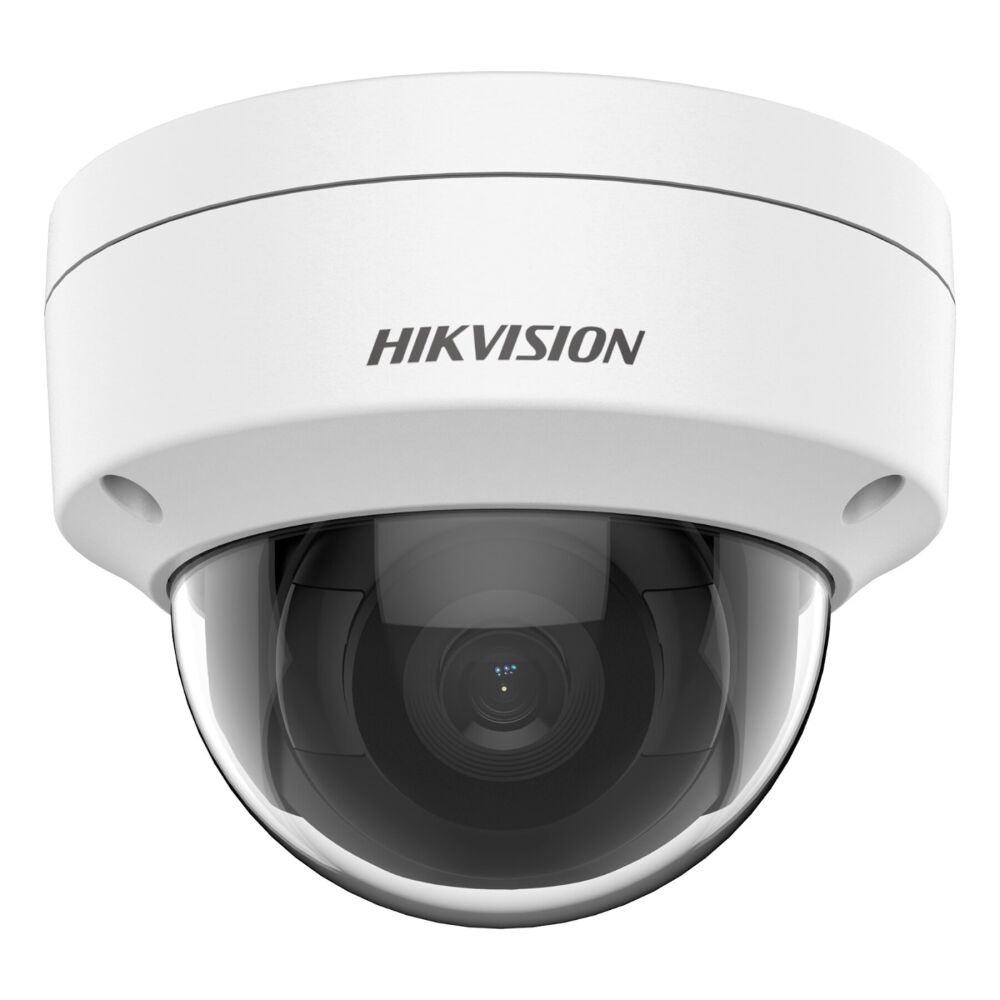
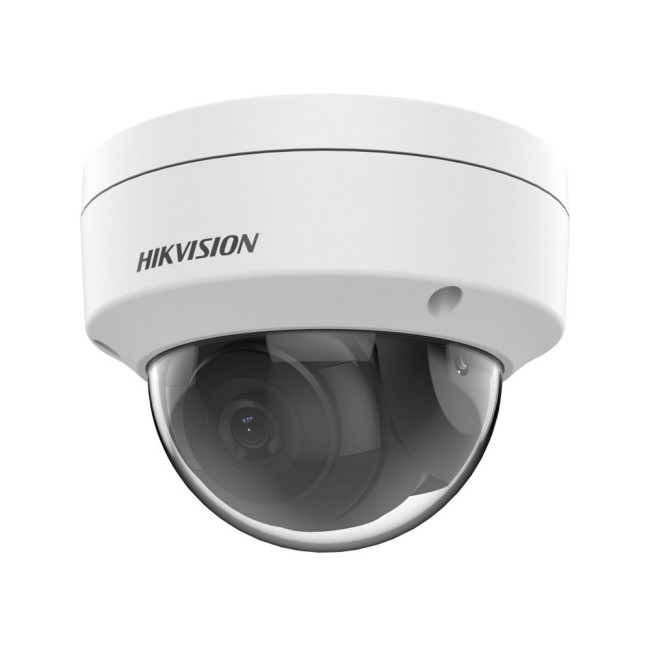
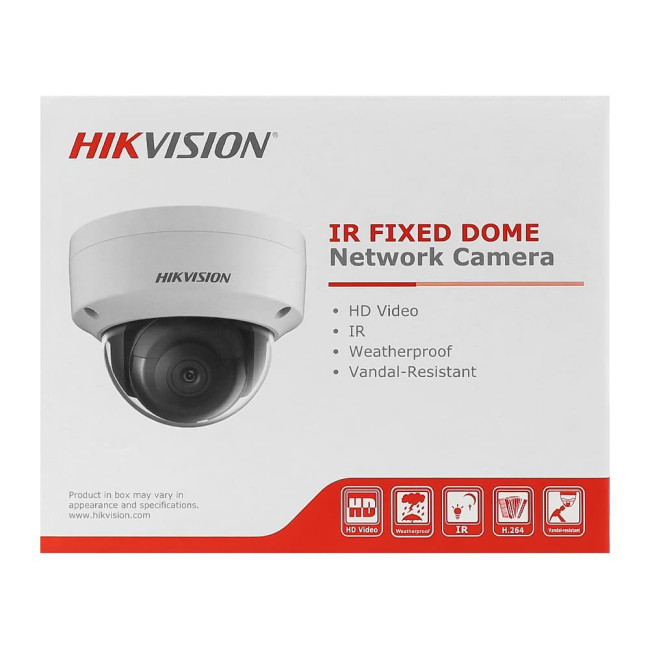
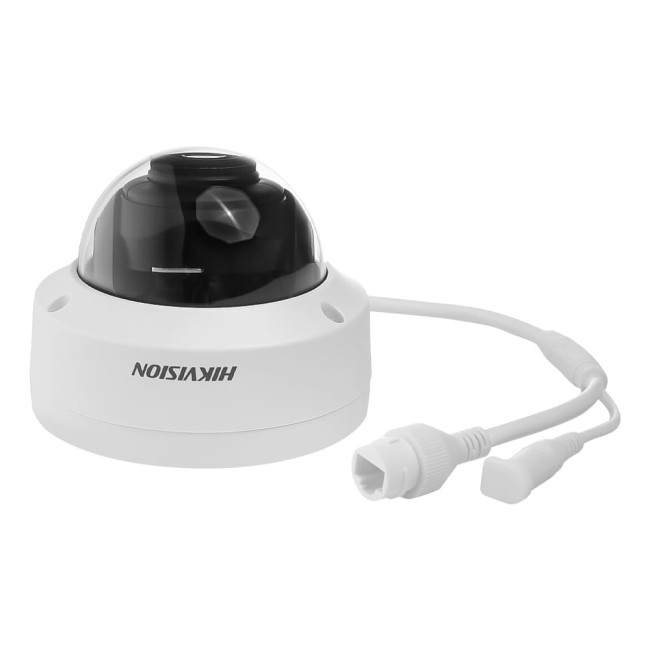
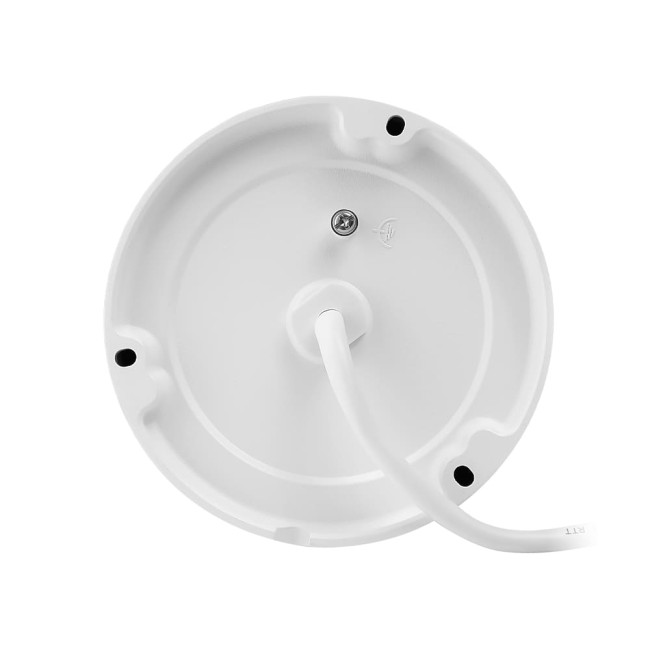
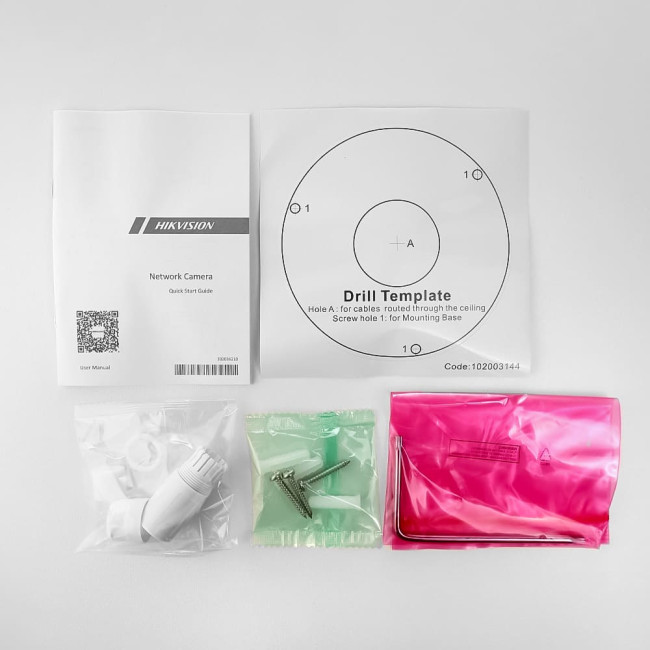
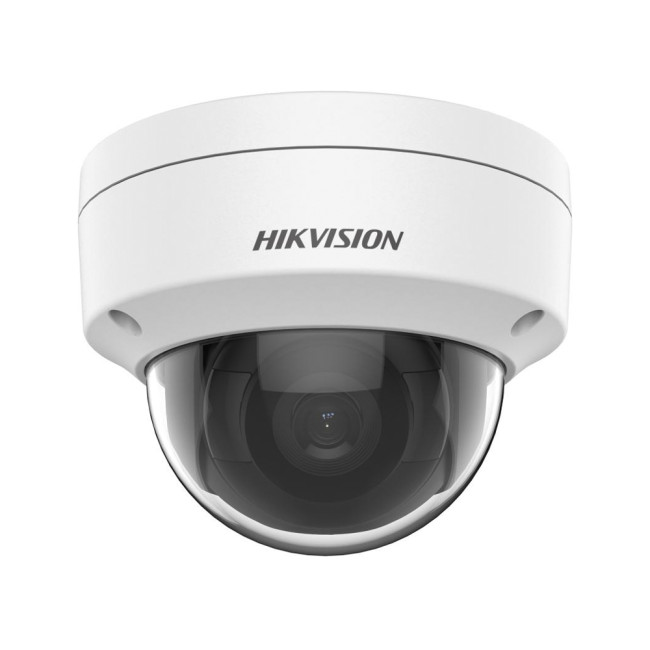


Description Hikvision DS-2CD1121-I
What the code DS-2CD1121-I actually tells you before you buy
Hikvision model numbers are readable left to right and describe the device class precisely: DS-2CD marks a network IP camera, the first digit after CD places the unit in the Value line — the entry-level budget series — the digits 11 encode the form factor and the 2 MP sensor, and the -I suffix stands for conventional infrared illumination. The detail that matters most is what is missing: there is no generation marker at all, neither G0 nor G2 nor G3. This is the original revision of the Value range, released before Hikvision started embedding neural-network object classification into its cameras. The practical conclusion is straightforward: you get a proven, long-serving workhorse that records reliably, but you get no intelligent analytics whatsoever, and since the price gap to its AI-equipped successors is only a few hundred hryvnia, that trade-off deserves a close look.
2 MP, a 2.8 mm lens and 105°: how far away a face is still identifiable
Hikvision never published DORI figures for this model — it predates the point when those tables became standard in the manufacturer's catalogue — so the honest approach is to derive the distances from geometry rather than quote a convenient marketing number. The 1920-pixel-wide frame is spread across a 105° field, which means that at 10 metres the camera covers a strip roughly 26 metres wide and delivers about 70 pixels for every metre of that strip. European practice puts confident identification of a stranger at around 250 pixels per metre, recognition of someone you already know at roughly half that, and mere detection of presence at 25. Translated to this camera, that gives a face clear enough for a police report only up to about 3-4 metres, recognition of a familiar person or reliable memory of clothing and build up to 6-7 metres, and simple awareness that someone is moving through the yard all the way out to the limit of the illuminator. The 2.8 mm optic is therefore not an oversight but a deliberate bias towards coverage: one camera takes in an entire lobby, vestibule or small courtyard, but it will never read a number plate at the gate.
Thirty metres of infrared: what to expect from the night mode and what not to
The illuminator works at 850 nm and reaches 30 metres, and the switch to night mode is handled by a mechanical IR cut filter that physically moves away from the sensor — cheaper cameras without that filter show the familiar pink-violet cast in daylight. The limitation should be stated plainly: at night the picture is monochrome, and no setting will change that, because colour night video only comes from models with white light or ColorVu optics. In practice you will learn a person's height, build, direction of travel and type of clothing from a night recording, but not the colour of their jacket or of the car they arrived in — and those are exactly the details the police ask for first. Dome housings add a specific maintenance point: once the transparent bubble collects dust or fingerprints, infrared light scatters inside it and the whole frame turns milky, so the cover needs wiping roughly once a season. Mounting the camera tight against a wall or under a narrow eave causes the same problem from the other direction, as reflected IR light blows out one edge of the image.
The one limitation that matters most: there is no AI detection of people or vehicles
This model offers only classical motion detection — it compares consecutive frames and reacts to any change of pixels inside the configured zone, with no understanding of what actually changed. A branch swaying in the wind, a cloud shadow, the neighbour's cat, rain caught in the IR beam and a person climbing the fence are, as far as this camera is concerned, identical events of identical importance. The pattern that follows is always the same: for the first few days the owner opens every alert, by the end of the first week there are several dozen a day, and somewhere in the second week the notifications get switched off — from that moment the system stops guarding anything and becomes an archive you consult after the fact. That is why we say it openly: if you want phone alerts you can trust, look at the G2 or G3 models, and this very catalogue has the DS-2CD1123G2-LIUF, a mere more. If, on the other hand, the camera records continuously into an NVR and you review footage only when something has happened, the missing analytics cost you nothing at all.
IK10 and IP67: the vandal-proof housing is the real reason to pick a dome
The IK10 rating means the housing survives a 20-joule impact, roughly a five-kilogram object dropped from 40 centimetres, so the camera will not be destroyed by a thrown stone or a punch. That is not an abstract figure but the central difference between a dome and the turret or bullet shapes: in a stairwell, a car park, near a school or inside a shop floor, cameras are smashed far more often than they are stolen. The same geometry brings a second benefit — the lens sits under the bubble and cannot be twisted by hand, so an intruder cannot simply turn it to face the wall the way a bullet camera on a bracket can be turned. IP67 covers complete dust ingress protection and short immersion in water, which makes mounting on an exposed facade without any canopy perfectly acceptable, while the metal in the body gives it 570 grams of mass that in itself slows down any attempt to unscrew it. The -30…+60 °C operating range is tuned to a Ukrainian winter, and that matters more than it sounds: cameras rated only down to -10 °C often refuse to boot after a frosty night until they warm up.
PoE power, the NVR-based archive and the absence of an SD slot
The camera runs either from 12 V DC or over PoE 802.3af using the same cable that carries the video, drawing up to 6.5 W. When sizing a system that number is convenient but tight: an eight-port switch with a 60-65 W budget carries eight of these cameras with almost no headroom, so for eight positions it is wiser to buy a 120 W switch and leave room for future white-light models that consume twice as much. One restriction tends to surface only after installation — this model has no microSD slot, so it depends entirely on the recorder or a video server; if the network drops or the NVR powers down, the footage for that interval simply never existed. ONVIF Profile S and ISAPI support let you attach the camera not only to Hikvision recorders but to third-party NVRs, Blue Iris, Frigate or Home Assistant, although the complete settings menu is always available only inside the native ecosystem. H.264+ compression roughly halves the disk footprint compared with plain H.264, but this generation does not speak the newer H.265, and across several cameras over a month that difference in storage becomes very noticeable.
Where this camera belongs and which jobs it genuinely does well
The best fit for the DS-2CD1121-I is indoor and semi-enclosed space where the main threat is not so much intrusion as vandalism and deliberate attempts to disable the camera: an apartment block entrance, a stair landing, an underground or surface car park, an office corridor, the sales floor of a small shop, a storeroom. Outdoors it works too — IP67 and -30 °C allow it — but the sensible zone of responsibility is around 10-15 metres: a porch, an entrance group, an inner courtyard, the area by the gate. Where it definitely does not belong is on a driveway with the job of capturing number plates, because a wide 2.8 mm lens and 2 MP physically cannot supply the pixel density needed beyond ten-odd metres; that task calls for narrower optics or a 4-8 MP sensor. Nor should it be the single camera on a large plot in the hope that it replaces a system — the sound approach is two or three inexpensive cameras covering every approach rather than one expensive unit in a corner. One more field lesson: mount the dome at 2.5-3 metres, because higher up faces enter the frame at too steep an angle and become useless for recognition.
How it compares with neighbouring models in this catalogue
Its closest relative is the DS-2CD1321-I: identical sensor, identical optics, identical illuminator, differing only in body shape (turret instead of dome) and in the absence of the IK10 rating, so the gap buys impact resistance alone — worth it in a stairwell, pointless under the eaves of a private house. The DS-2CD1321G0-I is already the next generation of the same budget line for less money, and if vandal resistance is irrelevant to you it is the smarter buy. The real alternative, though, is the DS-2CD1123G2-LIUF: same dome shape, same 2 MP, but a G2 generation with human and vehicle recognition, white light and a built-in microphone — a cheaper option that turn the camera from a witness into part of the security system, and in most scenarios that is money well spent. If you need more detail, the 4 MP DS-2CD1141G0-I costs more and doubles the pixel count, pushing the identifiable-face boundary out to roughly 5-6 metres. Among competitors in the same bracket, look at the Dahua DH-IPC-HDBW1431EP-S4 — also an IK10 dome, but 4 MP and still without AI — and the Dahua DH-IPC-HDW2249T-S-IL, which matches the 2 MP here but adds human and vehicle detection; the cheap Imou Turret SE-C has AI too, yet gives way to this Hikvision in housing strength and cold-weather reliability.
If you are unsure how many cameras your site needs and with which lenses, send us the perimeter length, the mounting height and the tasks you want covered — we will put together a layout and tell you honestly where this model is enough and where an AI camera is worth the difference.
Characteristics Hikvision DS-2CD1121-I
Reviews about Hikvision DS-2CD1121-I from real users
No reviews found







