
 m. Сміла, Незалежності, 67г. оф, 406/6























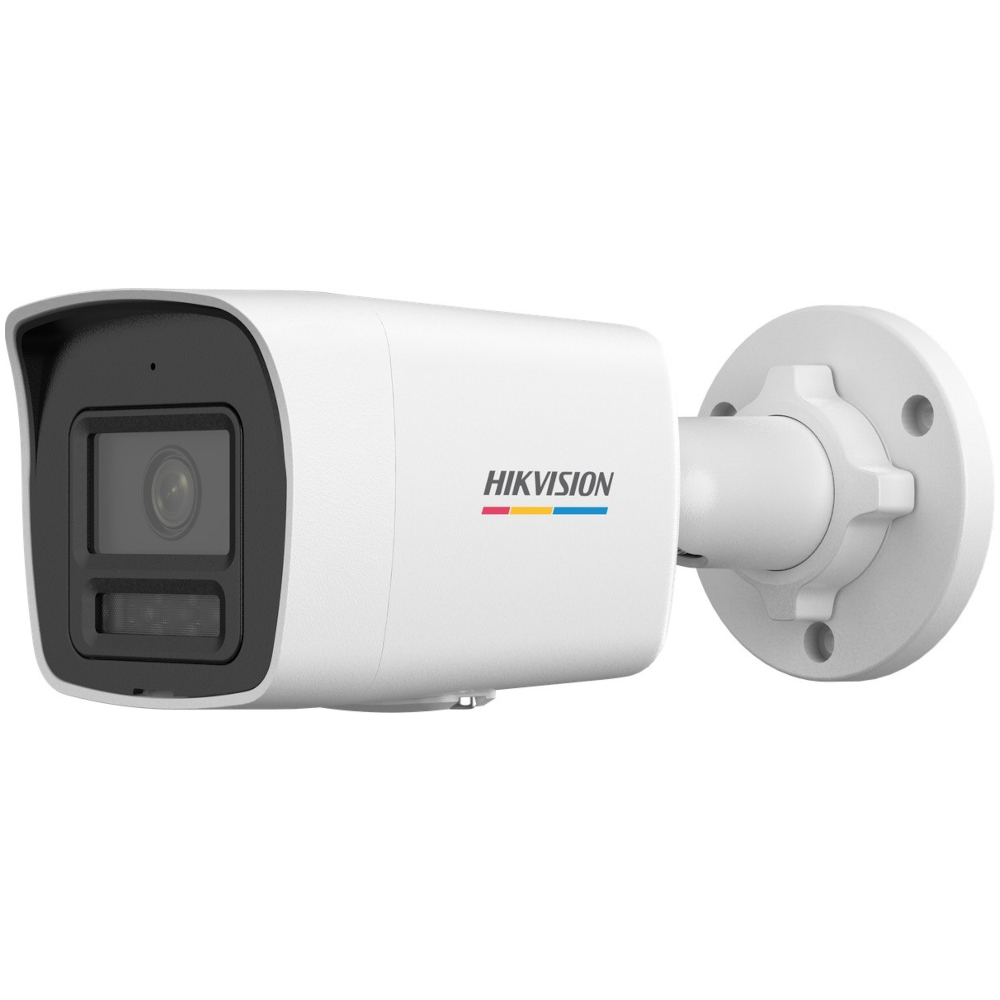
HIKVISION DS-2CD1047G3H-LIUF (4 MP/4 MM) - PoE IP CAMERA




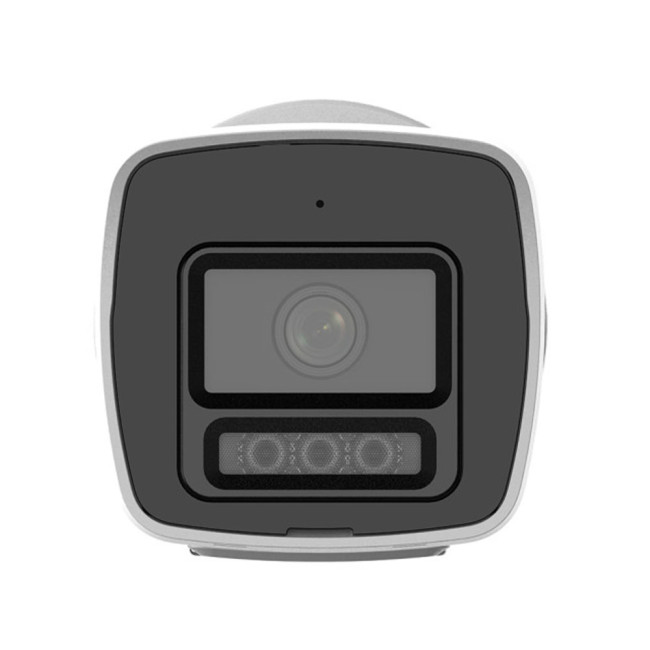
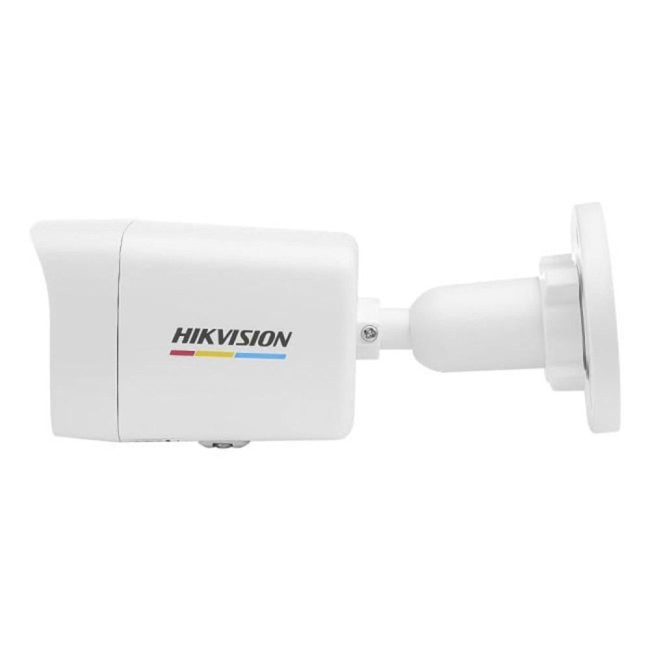
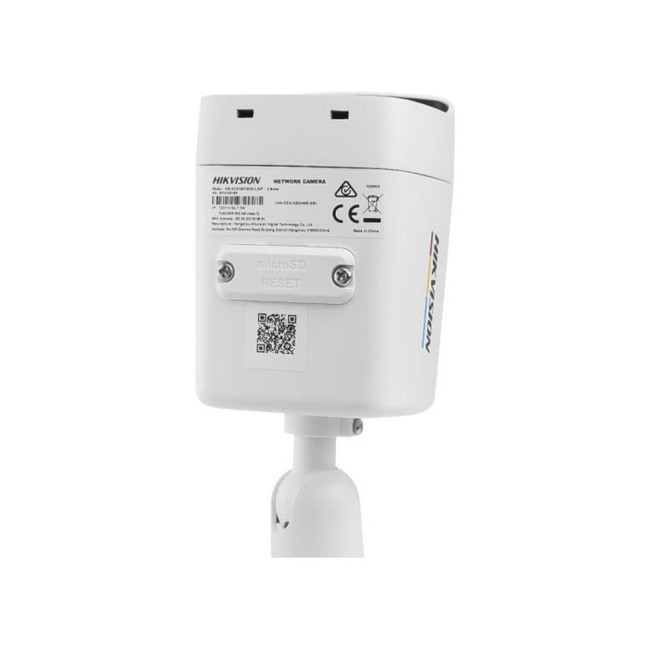
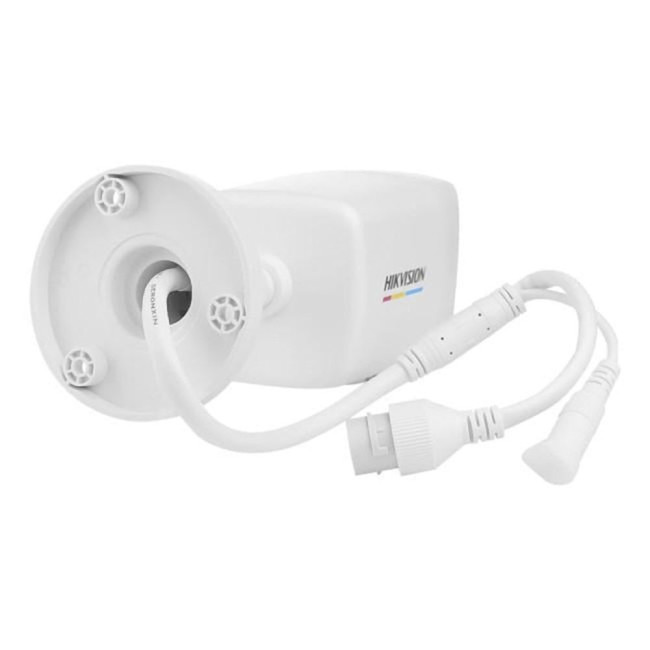
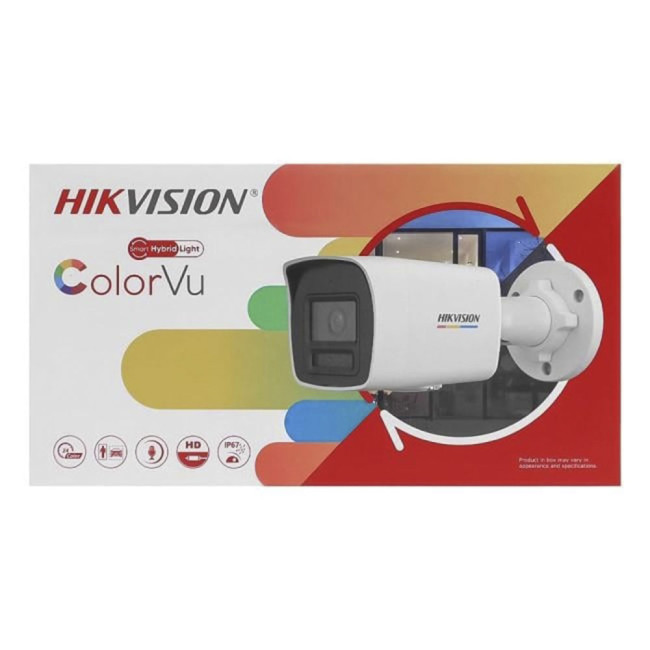
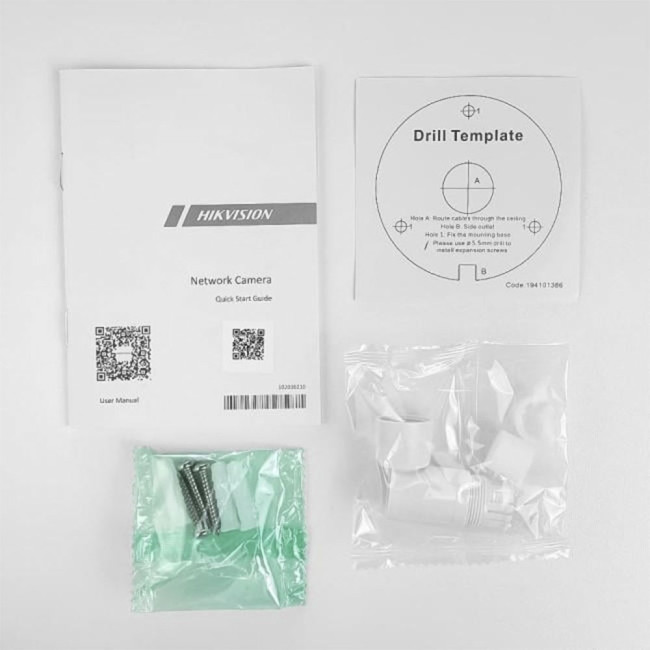
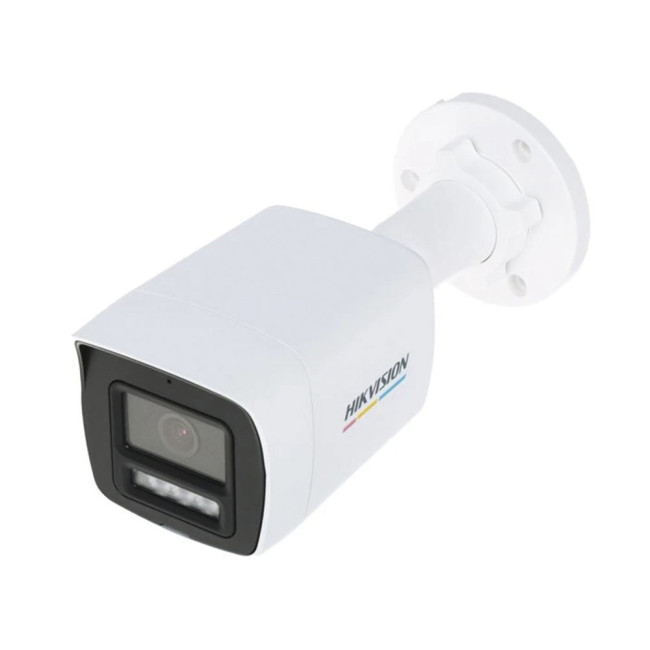


Description Hikvision DS-2CD1047G3H-LIUF
A 1/1.8-inch sensor in the budget line: what the letter H stands for
The main thing separating this model from the rest of Hikvision's 1-Series hides in a single letter of the index: H marks the version built on a large 1/1.8-inch sensor, while the neighbouring 4 MP domes in this catalogue sit on 1/3 or 1/2.8-inch chips. The physics behind it is simple and non-negotiable: the same pixel count spread over a larger sensor area means bigger pixels, and a bigger pixel collects more light, which brings less noise at dusk, cleaner colours under street lighting and less need to turn the illuminator on at all. In practice this shows up exactly during the grey half-hour before sunset and after sunrise, when a cheap camera has already dropped into black and white while this one still holds a colour image with readable detail. The second effect of a large sensor is its behaviour against backlight: a lamp above the gate or headlights aimed into the lens no longer bleach the whole frame into a white blob, and a person standing next to the light source stays distinguishable. The trade-off deserves saying out loud: a large sensor raises the power appetite to 8.5 W against 6.5-7.5 W on the simpler models of the series, which is noticeable when you size a PoE switch for eight channels or more.
People and vehicle detection: the filter that keeps a system alive past week one
This model declares both people detection and vehicle detection, and that is precisely what separates it from cameras offering plain motion detection. The difference is not marketing but whether the system still works a month after installation: a camera with no target classification alerts on any pixel change — a branch, a shadow, rain lit by the infrared beam — the owner disables push after a week, and the security function disappears, leaving only an archive. Here the camera tells people and vehicles apart from everything else that moves, so notifications arrive on events that actually mean something, and it becomes worthwhile to build rules on them: line crossing along the fence, entering the zone by the door, a car appearing on the driveway. Target classification also drives the Smart Hybrid Light illuminator: in smart mode the camera keeps infrared as its baseline and fires the white LEDs when a person or a vehicle enters the frame, so the night turns colour exactly when it matters rather than permanently. What is missing is animal detection — the specification does not list it, so a large dog roaming the yard will fall into the generic motion category, and the detection zone will have to be trimmed down to the path and the gate.
A 4 mm lens and an 89-degree angle: narrower, but faces and details survive
A 4 mm focal length with an 89-degree field of view is a deliberately narrower view than the widespread 2.8 mm versions covering roughly 100-106 degrees, and the choice between them decides what you actually get in the frame. Geometrically, 89 degrees give a strip about ten metres wide at five metres of distance and close to twenty metres at ten, so one camera covers a long walkway, the passage between the house and the fence, or a facade with two entrances. The real gain is pixel density: 2688 points across twenty metres amount to roughly 135 pixels per metre at ten metres, which is enough for confident face recognition out to about ten or eleven metres, whereas the wide 2.8 mm version at that same distance delivers only a little above a hundred pixels per metre. The downside is just as plain: 89 degrees is a poor fit for the overview of a small enclosed yard where a wide lens would have covered everything with one unit, while a narrow one leaves blind sectors at the sides. The rule of thumb is simple — 4 mm is bought for a direction, along a fence, a driveway or a path to the door; 2.8 mm is bought for a general view of the plot, and this same model exists in a 2.8 mm version in this catalogue.
Where this camera belongs and where it will feel wrong
The 179 mm bullet housing on a bracket is meant for a wall, a facade or a pole, and its visibility is a working feature: a camera you can see from a distance turns some casual visitors away before they even reach the fence. At 325 grams it is the lightest among its catalogue neighbours, so an ordinary plug in brickwork holds it without reinforcing the plate, and the built-in sun shield partly protects the lens from rain and low sun. Typical jobs are the entrance group of a private house, a passage between buildings, a long fence line, the facade of a small shop, the yard of a car workshop or an office entrance — anywhere that needs directed coverage rather than a panoramic view. IP67 protection, a metal and plastic housing and a -30 to +60 degree range deliver year-round outdoor service, and IP67 earns its keep specifically on an exposed facade where wind-driven rain hits the camera rather than under a canopy. Where it is the wrong choice: on the ceiling of a small room, where the bullet shape looks excessive and can be twisted by hand off its long bracket, so a dome version fits better, and at distances beyond thirty metres, where the illuminator simply no longer reaches.
Storage, the memory card and an ONVIF nuance worth knowing in advance
The camera records both to a recorder over the network and locally to a microSD card of up to 512 GB, which insures you against the most common failure in a system — a cut cable or a dead recorder, while the camera keeps shooting onto its own card. The H.265 and H.265+ codecs are roughly twice as economical as H.264, and in days it looks like this: continuous 4 MP recording at an average stream of about 4 Mbit/s produces some 40-45 GB per day, so a 512 GB card holds roughly eleven to twelve days of round-the-clock archive and several times that in event mode. The card is not included, and it is worth buying one rated for surveillance, because an ordinary card under continuous rewriting wears out in months. Now the compatibility nuance: the specification lists ONVIF Profile S and Profile G, ISAPI, SDK and ISUP, but Profile T is not stated — inside a Hikvision recorder that is irrelevant, yet if the camera is destined for a third-party VMS or another brand's NVR, Profile T is often the one responsible for correct H.265 stream handling, so compatibility is worth checking before you buy. Profile G, for its part, gives standard access to the footage held on the camera, while ISUP covers cloud operation without a public IP address.
8.5 W of consumption: how it adds up on a real system
The camera is powered either from PoE 802.3af over the cable that already carries video or from a separate 12 V supply, drawing 8.5 W at roughly 0.7 A. The 802.3af standard provides up to 15.4 W per port, so the margin at port level is almost double and under-powering will not happen on ordinary twisted pair up to a hundred metres, even in frost. The switch's total budget is what people most often underestimate: eight such cameras come to about 68 W of useful load, so a popular 60-65 W switch simply will not hold them, and 120 W should be the target, especially when domes share the same switch. The practical benefit of PoE is not only the single cable: one UPS on the switch and recorder keeps the whole system running through a power cut, whereas local 12 V supplies would need a battery backup beside every camera. The warranty on this item is 24 months, which carries weight for a camera on a facade or a pole, since dismounting and remounting at height often costs more than the replacement itself.
How it differs from the neighbouring Hikvision models in this catalogue
Its direct relative is the DS-2CD1047G3H-LIUF in the 2.8 mm version [1656]: the same camera, the same 1/1.8-inch sensor and the same power draw, differing only in optics — a wider angle against more detail at distance — so the choice follows the task, not a notion of which is better. The DS-2CD1043G2-LIUF [1631] is an earlier generation in the same bullet housing with a 2.8 mm angle and 9 W of draw: it also detects people and vehicles, but its sensor is smaller, so this model wins at dusk. The dome DS-2CD1143G2-LIUF Smart Hybrid Light [1655] shares the same 4 mm focal length but uses a 1/3-inch sensor in a dome body, which belongs on a ceiling or under an eave, while the bullet belongs on a wall or a pole. If alert filtering does not interest you and you simply want a cheaper 4 MP dome, the catalogue holds the DS-2CD1347G3-LIUF [1653] — its specification carries no person or vehicle classification, and that is the main reason for the gap. And when the job is a 50-60 metre perimeter or a gate where plates must be read, nothing from the 1-Series fits: there you want the DS-2CD2T47G3-LIY ColorVu [1651] with 60 metres of light or the 8 MP DS-2CD2T83G2-4LI [1644] with 80.
Send us the length of the stretch you need to cover and the mounting height, and we will work out whether this 4 mm version or the wider 2.8 mm one fits better, and how many cameras the site really needs.
Characteristics Hikvision DS-2CD1047G3H-LIUF
Reviews about Hikvision DS-2CD1047G3H-LIUF from real users
No reviews found







