
 m. Сміла, Незалежності, 67г. оф, 406/6























HIKVISION DS-2CD1027G3-LIUF (2 MP/2.8 MM) - PoE IP CAMERA

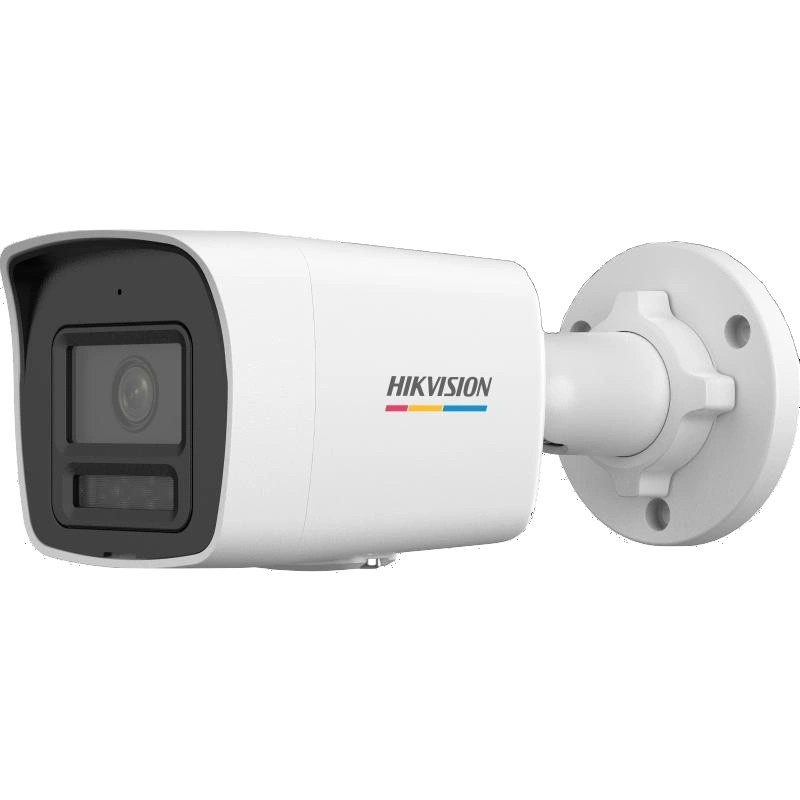
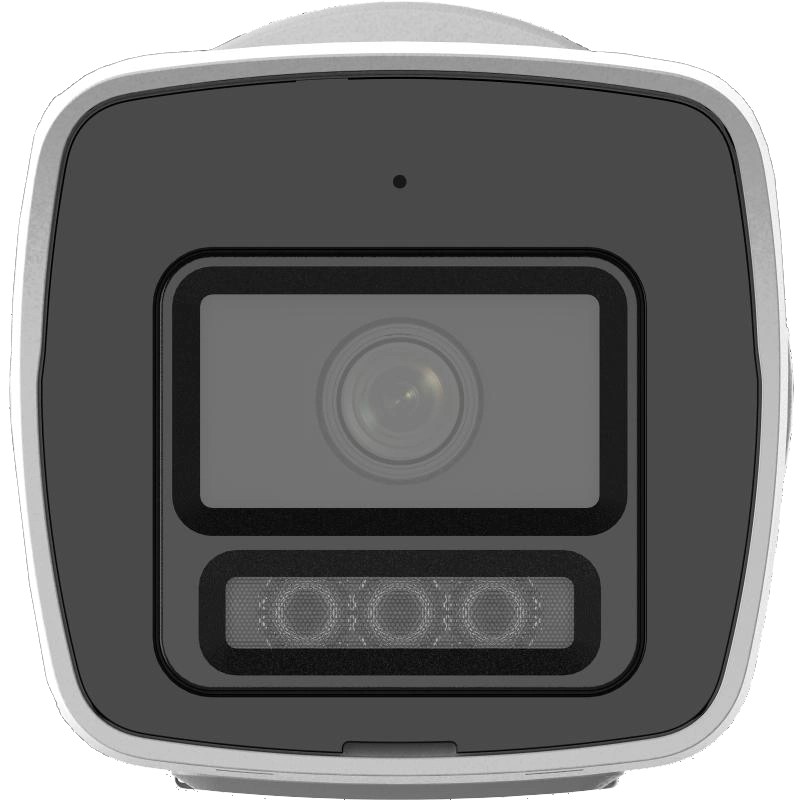
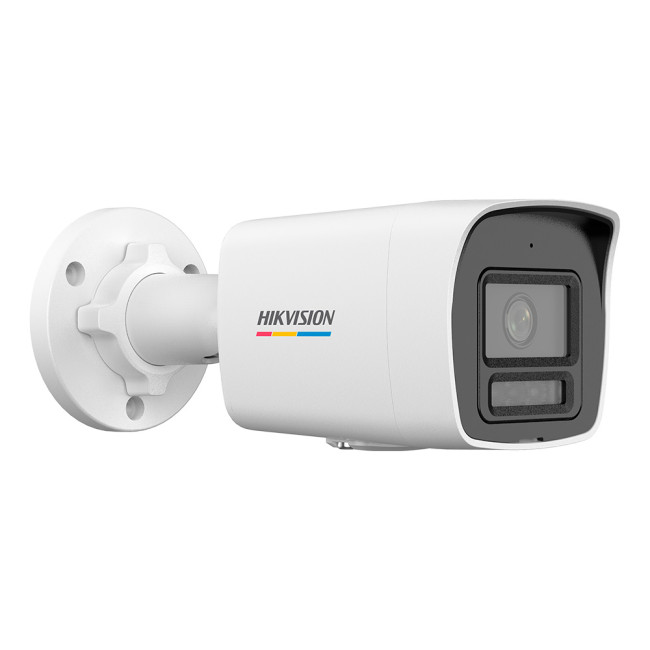
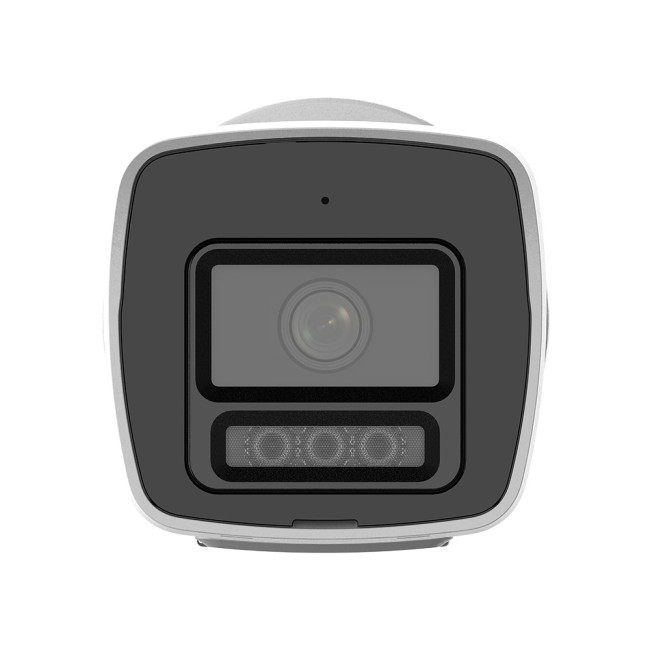
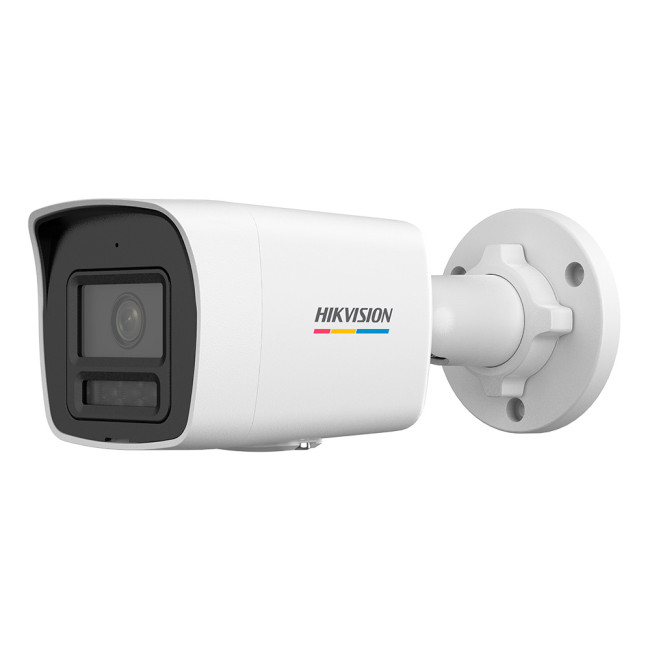


Description Hikvision DS-2CD1027G3-LIUF
2 MP on a 1/2.8″ sensor: when Full HD is plenty and when it no longer is
The camera records Full HD 1920×1080 at 25 frames per second — a resolution easy to underrate next to 8 MP models, yet entirely workable wherever the distances are short. The arithmetic is simple: with 1920 pixels across the frame and a 106° angle of view, an object five metres from the camera occupies several hundred pixels horizontally, which is enough to recognise a familiar face or read the label on a box. At ten metres that becomes a confident "a person in a black jacket with a bag", and at twenty metres only the bare fact of presence, so there is no point aiming this camera at the far corner of a large plot. The second practical gain of 2 MP is a modest bitrate: with H.265+ compression one such channel takes roughly a quarter of the space of an 8 MP one, so four cameras of this model hold about a month of continuous recording on an ordinary 2 TB disk. The limit deserves a plain statement: digital zoom will not pull a licence plate or a small article number out of Full HD — those jobs call for 4 or 8 MP, while 2 MP belongs where it matters to see the event rather than to read fine print.
The LIUF suffix: hybrid illumination to 30 metres and colour at night
The letters LIUF stand for a combination of two things — hybrid illumination (infrared plus white light) and a built-in microphone — and it is the first of those that separates this model from classic IR cameras at the same tier. In night mode the camera works by default with an unobtrusive IR illuminator effective out to 30 metres, and the white light comes on when movement appears in the area, turning the frame colour instead of monochrome. The difference in the practical worth of a recording is large: a monochrome frame records that somebody was there, a colour one records what colour the clothing and the car were — and those are precisely the markers you need when the footage has to be used. The fast G3-generation optics are built for night work, so in a yard with a single lamp or under street lighting the camera often never drops into monochrome at all. The limitation is tied to that same feature: 30 metres is a short reach, and white light in a housing this size is not aimed precisely, so on a driveway or under a window the camera will flash periodically — worth discussing with the household before mounting.
The model's most important limitation: there is no AcuSense here
This is the fact to know before buying: despite the G3 generation in the name, this version carries no object classification — no human, vehicle or animal recognition, only ordinary motion detection based on pixel change in the frame. The consequence is concrete and always the same: the camera reacts to a branch swaying in the wind, a cloud shadow, a cat, rain and headlights from the road, so it can send dozens of alerts in a single night. What follows is predictable — within a week or two the owner mutes notifications, and the system turns from a security device into an archive: the recordings exist, but you learn about an event only when you decide to look. If alerts are what you need, in this Hikvision line the letter H in the name carries the AI classification: in this catalogue that is the DS-2CD1047G3H-LIUF, which does declare human and vehicle detection. And if the camera is meant for continuous recording under a recorder — in a shop, say, where footage is reviewed in the morning rather than acted on at night — the absence of AI is no problem at all, and there is no reason to pay for it.
The built-in microphone: when sound settles a dispute and when it creates one
The microphone in the housing adds an audio channel alongside the video, and in practice it often proves more useful than extra megapixels: in a dispute at the till or at the gate a recording of the conversation explains what the picture does not — who said what, whether there was a conflict, whether the person opened the gate themselves. In a small warehouse sound helps capture machinery operation and verbal warnings to staff; in a workshop it captures the start of an incident that began outside the frame. Technically the audio rides in the same stream, so the recorder or memory card must be configured to record audio for it to be kept — it is quite often left switched off, and the silence in the archive comes as a surprise later. There is a flip side: recording sound in places frequented by third parties has legal boundaries, so in a shop floor or office it is better to announce audio capture with a notice at the entrance. For a purely perimeter camera on a fence the microphone is close to useless — beyond a few metres it mostly catches wind — so do not treat it as an argument for outdoor mounting.
Recording without the cloud: microSD up to 512 GB, FTP, RTSP and ONVIF
No cloud services are declared for this model in its specification, and that is less a shortfall than a different logic: the archive lives either in the recorder, or on a microSD card of up to 512 GB, or is uploaded to your own FTP server, and none of those options needs a subscription. For some buyers that is a deliberate advantage — video never leaves the local network, and the system's operation does not depend on the health of somebody else's service. The RTSP stream and ONVIF support in profiles S, T and G mean the camera attaches correctly not only to a Hikvision recorder but to another brand's NVR or a server-based VMS, keeping the full H.265 stream intact. ISAPI and SDK are available for automation, and confirmed Home Assistant integration lets you surface the image and the motion event on a smart-home dashboard with no intermediate service. The downside of having no cloud is obvious: to view the camera from a phone in another city you need either a recorder with its own remote access or a configured VPN — simply typing a login into an app and getting the stream from anywhere is not on offer here.
6.5 W of power, a compact body and mounting
Consumption of 6.5 W at roughly 0.5 A is among the lowest in the catalogue, and on a large system that difference is tangible: sixteen such cameras come to about 105 W, so a single 120 W PoE switch carries them without risk, whereas with higher-powered models and long-range illuminators the same switch would run out by the eighth camera. Power can come either over 802.3af PoE on a single cable or from a separate 12 V supply, which helps when the camera is added to a system that already has its own power wiring. The bullet housing is genuinely small: 179 mm long, about 69 mm across and 450 g, built from a mix of metal and plastic, so it is less conspicuous on a facade than the large Pro-series bullets but also less resistant to a deliberate blow. IP67 protection and a -30…+60 °C range allow year-round outdoor mounting including a Ukrainian winter, though on an exposed facade without an eave it is worth sealing the connector itself — that is usually where trouble starts, not in the housing. The warranty on this model is 12 months against 24 in the Pro series, another budget-line difference better known in advance.
Where this camera belongs and the jobs it genuinely suits
Its natural place is short distances within about twenty metres: a porch and front door, a pedestrian gate, the yard of a small house, a cottage garden, the approach to a garage, a small shop or workshop where the camera watches the till or the entrance. In a flat or an office it works well on a corridor and front door: the 106° angle takes in the passage completely, the 30-metre illuminator is surplus there, but the colour night frame remains. A good mass-market scenario is a budget set of four to six cameras on a private house, where this model covers the secondary directions (gate, back yard, the wall with windows) while one more expensive AcuSense unit sits on the main driveway and handles the alerts. Where it does not belong: a large perimeter, a long driveway, a car park for twenty vehicles, plate reading, and any site where nobody will review the archive and all hope rests on automatic alerts — without object classification that hope will not be met. Nor should it be bought where fragments of recordings must constantly be enlarged: two megapixels are simply not enough for that by the physics of the frame.
How it differs from the neighbouring Hikvision models in this catalogue
The closest relative in the line is the DS-2CD1047G3H-LIUF: the same Value class and the same hybrid illumination, but 4 MP instead of 2 and, crucially, declared human and vehicle detection; paying up for the H version is effectively paying for the alerts to work, and if you count on reacting at night it is mandatory. If 2 MP suits you but AI does not, look at the dome DS-2CD1323G2-LIUF and DS-2CD1123G2-LIUF in this catalogue: the same resolution and microphone, with human and vehicle recognition present, but in a dome shape — less conspicuous and harder to strike, yet less flexible to aim than a bullet. In the opposite direction sits the DS-2CD1021G0-I: a simpler and markedly more affordable G0-generation camera with a 4 mm lens, but without a microphone and without white light, so monochrome only at night — an option for technical monitoring where image quality is secondary. And if the main direction on your site demands detail, the catalogue holds the Pro-series DS-2CD2083G2-LI: 8 MP, AcuSense, a metal body and a 24-month warranty — another level, but also another role: such a camera goes on one or two key directions while the perimeter is filled out precisely with budget models like this one.
Tell us how many directions you need to cover and where the most important point on the site is — we will say where this model is enough and where a camera with human recognition is the better call.
Characteristics Hikvision DS-2CD1027G3-LIUF
Reviews about Hikvision DS-2CD1027G3-LIUF from real users
No reviews found







