
 m. Сміла, Незалежності, 67г. оф, 406/6























DAHUA DH-IPC-PT1239H-PV (2 MP) - PoE PTZ IP CAMERA WITH INTERCOM

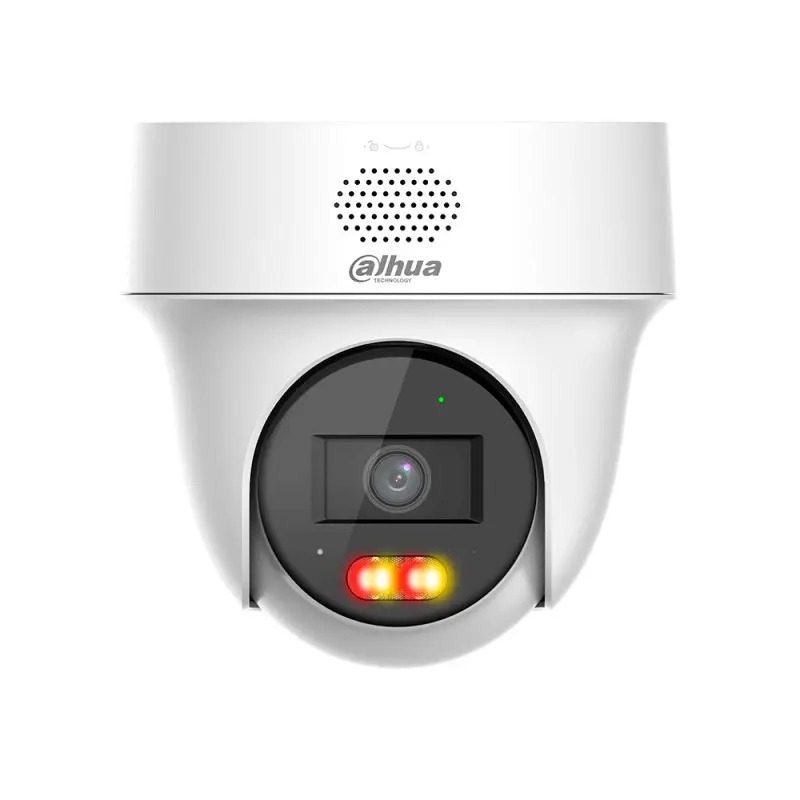
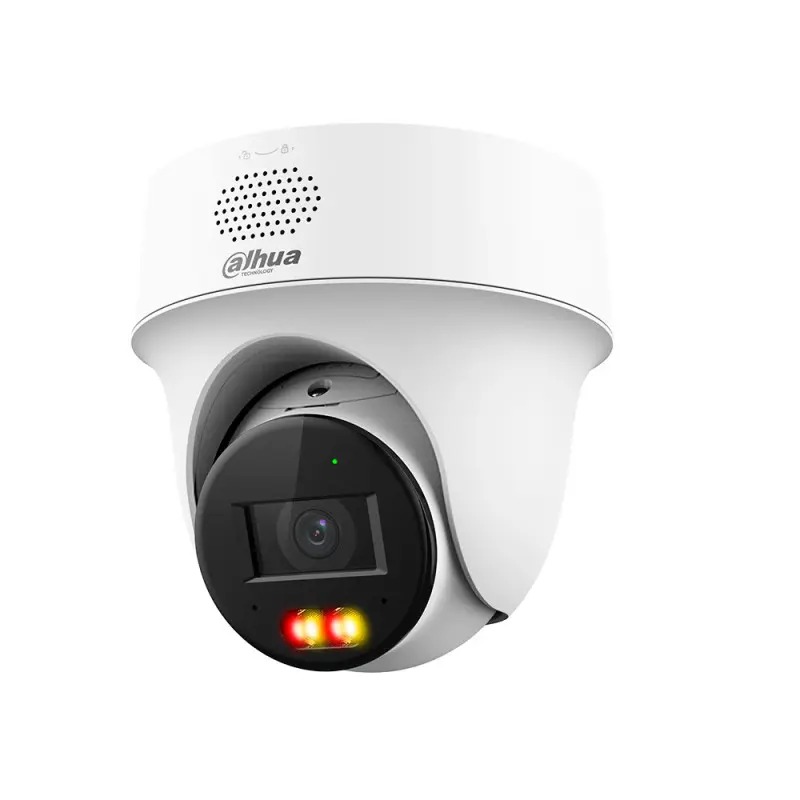
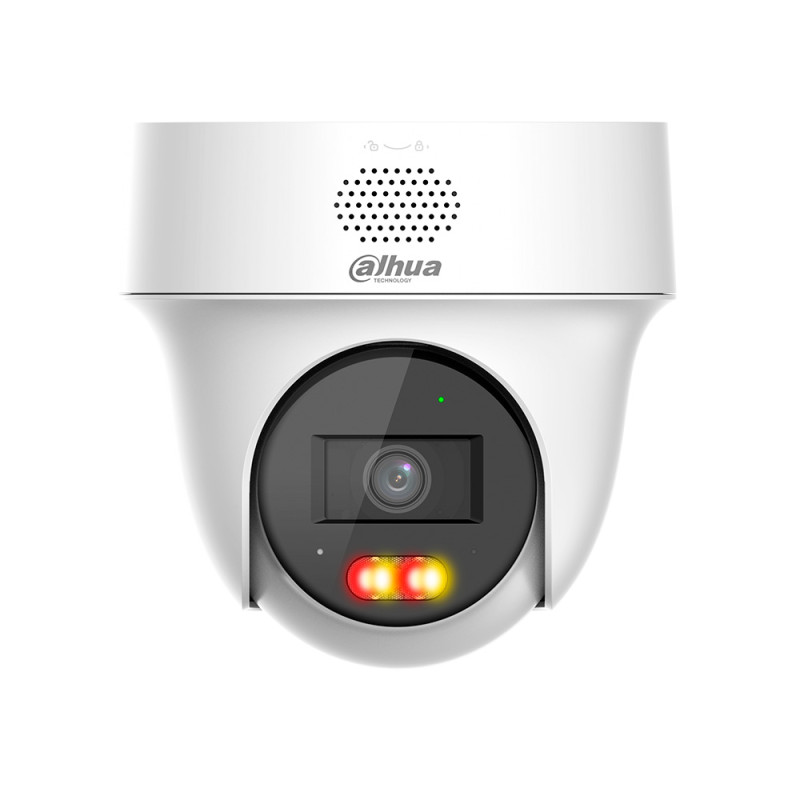
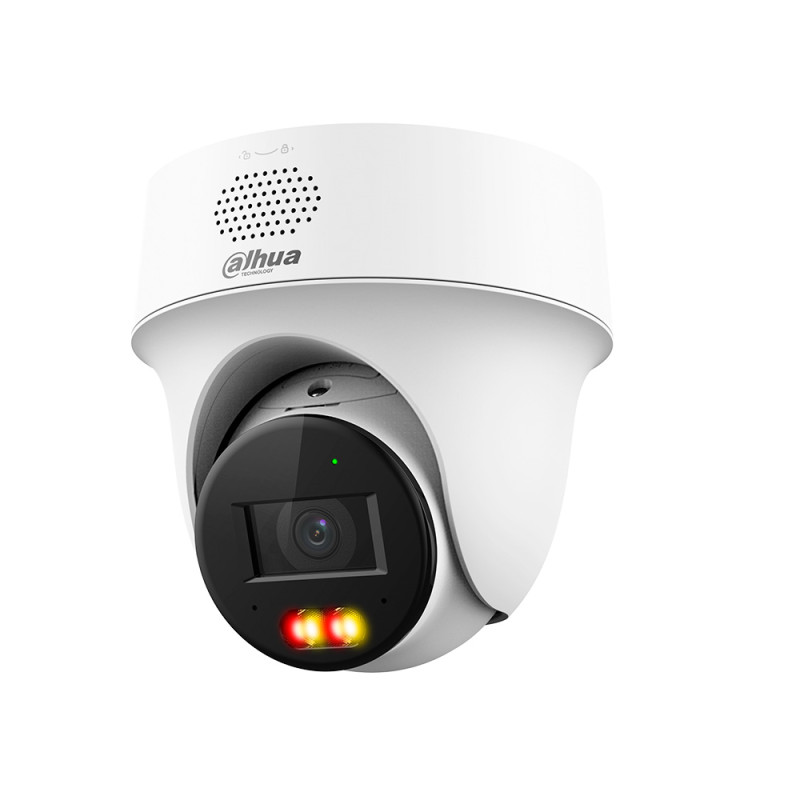


Description Dahua PT1239H-PV
345 degrees of pan and 90 of tilt: one camera instead of three fixed ones
The PT in the name stands for Pan-Tilt: the head rotates 345 degrees horizontally and travels from 0 to 90 degrees vertically, so a single unit on a pole or a house corner can survey practically the whole circle around itself. On a small plot that changes how the system is designed: instead of three fixed cameras aimed in three directions you fit one moving camera, and the saving covers not just the cameras but the cable, the recorder ports and the installer's hours. Pan speed reaches roughly 37 degrees per second horizontally and about 30 vertically — this is not a high-speed stadium PTZ but calm aiming around a yard, where moving between two opposite directions takes a few seconds. The camera stores up to 50 presets and keeps them through a power cut, so your routine viewpoints — the gate, the side door, the parking space, the entrance to an outbuilding — are set once and then recalled with a single tap in the app. And here is the limitation to understand before buying: a moving camera only sees the sector it currently faces, so while it is watching the gate the back yard is not being recorded at all. Wider coverage from one point is not simultaneous coverage, and during the few seconds the head spends travelling between positions part of the area is unwatched entirely; a PT model buys flexibility, but it does not replace several fixed cameras where a continuous archive of every direction at once is required.
Active deterrence: a spotlight and a voice instead of passive recording
The PV suffix marks the active-deterrence versions in Dahua's range, and that function is what separates this model from an ordinary pan-tilt camera. When the analytics classify a person in the frame, the camera can fire a warm white flash — the duration is configurable between 5 and 30 seconds and the strobe frequency can be set high, medium or low — and simultaneously play an audible warning through its built-in speaker, with your own audio file uploaded and the volume set anywhere from 0 to 100 percent. The value here is not measured in image quality but in the incident not happening: somebody who climbs the fence and within two seconds gets light in the face plus a sentence like "you are on private property and security has been called" usually turns back, and there is nothing left to investigate on the recording. For that to work, record your own message, keep it short and in the local language — long texts are useless, because an intruder stops listening after about three seconds. One constraint deserves planning for: in dense housing the neighbours see the light and hear the audio too, so never aim the unit at a pavement or at the windows opposite, and in town the deterrence is usually limited to night hours, otherwise daytime false triggers quickly become a dispute next door.
Smart Dual Light: discreet infrared at night, warm light on an event
Illumination here is dual — infrared LEDs and warm white LEDs in one housing, both groups effective to about 30 metres. The logic runs like this: in normal night mode only the invisible infrared is lit and the camera records in black and white, giving away nothing about its presence; as soon as the analytics see a person, the warm white light comes on and the frame turns colour at exactly the moment colour is needed. Sensitivity of 0.05 lux in colour at an F1.6 aperture is enough for a yard with a street lamp to be recorded in colour with no illuminator at all, while at zero light the LEDs carry the scene from nothing. Thirty metres is a yard, porch, two-or-three-car parking bay or small courtyard distance, not a long fence or driveway: at 40-50 metres from the camera you will see movement at night, and not always even that. Unlike infrared, warm light leaves no telltale red glow at the LEDs and does not light up fog and falling snow nearly as harshly, which is a visible difference in winter night footage.
2 MP and a 103-degree angle: what the camera will show and what it will not
This part calls for candour: a 1/2.8-inch sensor at 1920 by 1080 pixels is baseline 2 MP, the most modest level of detail in the current line-up, and buying this camera to read faces or plates at distance would be a mistake. The 2.8 mm lens spreads those two megapixels across a very wide scene — 103 degrees horizontally and 55 vertically — so pixel density per metre is low: a confident portrait frame reaches about 3-4 metres from the camera, clothing and behaviour can be described out to 8-10 metres, and beyond that you are left with presence and direction of travel. A number plate will not be read by this optic and sensor combination practically anywhere, except where a car stands almost against the camera. In exchange, 2 MP has its own advantages: the stream is light on the network and the disk, 25 frames per second is available at full resolution with no compromise, and digital zoom shows less noise than it does on overloaded 8-megapixel chips of small format. The honest positioning is this — the model is there to act as eyes with a reaction: see, turn, light up, speak and record the event; if the main job is identifying a person from footage a month later, bring the point of passage close to this camera or put a higher-resolution fixed unit beside it.
Human and vehicle classification, a microphone and two-way talk
The camera can separate people and vehicles from everything else moving in the frame, and for a moving model with deterrence that is not an option but a precondition: without classification the spotlight and the speaker would fire at every branch, cat and headlight shadow, and the function would have to be switched off within a week. With classification the alerts mean something, and recorded events can be filtered by object type instead of scrubbing through hours of footage. The built-in microphone and speaker provide full two-way audio: from the app you can not only hear what is happening at the gate but talk to a courier or a neighbour, so the camera partly does the job of an outdoor intercom at a point where none exists. Audio in a recording often matters more than extra megapixels — when a quarrel at the gate or a dispute over a dented car has to be settled, a sentence on the recording decides more than frame detail. One clarification about auto tracking: the specification fields on this product card mark it as present, but the manufacturer's published specification for this model does not explicitly state automatic subject following, so if you specifically need the head to escort a person automatically, confirm it with our manager before ordering.
PoE power, an IP66 shell, and what to plan for in mounting and archiving
The camera runs on 12 V DC at 1 A or over PoE 802.3af, and peak consumption here is noticeably higher than on fixed cameras — up to about 11 W, because the pan motors, the spotlight and the speaker all draw power. That matters when sizing a switch: an 802.3af port supplies 15.4 W, so one camera fits comfortably, but four of them already demand roughly 44 W of useful load, and a cheap switch with a 60 W total budget across eight ports needs checking against its datasheet rather than its socket count. The housing is metal, silver, around 128 mm across and 127 mm deep at 410 g, rated IP66 with surge protection; the manufacturer's documentation gives an operating range of -30 to +55 degrees, and note that our product card lists a wider range than the published specification. Always leave clear space around the head: a pan-tilt mechanism must not be recessed or tucked tight under a narrow soffit, or the camera will be unable to reach part of its positions — and the mechanism is a moving part that wears over the years, whereas a fixed camera has nothing to wear out. Video is encoded in Smart H.265+ (as well as H.265 and H.264 in the B/M/H variants), and a two-megapixel H.265 stream runs at roughly 1-2 Mbit/s, or about 15-25 GB per day of continuous recording: a 2 TB disk holds something like three months from one such camera, and event-based recording stretches that further. There is a microSD slot, but the manufacturer does not publish a maximum card size, just as our card does not list the integration protocols, so if you plan to connect the camera to another brand's recorder over ONVIF please confirm compatibility with our manager; with Dahua recorders such as the four-PoE-port DHI-NVR1104HS-P-S3/H it works natively.
Where this camera belongs and which jobs it genuinely suits
The most natural spot for the PT1239H-PV is the corner of a house, a pole in the middle of a yard or the gable above an entrance — a point from which one camera can survey the gate, the path to the door and the parking space at once. It covers a compact property with several directions of interest well: a yard 10-15 metres across, a plot with outbuildings, a small car park in front of an office, the courtyard of a cafe with a terrace where you want both surveillance and the ability to issue a spoken warning in the evening. Indoors it also works — a warehouse, a workshop, a production area with several zones that should be empty at night — and that is precisely where the audible warning has the greatest effect, because in an enclosed space it sounds louder and more startling. Where it does not belong: a long fence or driveway, which 30 metres of illumination and 2 MP will not cover; an entrance where plates must be read; and a site needing a continuous synchronous archive of every side, where cheaper fixed cameras on each direction deliver more than one moving unit. Nor should it go into dense city housing right against the neighbours' windows: in such a spot the very feature you are paying for will either cause a quarrel or be turned off, leaving you with a basic 2 MP camera.
How it differs from the neighbouring models in this catalogue
Its direct relative here is the Dahua DH-P5AS-PV: also a moving camera with a spotlight and spoken warnings, but 5 MP instead of 2, a 4 mm lens and a Wi-Fi or Ethernet connection; it resolves far more detail and suits places where no cable can be pulled, yet it draws up to 14 W, has no PoE and depends on Wi-Fi stability, which makes the PT1239H-PV the more convenient choice for a permanent wired install powered from a switch. The Dahua DH-SD2C400NA-B-PV-PRO-BE is the next step up: 4 MP, moving, with PoE 802.3af and the same active deterrence — the same idea with a twice-as-detailed image, so if you expect not only a reaction but footage good enough for identification, paying more for that model is justified. The Dahua DH-T5A-PV offers 5 MP with the spotlight and voice but no movement at all: the pick for one specific direction where nothing needs to be looked around for and detail matters. And if active deterrence is not needed at all and the task is plain surveillance, the fixed Dahua DH-IPC-HDW2249T-S-IL eyeball dome on the same 2 MP with Smart Dual Light illumination comes markedly cheaper, draws only 4.4 W and has no moving parts — for a simple yard with one direction of view that is the more rational option, while the PT1239H-PV earns its place exactly when you need both circular coverage from one point and a light-and-sound response to an intruder.
Tell us how many directions you need to keep in frame and how far the gate, the path and the parking space sit from the camera, and we will say whether one moving camera is enough here or two fixed ones would serve you better.
Characteristics Dahua PT1239H-PV
Reviews about Dahua PT1239H-PV from real users
No reviews found







