
 m. Сміла, Незалежності, 67г. оф, 406/6























DAHUA DH-IPC-HFW2849TL-S-PRO (8 MP/3.6 MM) - PoE IP CAMERA PRO

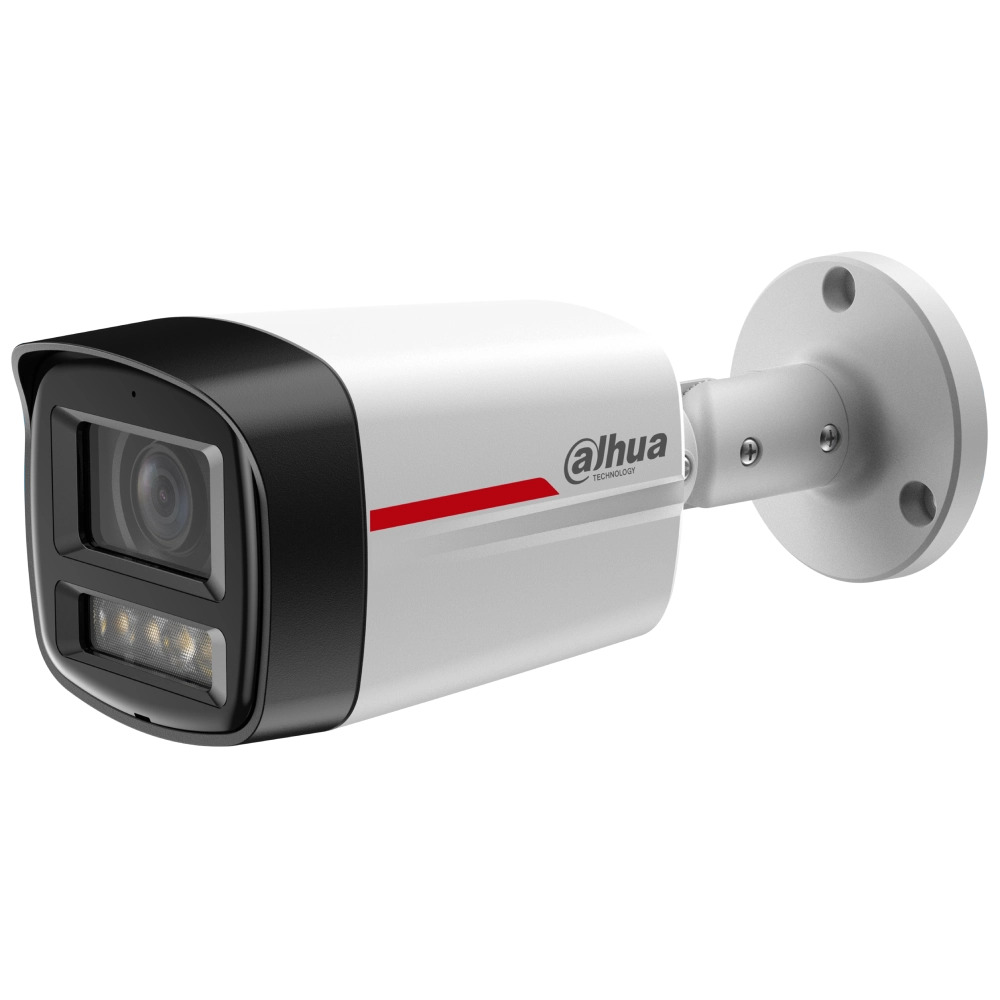
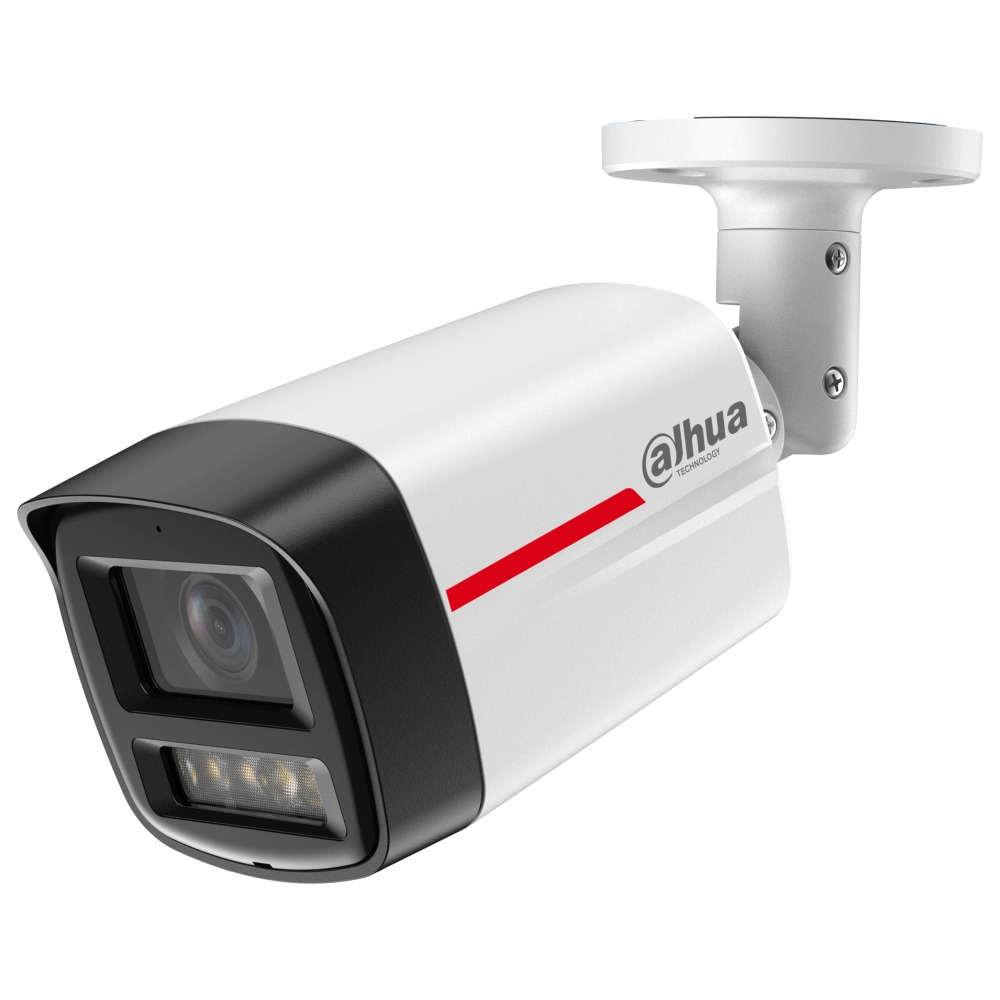
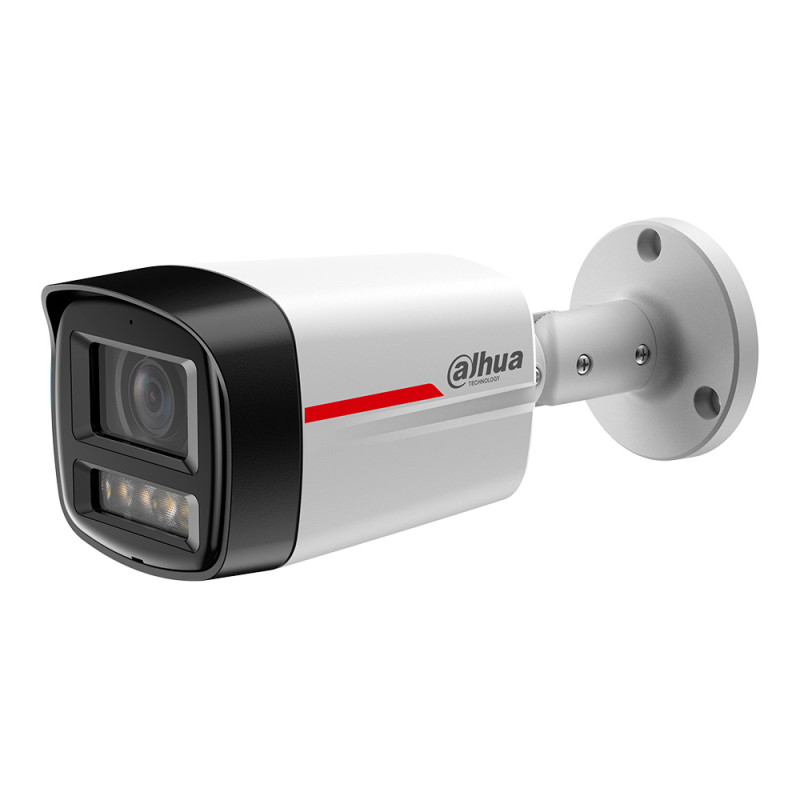
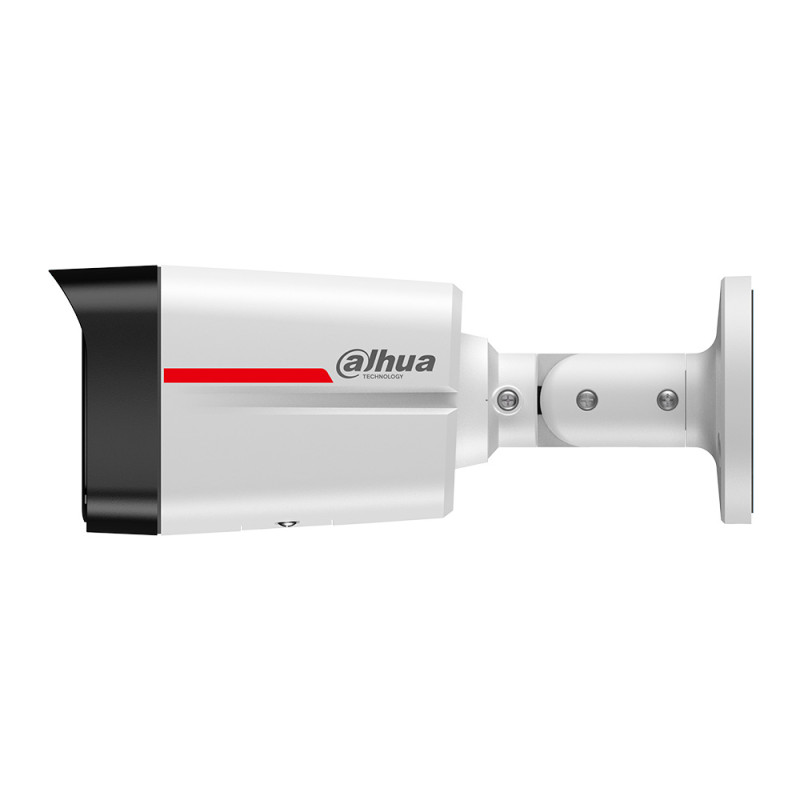
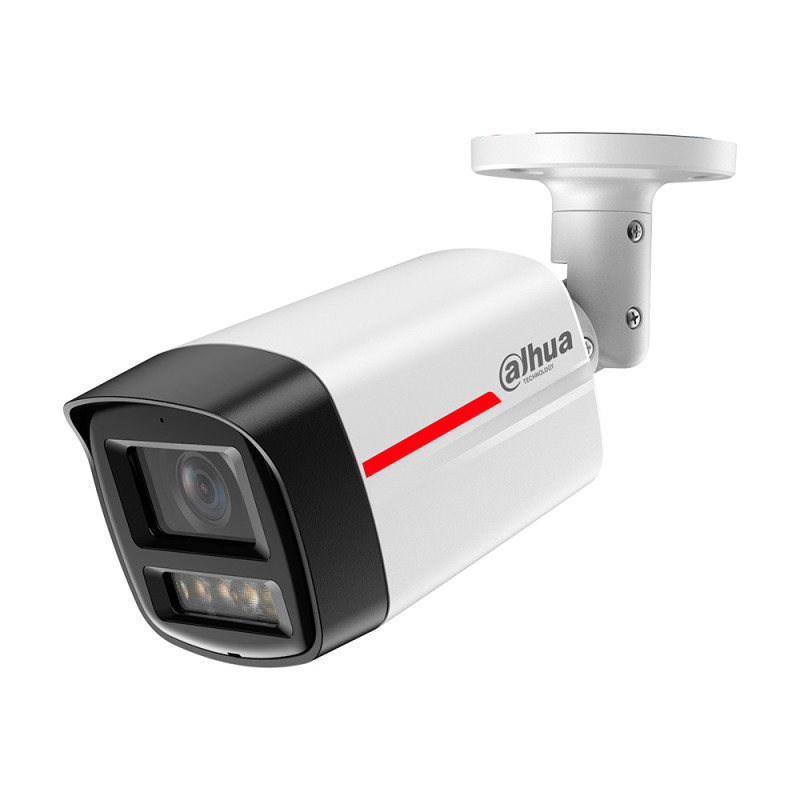


Description Dahua HFW2849TL-S-PRO
WizColor and a 50-metre warm illuminator: the night stays in colour
The letters TL in this model name indicate a warm white illuminator in place of infrared, and that choice shapes everything about how the camera behaves after sunset. Instead of dropping into a black-and-white infrared mode, the camera works through WizColor technology: four warm LEDs light the scene out to 50 metres, while fast optics at F1.0 and sensitivity near 0.0004 lux keep the picture in full colour around the clock. In practice this changes the kind of evidence you end up holding: a monochrome frame tells you that somebody was there, a colour frame tells you it was a person in a blue jacket with a yellow backpack who left towards the next driveway. Fifty metres of effective illumination is well beyond the 30 metres typical of the budget segment, so the camera lights not only the ground beneath it but the far corner of a yard or the opposite side of a street. The trade-off deserves planning for: warm light is visible light, so the camera does not watch invisibly at night, and outdoors it attracts insects that can trigger false detections in summer — which is why the illuminator is normally set to fire on schedule or on an event rather than burn continuously.
8 MP on a 1/1.8-inch sensor and what that means in the frame
A resolution of 3840 by 2160 on a 1/1.8-inch sensor gives roughly four times the pixels of the widespread 2 MP cameras and about twice those of a 4 MP model. The large sensor matters more than the megapixel figure itself: at equal resolution, a bigger chip collects more light per pixel and produces less noise at dusk, which is why cheap 8 MP cameras built on tiny sensors often deliver a worse night image than an honest 4 MP on a large one. The practical gain from 8 MP is post-event zoom: a region of the frame where a 2 MP camera shows a smudge remains usable here for describing a person or reading large lettering on the side of a van. There is a compromise to know in advance — at full 8 MP the camera outputs 20 frames per second, and 25 frames become available when you step down to 4 MP (2688 by 1520). For a yard, a warehouse or a facade, 20 frames are entirely sufficient, but if the camera watches fast traffic and every single frame matters during a frame-by-frame review, it is smarter to run deliberately in the 4 MP, 25-frame mode.
A 3.6 mm lens and a 93-degree view: what actually fits in shot
The fixed 3.6 mm lens covers 93 degrees horizontally, sitting between the wide 2.8 mm option and genuinely narrow optics, and for most residential sites that middle ground is the most useful one. A 2.8 mm lens takes in more space but spreads the same pixel count across a wider scene, so distant detail shrinks; 3.6 mm narrows the view and in exchange raises pixel density per metre, keeping a face readable further out. As a rough guide, this means a confident portrait-grade frame at eight to ten metres, dependable recognition of build, clothing and behaviour out to twenty or twenty-five metres, and beyond that a zone where presence is clear but identifying features are not. Licence plates at twenty to thirty metres are outside what this optic will reliably read — for that job the gate or walkway has to be brought closer to the camera, around six to eight metres, or handled by a separate camera with longer or varifocal optics. Magnification here is digital only, so framing is set once during installation; it is worth spending the extra ten minutes on the pole rather than regretting the tilt angle later.
WizSense analytics: the camera tells a person from a branch
The model belongs to the WizSense family, which means the analytics run inside the camera on its own processor: SMD Plus classifies the object and separates people and vehicles from branches, shadows, rain, snow and animals. The difference from plain motion detection is familiar to anyone who has owned a cheap camera: without classification, alerts arrive on every pixel change, within a week there are hundreds of them, and the owner simply turns push off — after which the system stops working as security and becomes an archive you only open after an incident. With classification, alerts arrive on substance, so there is no urge to mute them, and the recorded footage can be filtered by object type instead of scrubbing through hours of video. Notifications are delivered by push and e-mail, and the camera has a built-in microphone, so sound accompanies the video — for sorting out a dispute at a gate or in a warehouse that often matters more than two extra megapixels. One note: the feature table for this item in our catalogue mistakenly shows human and vehicle detection as absent, while the manufacturer documentation lists SMD Plus as present, so if the function is critical for you, please confirm it with a manager before ordering.
Power, housing and mounting: 7.2 W, IP67 and a metal body
The camera runs from 12 V DC or over PoE 802.3af, consuming around 7.2 W at roughly 0.6 A — a 50-metre warm illuminator needs more energy than conventional infrared, and that shows up directly in the consumption figure. Sizing a system is straightforward: the 802.3af budget is 15.4 W per port, so one camera passes with margin, but eight of them on a single switch draw about 58 W of useful load, and inexpensive switches with a 60 to 65 W total budget are then running right at the edge. The body is metal, 197.9 mm long and 570 g, which is markedly tougher than plastic and matters beyond vandalism: metal carries heat away from the sensor and the LEDs, and that feeds straight into how much noise the image shows in summer. The IP67 rating means full dust protection and resistance to short immersion, which in practice buys peace of mind on an exposed facade under wind-driven rain with no eave above the camera. The operating range of -40 to +60 degrees Celsius covers a Ukrainian winter with room to spare, and that is not a formality: cheap cameras rated only to -10 degrees frequently fail to start in January after a power cut.
Storage, codecs and what the camera works with
Video is encoded in Smart H.265+ as well as H.265, H.264 and H.264H, and the codec is what decides how much archive you end up with: an 8 MP stream in H.265 at a sensible bitrate runs around 4 to 6 Mbps, which is roughly 50 to 60 GB per day of continuous recording. As a worked example, a 2 TB drive holds about 35 to 40 days from one such camera, or roughly a week to ten days if four 8 MP cameras share that drive; switching from continuous to event recording multiplies the retention several times over. Locally the camera writes to a microSD card of up to 256 GB, which is insurance against the recorder being stolen or the network going down rather than a substitute for a recorder. Integration options include ONVIF, FTP, SFTP, CGI and P2P, Home Assistant is supported, and client apps exist for Windows, macOS, iOS and Android — so the camera fits both a Dahua recorder such as the DHI-NVR1108HS-8P-S3/H with its eight PoE ports and a third-party system over ONVIF. There is no cloud service in this model, which is arguably a plus: no subscription and no dependence on somebody else server, though remote access then has to be arranged through P2P or through the recorder.
Where to mount it and the jobs it suits best
A bullet body almost twenty centimetres long on a bracket is a camera that is visible from a distance, and that visibility works as prevention in itself: most opportunistic intruders pick the property without obvious surveillance. Its natural places are the facade of a house or shop, a long fence line, a driveway between buildings, a warehouse perimeter, a yard with a loading bay — anywhere the controlled zone is elongated and far illumination is needed. For that geometry, two cameras facing each other from opposite ends of a fence beat one camera in the corner of a plot: both sides of the subject end up on video whichever way they move, and a receding back is not the only thing on the recording. Indoors the model is usually excessive — a 50-metre warm illuminator in a corridor or sales floor glares and bounces off walls, and a conspicuous bullet in a cafe or office looks aggressive, where a compact dome is the better fit. It is also the wrong tool when the real task is one narrow point at a distance, such as a barrier arm or a gate with plate reading: 93 degrees is too wide for that, and digital zoom does not make up for the missing focal length.
How it differs from the neighbouring models in this catalogue
The closest analogue here is the Dahua DH-IPC-HFW2449TL-S-PRO: the same series, the same warm-light technology and the same 50-metre illuminator, but 4 MP instead of 8 MP and a 2.8 mm lens instead of 3.6 mm. If the camera looks at a modest yard or a porch where the controlled zone sits within ten to fifteen metres, the junior 4 MP version covers the task completely and paying up for 8 MP buys a specification line rather than a result; 8 MP starts to earn its keep on wider and longer scenes where you later need to enlarge a fragment. The Dahua DH-IPC-HFW2849S-S-IL is also 8 MP in a bullet housing, but with Smart Dual Light — infrared plus warm light — at 30 metres: it can watch discreetly in infrared and fire white light only on an event, at the cost of shorter illumination and a wider 2.8 mm view. The Dahua DH-IPC-HFW2849T-AS-IL pairs the same 8 MP and 3.6 mm with a 50-metre dual illuminator plus alarm inputs and outputs for a siren or a sensor, which makes it the pick for a site with security automation. And if you need active response rather than observation alone, this catalogue also has the pan-tilt DH-SD2C400NA-B-PV-PRO with a floodlight and voice warning — it resolves less detail at 4 MP, but it chases the visitor off by itself.
If you are unsure whether 8 MP at 3.6 mm is the right fit for your site, send us the length of the area you need covered and the planned mounting height, and we will work out what will actually be visible in the frame.
Characteristics Dahua HFW2849TL-S-PRO
Reviews about Dahua HFW2849TL-S-PRO from real users
No reviews found







