
 m. Сміла, Незалежності, 67г. оф, 406/6























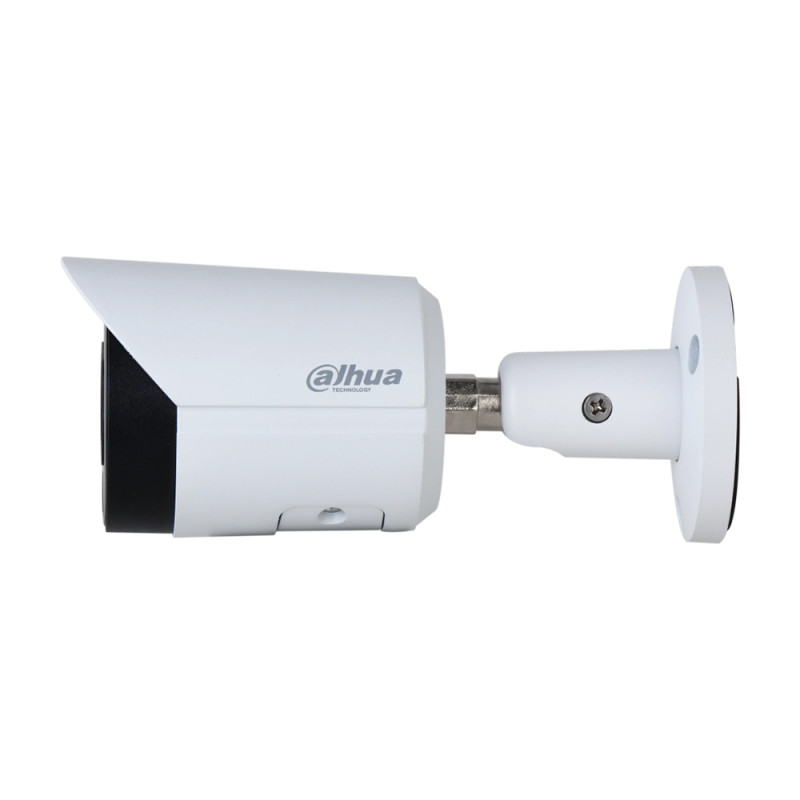
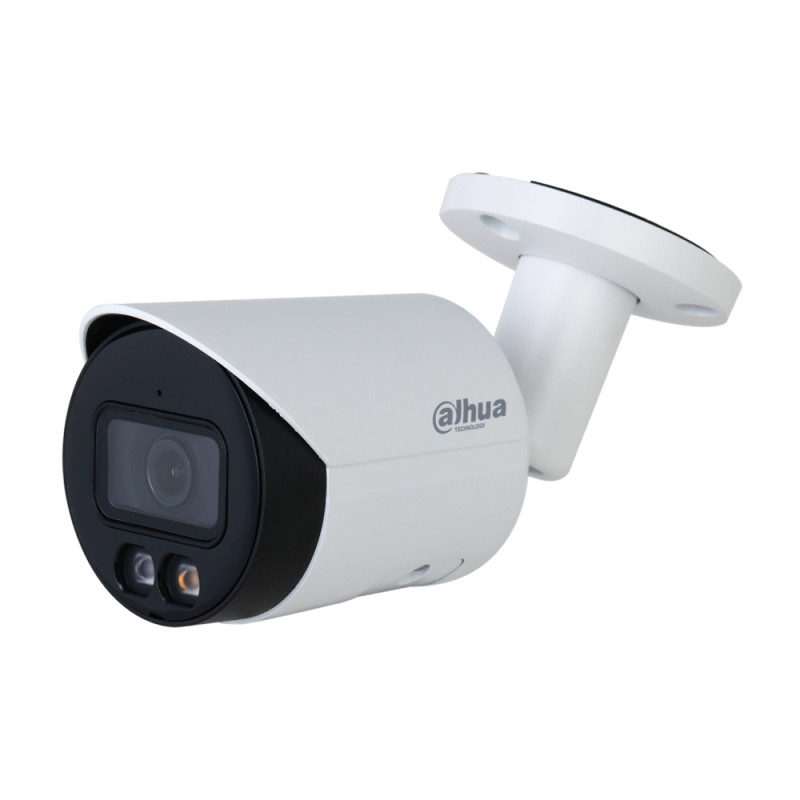
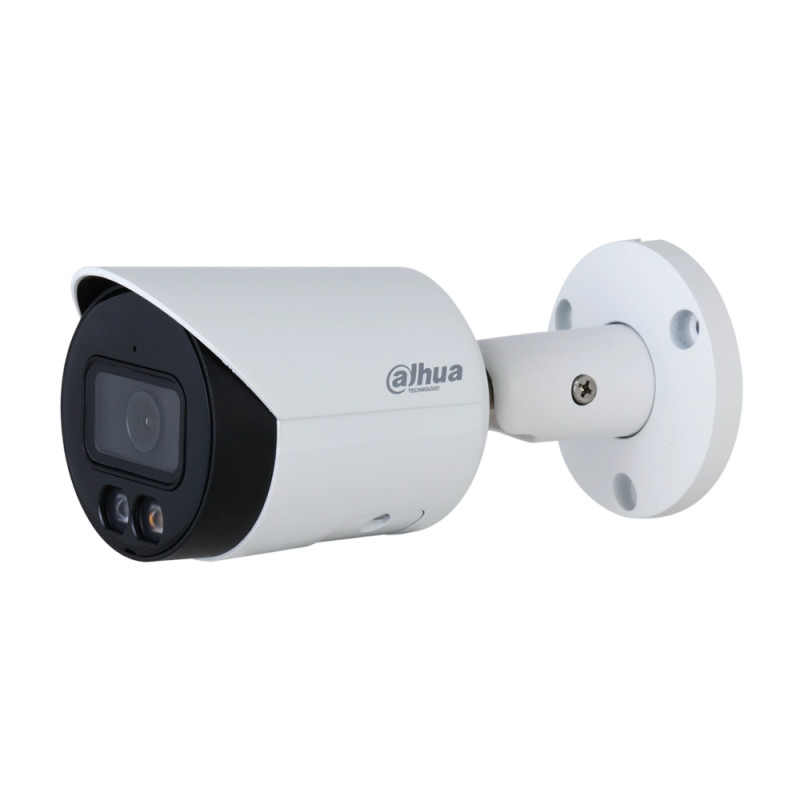
DAHUA DH-IPC-HFW2449S-S-IL (4 MP/2.8 MM) - PoE IP CAMERA

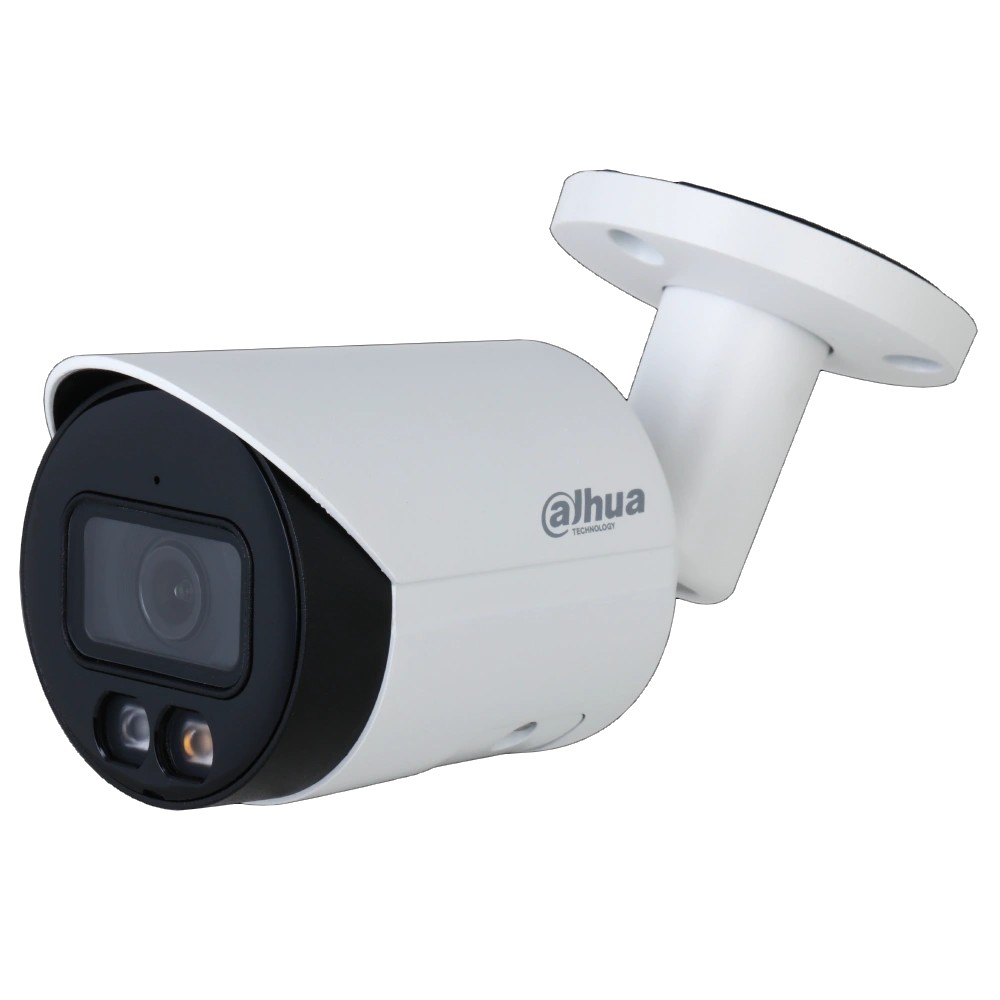
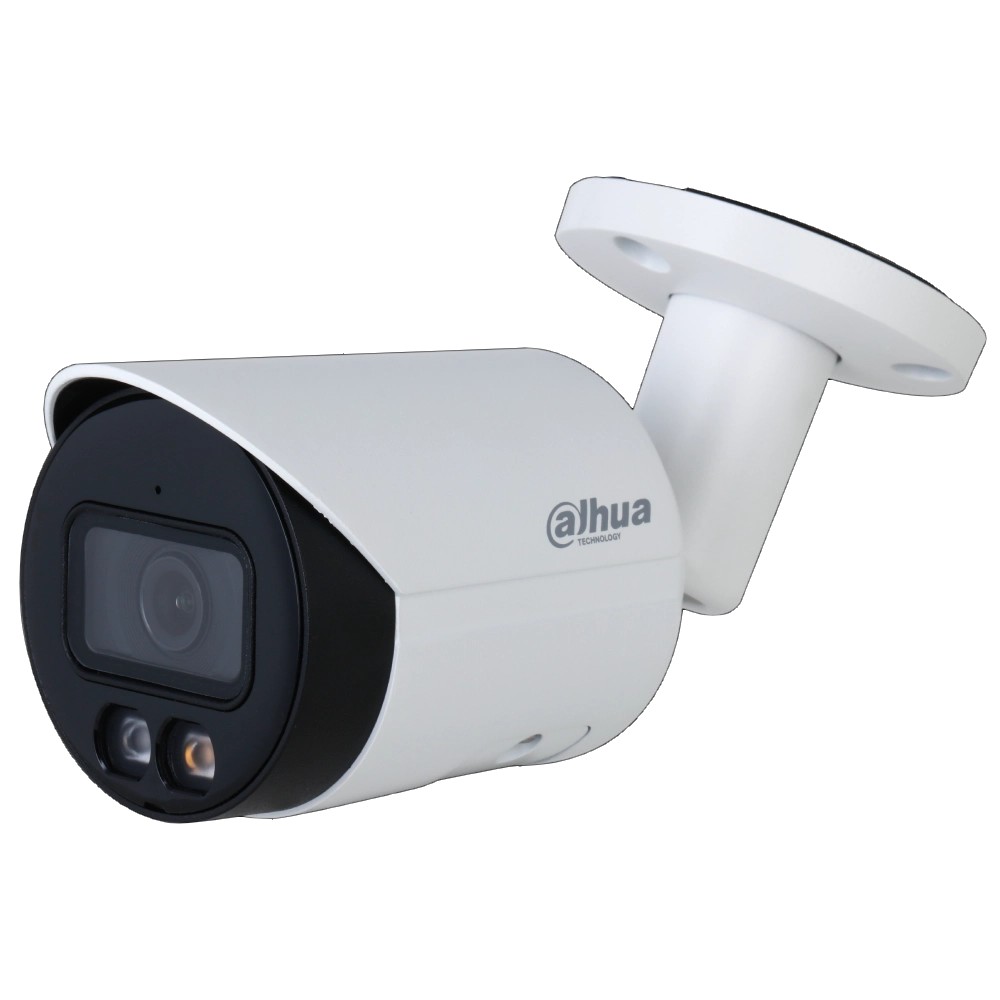
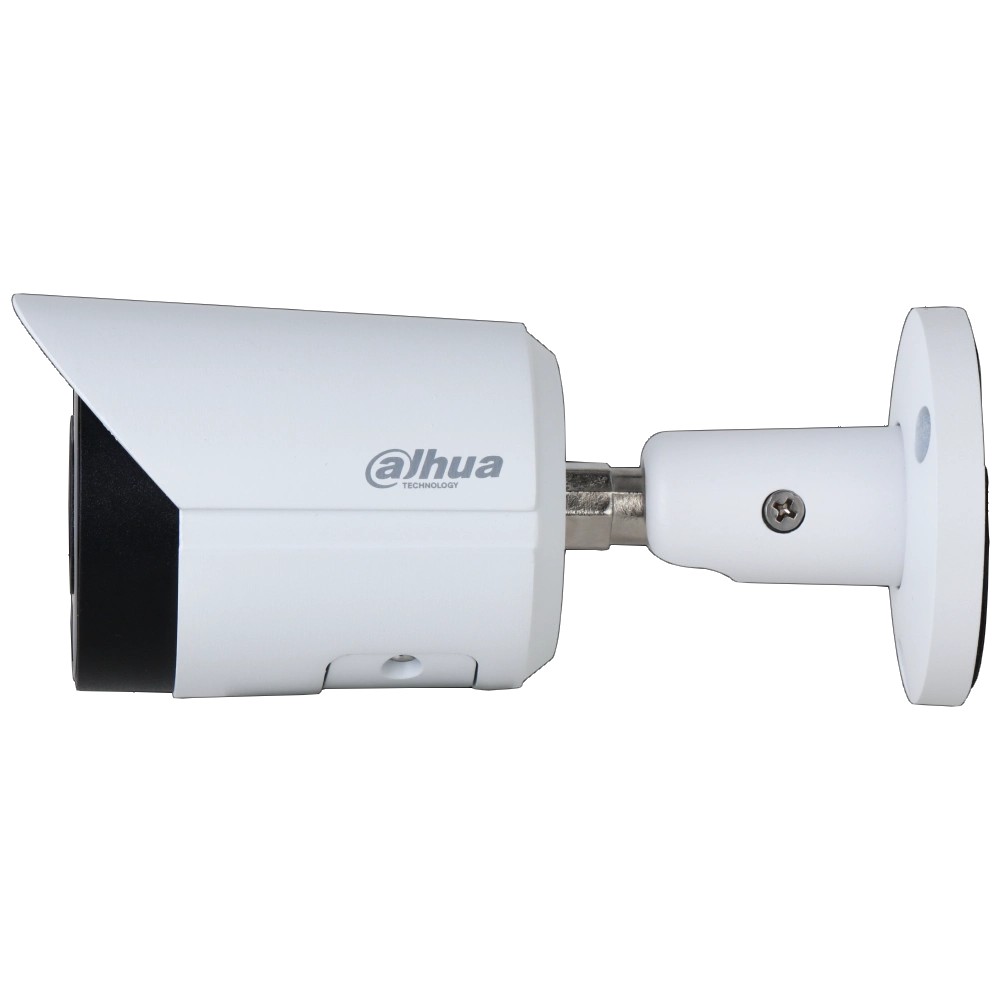
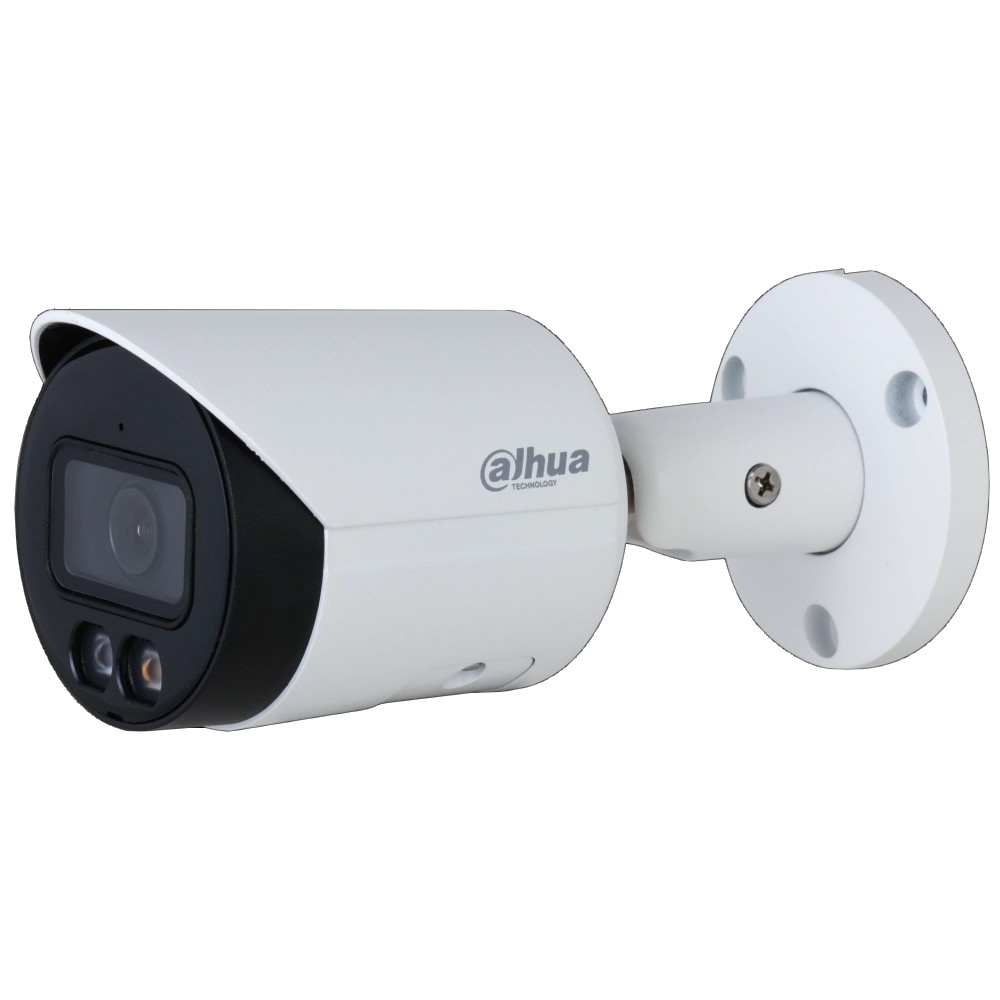


Description Dahua HFW2449S-S-IL
Smart Dual Light: colour footage at night instead of a grey silhouette
The -IL suffix in the model name stands for Smart Dual Light: the camera carries both an infrared illuminator and a warm white LED illuminator, and the analytics engine decides which one to use. While nothing is happening in the scene the IR illuminator works alone — invisible to the eye, it draws no attention to the camera, attracts no insects, and the recording stays black and white. The moment the processor classifies an object as a person or a vehicle, the warm white light comes on and the frame turns full colour, so instead of a silhouette in a light jacket you get footage showing a beige jacket and a dark blue estate car. Those details are what matters when the recording has to be shown to the police or an insurer, because a monochrome silhouette only confirms that somebody was there. Warm white light is also kinder than cold white: it dazzles the person in frame less and renders skin and clothing more naturally, and both illuminators reach the same 30 metres, so the colour mode does not cut out halfway across the yard.
4 MP, a 2.8 mm lens and a 95-degree field of view: what you really see
The 1/2.9-inch 4 MP sensor produces a 2688×1520 frame, roughly twice the pixel count of the widespread 2 MP cameras, and that is the threshold at which digitally zooming into a fragment still returns something useful. One nuance rarely printed in the spec sheet: at full 2688×1520 the camera delivers 20 frames per second, while 25 frames are available in the 2560×1440 mode. For security work the gap between 20 and 25 fps is barely noticeable, but if genuinely smooth motion matters — a till, a turnstile, a conveyor — it is better to plan for 2560×1440 from the start rather than chase the maximum pixel count. The 2.8 mm lens with its 95-degree field of view is wide: a single camera covers a typical private yard, an entrance gate area or a small retail floor in one piece, with no blind spots at the edges. The trade-off of a wide angle is worth knowing in advance — detail shrinks quickly with distance, so facial features and number plates are reliably readable within roughly ten metres, and beyond that the camera records the situation rather than identifying marks.
WizSense analytics: SMD Plus, tripwire and intrusion zones
This is a WizSense 2 series camera, which means video is processed on board by a neural-network algorithm rather than by comparing neighbouring frames for changed pixels. The core function is SMD Plus: the camera separates people and vehicles from a swaying branch, a cloud shadow, rain caught in the illuminator beam or a cat on the fence, and only raises an event once the object has been classified. On top of that sit two perimeter rules — tripwire and intrusion — again with human and vehicle classification, so you can be alerted about people in a driveway that the owner's own car uses several times a day. The pay-off here is behavioural rather than technical: a camera without classification teaches its owner within a week to ignore notifications, after which he switches them off and the system stops being a security system and becomes a mere archive. The limits deserve a straight answer too: there is no animal detection in this model, so a large dog may be handled as a person, and face recognition, people counting and plate reading are simply not part of it — those belong to higher series and to the corresponding recorders.
Metal, IP67 and PoE: mounting, frost and sizing the switch
The housing is all-metal, 480 g and 166 mm long — the classic bullet shape on a bracket, visible from a distance, and its mere presence on a facade already deters a share of opportunistic visitors. IP67 means complete dust protection plus resistance to brief immersion, so the camera can sit on an open wall with no eaves above it, exposed to wind-driven rain, rather than only under a canopy as IP65 models prefer. The −40 to +60 °C operating range is specified for a real winter: cheaper cameras rated from −10 °C often fail to come back up after a power cut on a frosty night, or lose focus as the optics deform. Power comes either from 12 V DC or over PoE 802.3af on the same cable that carries the data, at 5.9 W and a current of about 0.5 A. For a budget estimate that works out neatly: eight of these cameras amount to roughly 47 W of real load, so even an inexpensive eight-port PoE switch with a 60-65 W budget covers the installation with headroom — headroom best kept for a future camera with a heated housing.
Where the archive lives: SD card, recorder and third-party systems
The microSD slot takes a card of up to 256 GB, which is not a replacement for a recorder but an insurance policy: if the network goes down or someone unplugs the NVR, recording continues locally and can be pulled off the card once the link is back. As a yardstick, one 4 MP H.265 stream consumes roughly 40-50 GB per day of continuous recording, so a 256 GB card holds about five to six days around the clock and considerably more if you record on events only. The H.265 codec with Smart H.265+ on top cuts the bitrate further on a static scene, which matters a great deal when several cameras share one uplink to the recorder or are viewed remotely over the internet. Support for ONVIF, FTP/SFTP, CGI, P2P and Milestone means the camera is not locked to Dahua recorders and works with third-party NVRs and video management software — an important point when another brand is already installed on site. The built-in microphone records audio alongside the video, but there is no speaker, so this model cannot do two-way audio and you will not be able to speak to the person in frame.
Where to install this camera and the jobs it was built for
Its strongest scenario is the outdoor perimeter of a private house: the yard, the entrance gate, the facade, the back garden — places where what you need at night is not the bare fact of movement but a colour frame carrying identifying marks of a person or a car. The second natural niche is a small commercial site: a shop entrance, a loading bay, the car park in front of an office, the yard of a repair shop, where the metal housing and IP67 shrug off dust and a hose wash. On an elongated plot — a long fence, a passage between buildings — two of these cameras facing each other beat one in the corner, because a person walking away from the first camera always stays in the frame of the second. Where the model is out of place: a narrow pass-through point that calls for confident face identification or plate reading, which asks for a longer or varifocal lens such as the HFW1230T1-ZS-S5 from this same catalogue with its 2.8-12 mm optics. Indoors it will work as well, but a 30-metre illuminator in a corridor is overkill and a bullet body on a bracket looks bulky there, so a dome shape usually makes more sense inside.
How it differs from the neighbouring Dahua models in this catalogue
Its closest relative is the Dahua DH-IPC-HDW2449T-S-IL: identical 4 MP Smart Dual Light internals in an eye-ball dome housing that sits lower and draws less attention; take that one for a ceiling, a porch or an interior, and the HFW2449S-S-IL for a facade or a pole where you need bracket reach and precise aiming into the distance. The DH-IPC-HFW2249S-S-IL is essentially the same camera at 2 MP: if it watches a short yard and seeing that there is a person in frame is enough, it is a noticeably more affordable option, though digital zoom on it yields almost nothing. In the other direction sits the DH-IPC-HFW2849S-S-IL at 8 MP, where paying more for double the detail is justified on a wide yard or a car park, when one camera has to cover ground that would otherwise need two. If night-time reach is the real problem, look at the DH-IPC-HFW2449TL-S-PRO: the same 4 MP but illumination up to 50 metres and a higher 7.2 W draw, which is sensible for a long driveway or a large plot. Conversely the DH-IPC-HFW1431S1 is the junior 1-series at 4 MP with no AI analytics and no white light: cheaper, but it alerts on any movement at all and shoots monochrome at night, so the saving lands exactly on the function you bought a camera for.
If you are not sure how many cameras your site needs or which optics to choose, send us the perimeter length, the number of entrances and where cable already runs — we will put together a layout with a calculation of what ends up in each camera's frame.
Characteristics Dahua HFW2449S-S-IL
Reviews about Dahua HFW2449S-S-IL from real users
No reviews found







