
 m. Сміла, Незалежності, 67г. оф, 406/6























DAHUA DH-IPC-HFW1431S1-BE (4 MP/2.8 MM) - PoE IP CAMERA



Description Dahua HFW1431S1-BE
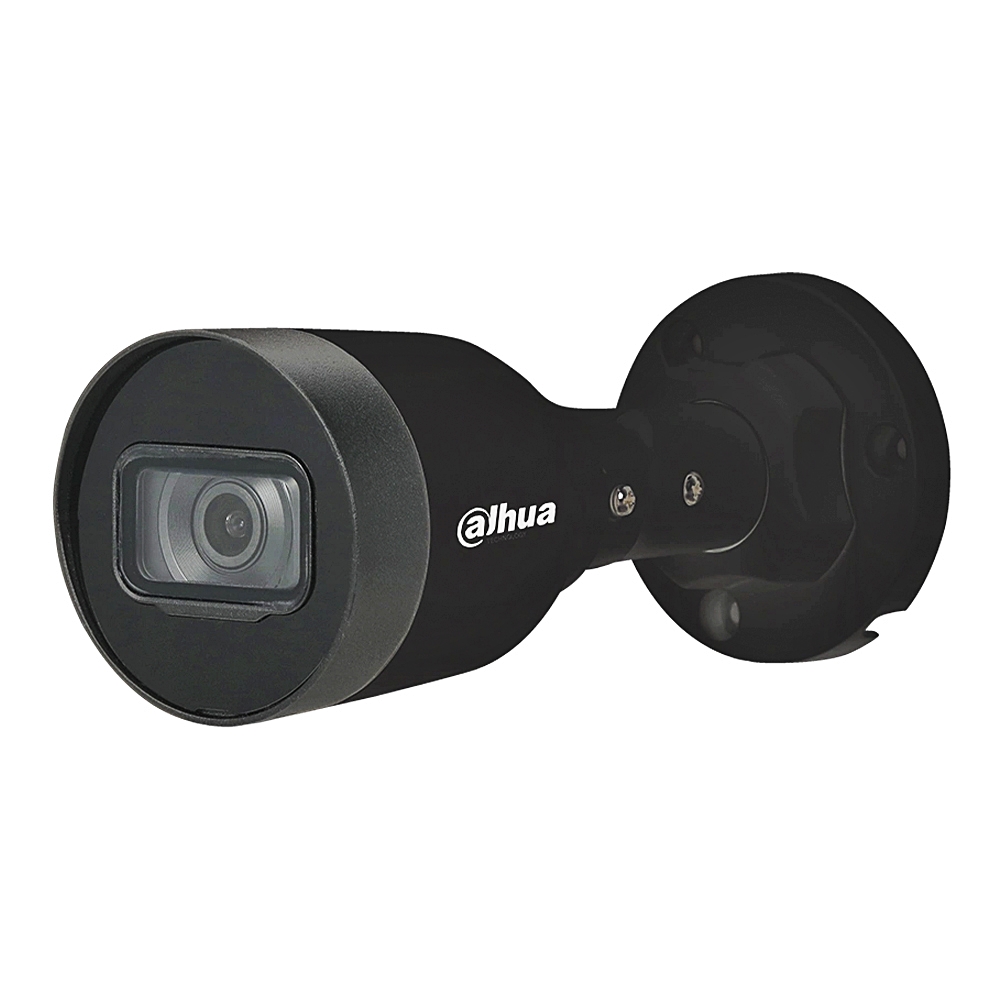
Black housing is an installation decision, not a styling one
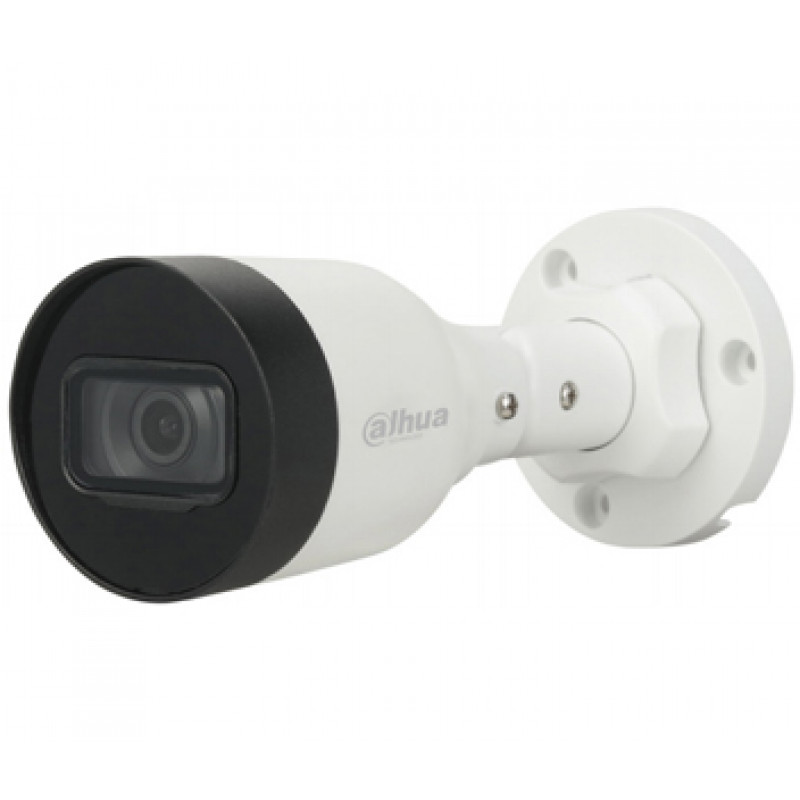
The BE index separates this version from the plain HFW1431S1 by paint alone: the same 1/2.7" 4 MP sensor, the same infrared reach of up to 30 metres and the same 5 W draw sit inside both bodies. What changes is how the camera behaves on a real wall — against dark brick, under a brown soffit, on a graphite fence or a steel gate the black cylinder merges into the surface, and a casual visitor never registers that anything is watching. A white camera on a dark background does the opposite: it becomes the most visible object on the facade, easy to spot, easy to walk around outside the frame and occasionally easy to knock aside with a stick. There is a trade-off worth knowing — dark plastic heats up more than light plastic under direct southern sun, so on a bare sunlit wall with no overhang the white version or a small canopy is the safer choice. And if your goal is deterrence rather than discretion, deliberately visible white hardware communicates «this place is monitored» far better than a camera nobody notices.
Four megapixels across 104 degrees: what the frame actually resolves
The 1/2.7" sensor delivers 2688×1520 pixels, roughly twice the detail of the two-megapixel cameras that still dominate this price class. With a 2.8 mm lens covering 104 degrees horizontally, one unit takes in a typical house yard or a driveway entrance without pairing two cameras facing each other. One specification detail matters more than it looks: full 2688×1520 output runs at 20 frames per second, while 25 or 30 frames are available at 2560×1440, so the web interface makes you choose between maximum detail and smoother motion. For general area coverage leave it at 4 MP and 20 fps; if the frame includes a lane where cars pass at 30-40 km/h, dropping slightly in resolution buys cleaner individual frames when you later scrub through the recording. The wide angle has a cost you should plan around — a licence plate stops being reliably readable beyond roughly ten metres, which is the argument for a second, tighter camera at the gate rather than one lens for every task.
Up to 30 metres of infrared, and an honest word about black-and-white nights
Illumination comes from a single high-output infrared LED rated for an effective 30 metres, enough for a yard, an access road or the inner court of a small warehouse. Smart IR trims the beam automatically when somebody steps close to the lens, which is what keeps a face at two or three metres from burning out into a white blob. The model's hard limit is the absence of white light, so night footage is always monochrome. You will see the silhouette, the height, the gait and whether the person carries something, but not that the jacket was red or the car silver — and those are exactly the details police or an insurer ask for first. Incidentally, black paint does not hide the camera after dark: the faint red glow of working infrared diodes is visible from several metres regardless of housing colour.
Motion detection only, with no human or vehicle classification
This is an Entry-series camera without WizSense analytics on board: it runs classic pixel-change motion detection inside rectangular zones you draw, plus service alarms such as lens tampering, network loss, IP conflict and unauthorised access attempts. In practice the camera cannot tell a person from a branch, a cat or a curtain of rain, and the infrared illuminator attracts insects whose flight past the lens registers as large motion in the frame. The failure pattern is well known: the owner enables alerts, collects several hundred empty notifications within a week and switches them off permanently, after which the installation stops being a security system and becomes a video archive. The workable approach is to narrow detection zones down to what genuinely matters — the gate, the path to the door — and to leave smart filtering of people and vehicles to a recorder that has analytics of its own. If reliable push alerts about a person are a requirement, look at the 2-series models with SMD Plus instead, because AI cannot be added to this hardware later.
The archive lives on the recorder: there is no SD card slot
No memory card is provided here, so the camera always works alongside a recorder or a server and cannot store anything locally on board. The consequence is direct: a cut cable, a dead switch or a failed recorder means not a pause in viewing but missing footage for that period, which is why the recorder and the switch belong behind a UPS rather than in a bare socket. The stream is H.265, roughly twice as efficient as H.264, and in practice a 4 MP channel with H.265+ consumes somewhere around 1-2 TB per month of continuous recording depending on how busy the scene is. Support for ONVIF, CGI, FTP and P2P means the camera registers not only with Dahua recorders but with third-party NVRs and VMS platforms as well, although some service settings stay out of reach in a foreign interface. A built-in microphone is listed in the product card, yet audio is only written when the audio track is enabled on that recorder channel — and recording conversations on a site carries its own legal constraints.
12 V or PoE power, IP67 sealing and operation from -40 to +60 °C
The camera pulls about 0.4 A at 12 V for a 5 W load, so eight of them on one switch add up to roughly 40 W, which any inexpensive eight-port 802.3af PoE switch handles with room to spare. Dahua allows roughly ±30 percent input voltage tolerance, and on lines with the voltage sags common in Ukrainian suburbs that matters more than it sounds: cheaper cameras with tighter tolerance reboot themselves at random on such a feed. IP67 is not merely rain resistance but sealing verified against immersion in a metre of water, so the camera survives a position under a leaking downpipe or on a facade that side wind soaks. The metal-and-plastic body is 164.7 mm long and weighs 380 g, mounting on an ordinary bracket, though a cylinder that long needs clearance — in a narrow window reveal there is simply no room to aim it. The -40 to +60 °C range covers a Ukrainian winter comfortably, while the warranty on this model is 12 months, half of what the senior 2-series carries, which is worth weighing on sites where a camera runs non-stop for years.
Where it belongs, and which jobs it is genuinely built for
This camera is at its best wherever you need a solid general view and a dependable archive: a house yard, a driveway entrance, a warehouse courtyard, the wall of a workshop, the entrance area of a small shop. The bullet form has a practical advantage over a dome — the direction of view is obvious from outside, so the aim can be set and documented during installation with confidence that the covered zone will not drift over the years. For corridors, narrow passages and long stair flights switch on 90 or 270 degree image rotation: the frame becomes vertical and the passage fills it instead of two empty walls at the edges. Where it is the wrong tool: reading plates at distance, colour imagery at night, a retail floor that needs visitor analytics, and any site without a recorder, since the camera has nowhere to write. Do not expect it to be the single camera of a large plot either — 104 degrees is wide, but one viewpoint never replaces two.
How it compares with its neighbours in this catalogue
Its closest relative is the HFW1431S1 without the BE index — the same camera in a light housing, so the decision between them is purely about the surface you are mounting on, since the specifications match watt for watt. If you want identical internals in a dome shape for a ceiling or a soffit, the catalogue has the HDW1431T1: the same 4 MP and the same 30 metres of illumination in an eye-ball body that draws less attention and looks tidier over a porch. When seeing the colour of a car or a coat at night is critical, this is the wrong model — consider the HFW2249S-S-IL or HDW2249T-S-IL with warm white light, which give up resolution at 2 MP but deliver colour night footage and add human and vehicle detection. If you want 4 MP, analytics and longer reach together, the logical step up is the HFW2449TL-S-PRO with 50 metre illumination and human and vehicle recognition, while the 8 MP HFW2849S-S-IL sits at the top for maximum detail. In the other direction, when the footage only needs to establish that somebody was there, the 2 MP HFW1230S1 covers the same job more simply.
Tell us which wall and what height you have in mind and what has to be visible in the frame — we will say whether one unit covers that zone and which catalogue model makes the best second camera next to it.
Characteristics Dahua HFW1431S1-BE
Reviews about Dahua HFW1431S1-BE from real users
No reviews found







