
 m. Сміла, Незалежності, 67г. оф, 406/6























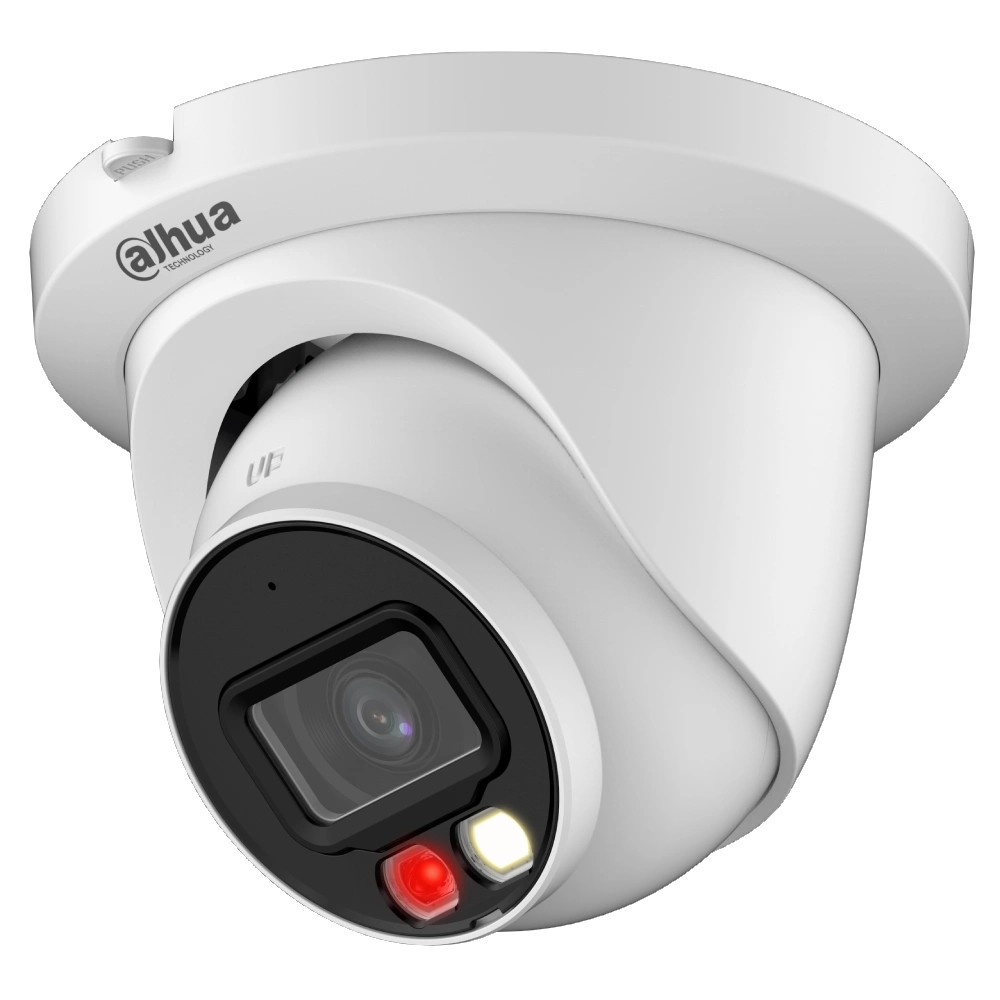
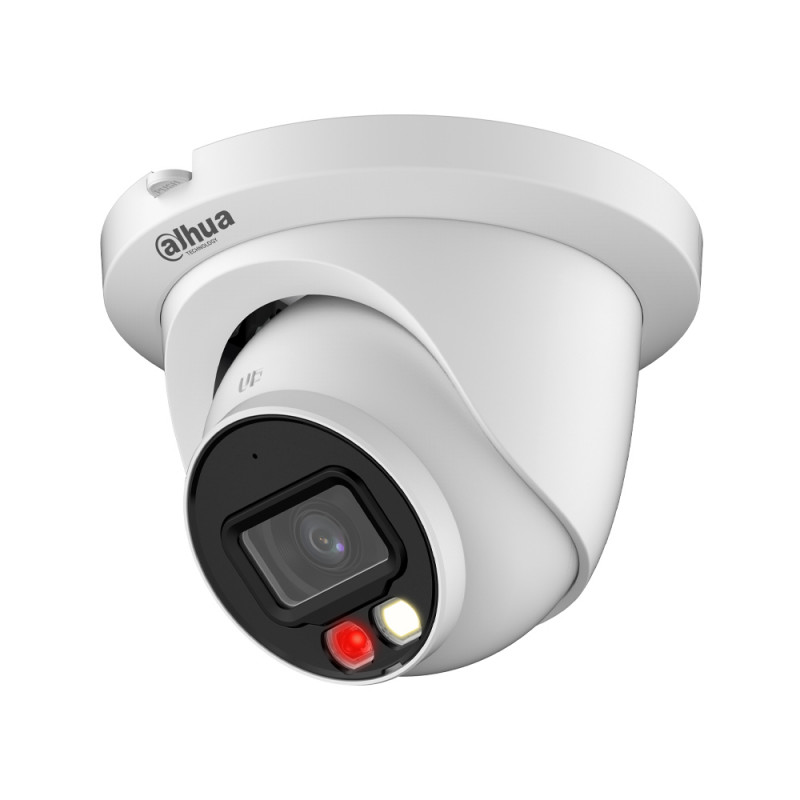
DAHUA DH-IPC-HDW2849TM-S-IL (8 MP) - DOME PoE IP CAMERA WITH FULL-COLOR NIGHT VISION



Description Dahua HDW2849TM-S-IL
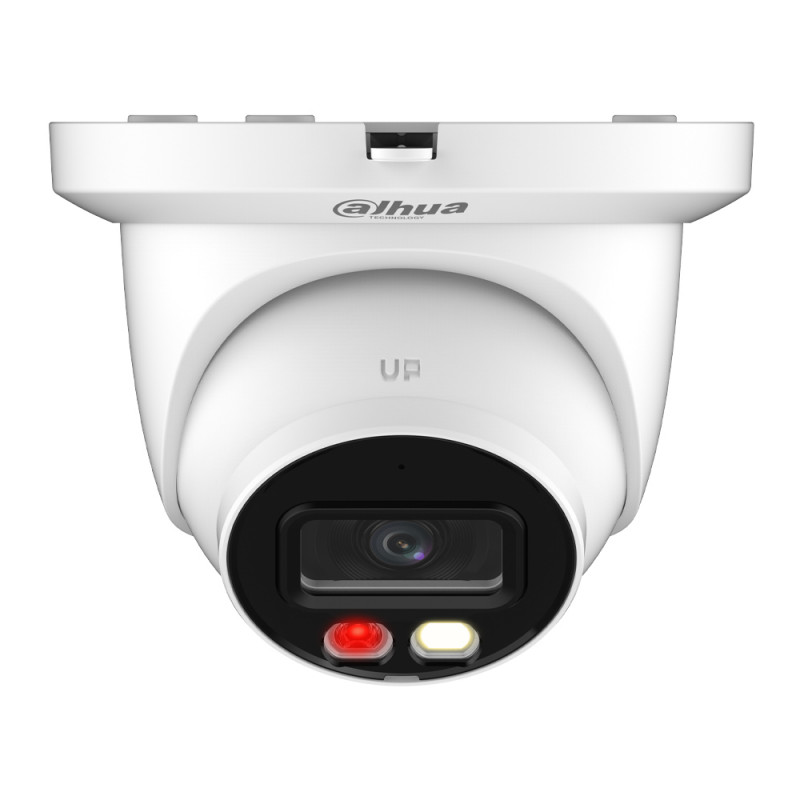
Smart Dual Light: the picture stays in colour after dark
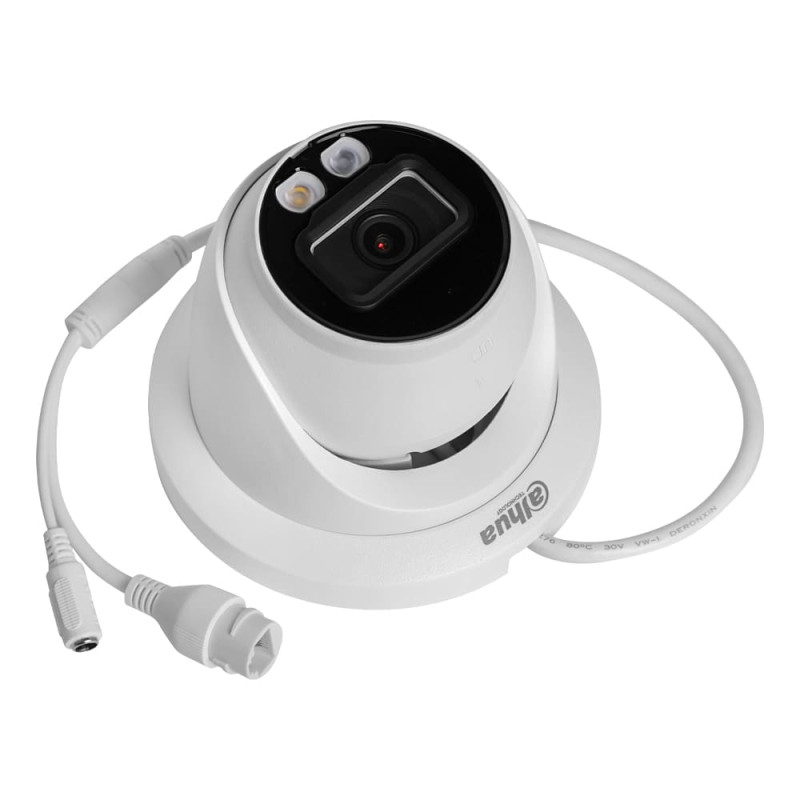
The -IL suffix stands for Smart Dual Light: the camera carries both an infrared emitter and warm white LEDs, each rated for up to 30 metres. In normal night mode only the invisible infrared is on and the scene is recorded in black and white; the moment the analytics spot a person or a vehicle, the warm white light switches on and the footage turns full colour exactly when it counts. The difference is not cosmetic — a monochrome frame shows a silhouette in a jacket, a colour frame shows that the jacket was red and the car a silver saloon, and those are the details you need when explaining to the police or an insurer who was on your property. Warm white light, unlike cold white, dazzles people in frame far less and reproduces skin and clothing more naturally, so a face at close range stays recognisable instead of burning out. There is also a side effect that often turns out to be the main one: a sudden burst of light tells an uninvited visitor plainly that he has been seen, and a good share of attempts end right there.
Eight megapixels on a 1/2.7" sensor, and an honest note about frame rate
The 1/2.7" sensor delivers 3840×2160, four times the detail of a 2 MP image, and that headroom exists not for the spec sheet but so that a week after an incident you can zoom into the recording and make out what nobody noticed live. One point that rarely gets mentioned: full 8 MP is delivered at 20 frames per second, while 25-30 fps is available in the 2688×1520 mode, which is 4 MP. For a yard, an entrance or a shop floor, 20 fps is more than enough — nobody teleports between frames — but when the scene contains fast movement, such as a car crossing it sideways, the smoother 4 MP stream is often more informative than choppy 4K. An F1.6 aperture and 0.008 lux colour sensitivity mean the camera holds colour on street lighting alone before its own illuminator ever fires. The 111° horizontal field of view is among the widest in this line, so one unit covers a whole yard or a mid-sized retail floor with no blind corners.
DORI distances: what you get at 8, 17 and 34 metres
For the 2.8 mm version the manufacturer states 84.8 m for detection, 33.9 m for observation, 17 m for recognition and 8.5 m for identification. In practice that means you will notice movement almost across the entire plot, tell a human from an animal from around thirty metres, and obtain a face shot worth showing to an investigator only within the first eight and a half metres. Hence the key mounting rule for this model: the point where a person unavoidably comes close — the gate, the porch, the till, the warehouse door — must fall into the near zone of the frame rather than its far corner. The same 8-10 metres applies to licence plates: a 111° view gives an excellent overview, but reading plates at 20 metres is a job for a longer focal length. Keep in mind as well that the 30-metre illumination range is shorter than the detection range, so in complete darkness the camera's working zone is defined by the light, not by the optics.
WizSense and SMD Plus: alerts only for what actually matters
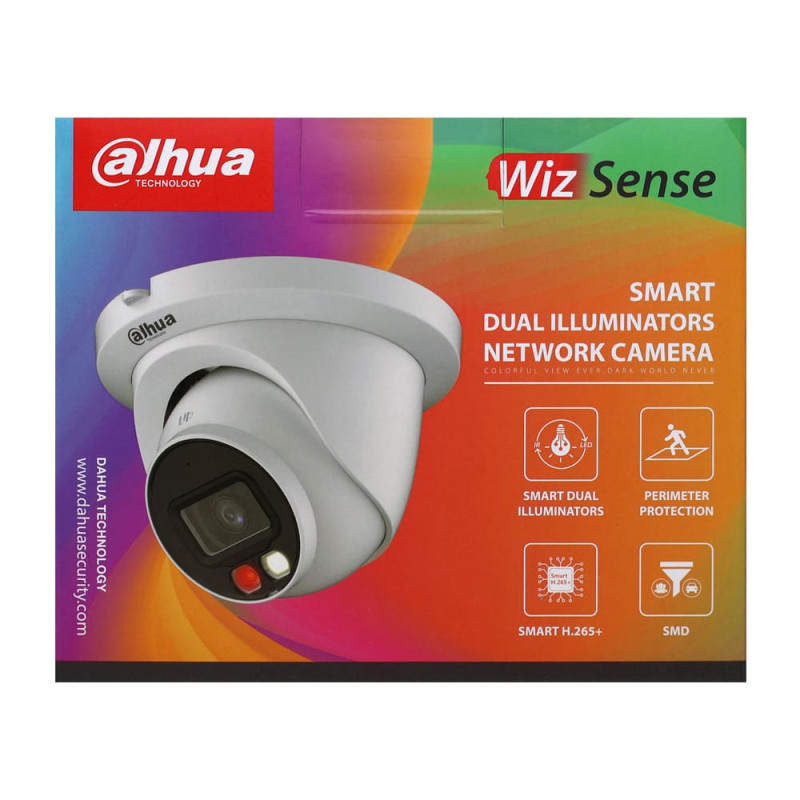
The camera belongs to the WizSense 2 series with built-in SMD Plus, which classifies a moving object as a human or a vehicle inside the device's own processor — no cloud service and no separate server involved. Tripwire and intrusion rules support the same classification, so you can, for instance, be alerted about a person by the fence at night while ignoring cars passing along the street. The same analytics drive the illumination: white light comes on for a person or a vehicle, not for every branch stirred by the wind, which is precisely what keeps the yard from flashing all night. The contrast with unclassified cameras shows up by the second week — those fire on rain, on insects in the IR beam and on cloud shadows, the owner switches the alerts off, and the system quietly stops doing security work. Here the alert density drops far enough that a push notification is worth reading again rather than swiping away unseen.
Eyeball housing, power and mounting: what to plan before installation
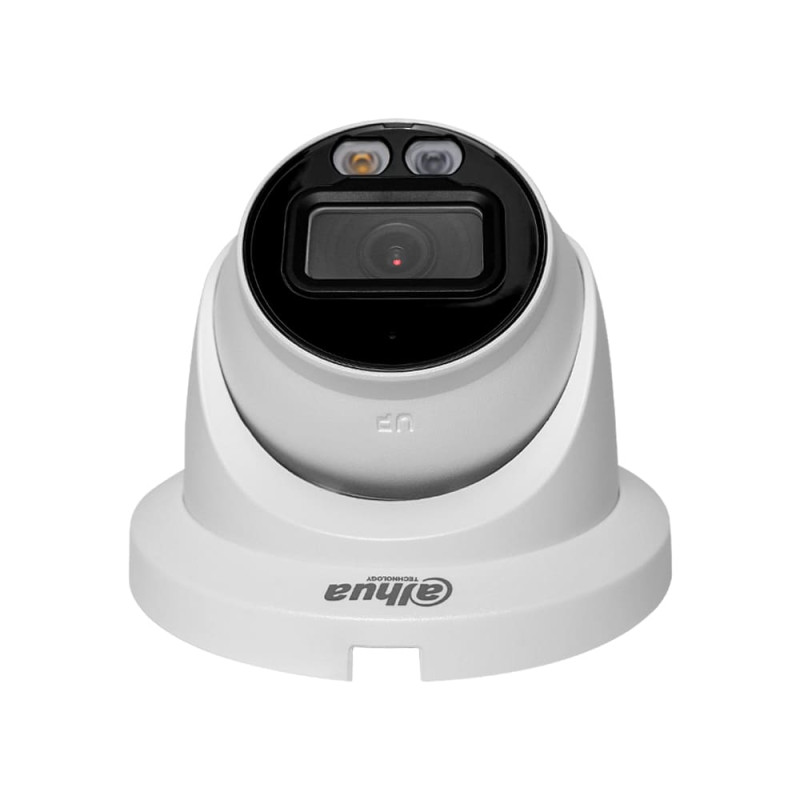
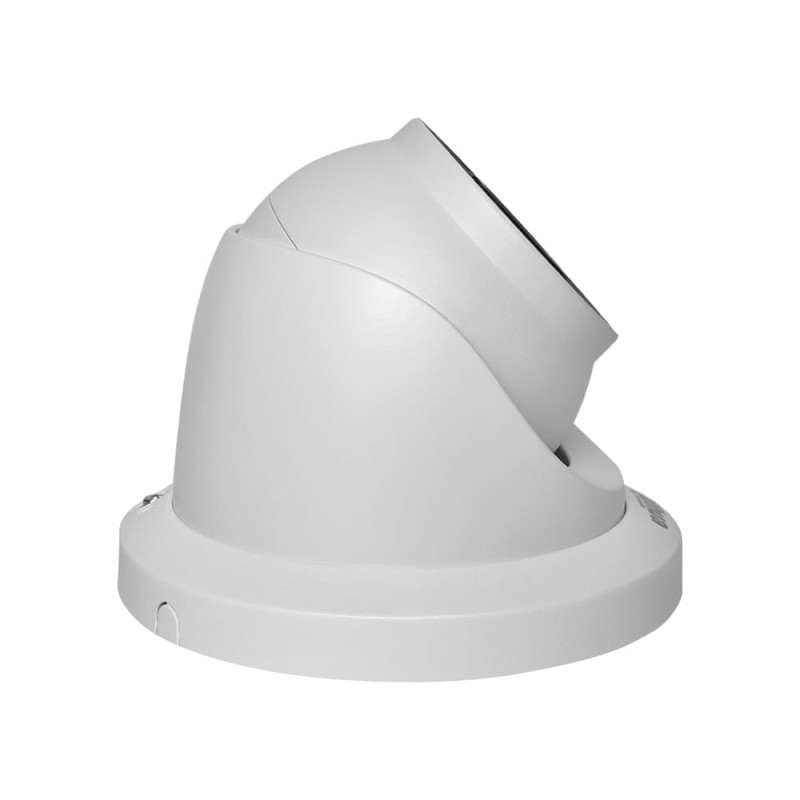
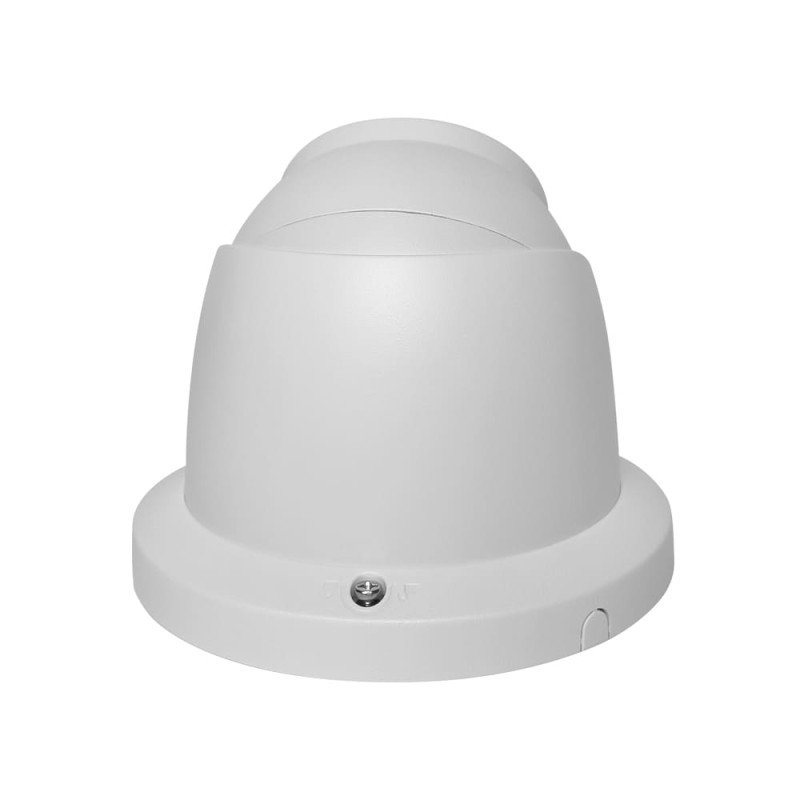
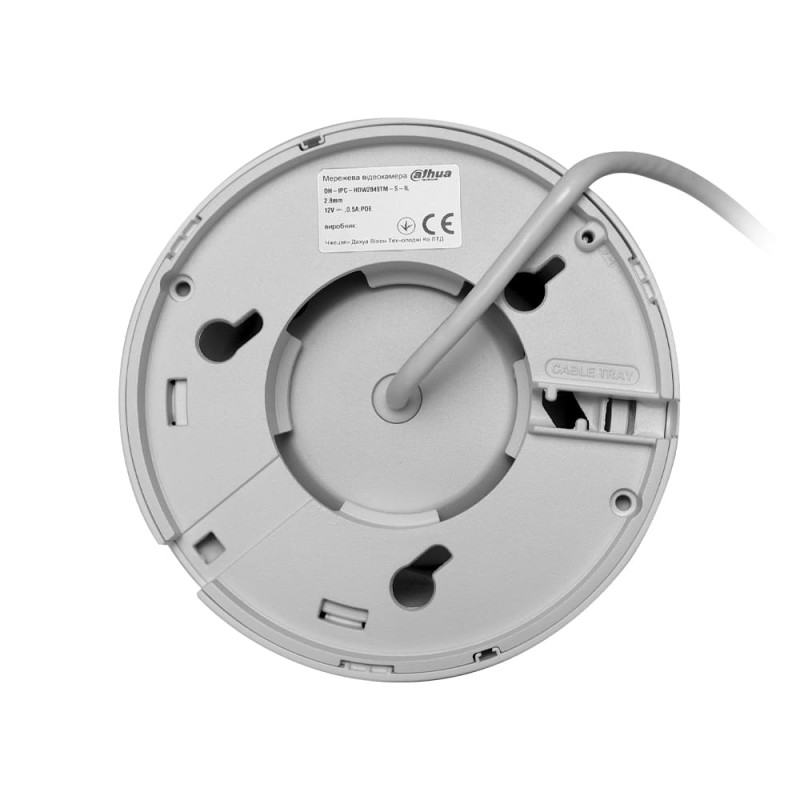
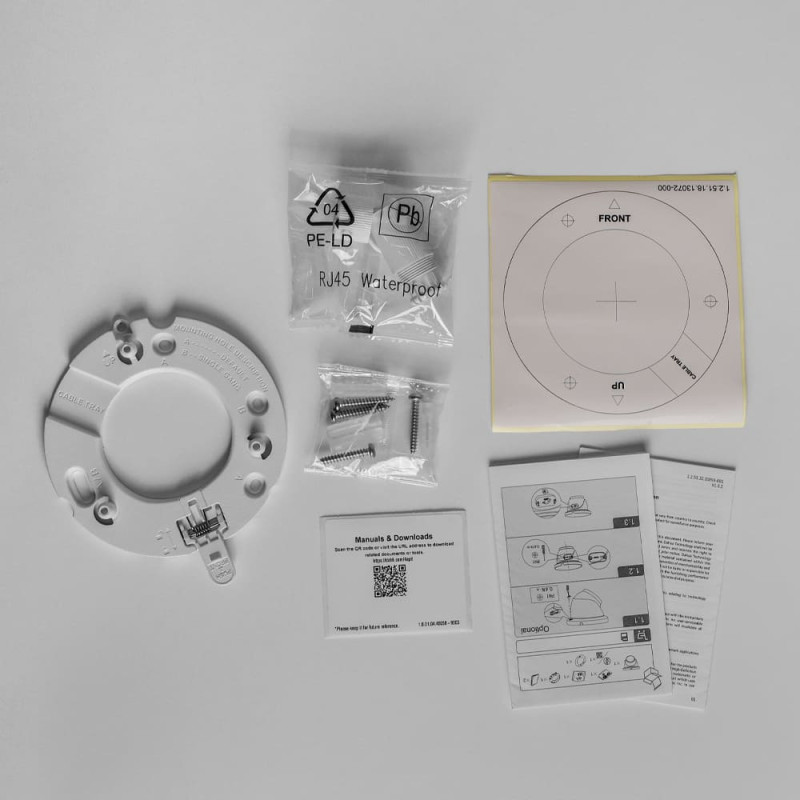
The eyeball design is a ball seated in a base: after mounting it rotates a full 360° and tilts up to 78°, so the aim is fine-tuned on site instead of being corrected by drilling new holes. Unlike a bullet on an arm, this ball is much harder to twist by hand, and a compact 122 mm metal body weighing 480 g looks tidier on a façade than a long barrel. Power is 12 V or PoE 802.3af, and consumption is the lowest in the line: 2.6 W in normal operation and about 5 W (5.9 W over PoE) with illumination and analytics running together, so ten of these units sit comfortably on an ordinary 60-watt switch. IP67 allows year-round outdoor use, but note the working range of -40…+55 °C: on a south-facing wall in full summer sun a small canopy is worth adding, while winter cold falls well inside the specification. Local recording goes to a microSD card of up to 256 GB as a buffer against network outages, while the permanent archive belongs on a recorder or NAS — the camera streams over ONVIF, RTSP, FTP/SFTP and P2P, supports Milestone and has a built-in microphone for audio.
Where this model fits, and where another one is the better buy
This camera is strongest where the night matters for detail rather than for the bare fact of movement: a house yard, a porch, the area by the gate, a shop entrance, a small retail floor or a car wash. Warm white light out to 30 metres combined with 8 MP produces frames that show the colour of clothing and vehicles, while an eyeball under a canopy looks unobtrusive to the people walking in. Indoors the model works well too — a dome bothers customers far less than a barrel on a bracket, and 111° covers a medium-sized room from a single point. Where it does not fit: long perimeters and driveways, where 30 metres of light simply will not reach the far end, and locations where the camera may be attacked deliberately, since an eyeball carries no impact rating and a stairwell or a school needs a vandal-resistant dome. It is likewise a poor choice where white light would be a nuisance — facing bedroom windows, or beside a road where a sudden flash could distract a driver.
How it differs from neighbouring Dahua models in this catalogue
Its closest relative is the DH-IPC-HDW2449TM-S-IL: identical housing and the same dual-light technology, but 4 MP instead of 8. If you do not plan to zoom into recordings and an overview is enough, that junior model covers the job, while paying extra for 8 MP makes sense when fine detail is the point. Further down the range sits the 2 MP DH-IPC-HDW2249T-S-IL, better suited to a secondary viewpoint than to the main angle. The DH-IPC-HDW3441EM-S-S2 follows a different philosophy: third series with smarter SMD 4.0 analytics and a 50-metre illuminator, but classic infrared, meaning monochrome nights and 4 MP — choose it when reach and alarm accuracy outweigh colour. The DH-IPC-HDBW2849E-S-IL packs the same 8 MP dual-light electronics into a vandal-resistant dome, which is what you want when the camera hangs in a public place within arm's reach. The DH-IPC-HFW2849S-S-IL, conversely, is the same feature set in a bullet housing that is visible from afar and deters by its presence, though it is also an easier target for anyone who wants to knock it aside.
Tell us what you actually need to see at night — faces at the door, licence plates or the general picture of the yard — and we will advise how many cameras and which optics will be enough.
Characteristics Dahua HDW2849TM-S-IL
Reviews about Dahua HDW2849TM-S-IL from real users
No reviews found







