
 m. Сміла, Незалежності, 67г. оф, 406/6























DAHUA DH-IPC-HDW2449T-S-PRO (4 MP/2.8 MM) - DOME PoE IP CAMERA PRO



Description Dahua HDW2449T-S-PRO
Full-colour night footage from an F1.0 lens and a 1/1.8-inch sensor, not from floodlights
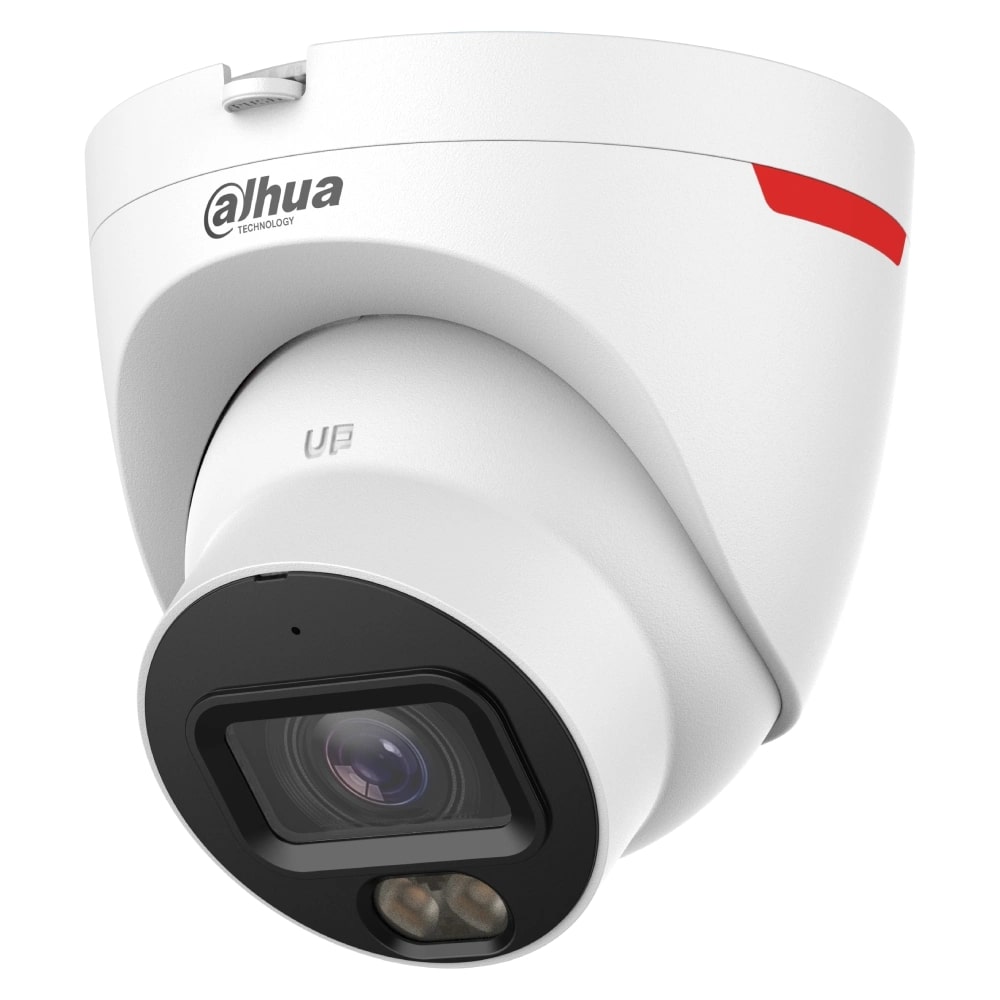
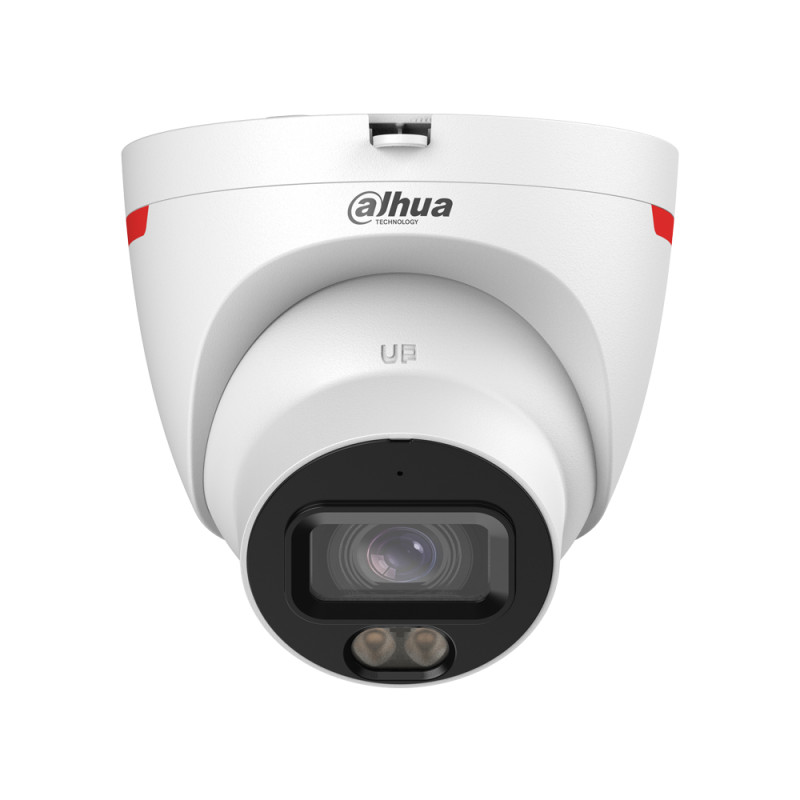
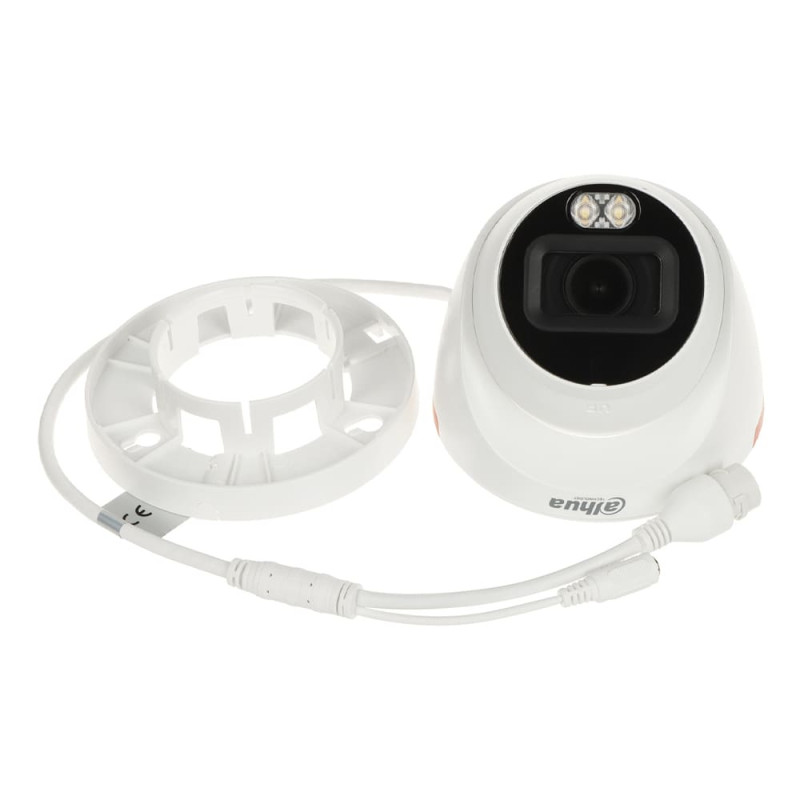
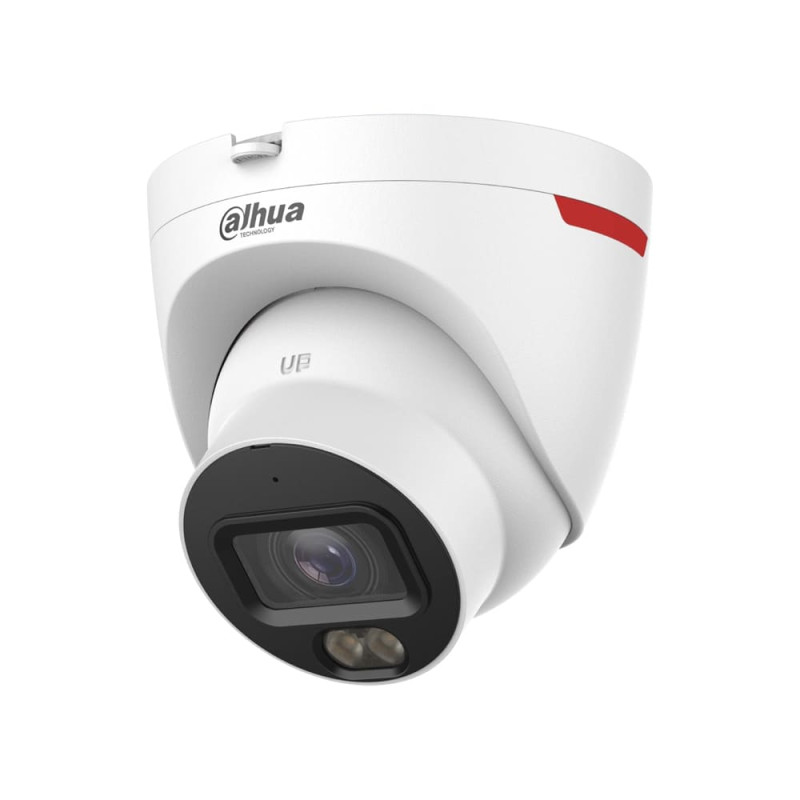
The S-PRO suffix places this camera in Dahua's WizColor family, where colour night video comes from the optics and the sensor rather than from a powerful spotlight. The F1.0 aperture lets in roughly twice as much light as the F1.6 lenses common in this class, and the 1/1.8-inch sensor has almost double the area of the usual 1/2.8-inch chip, which is how the specified minimum illumination gets down to 0.0005 lux. In a yard lit by a single street lamp, next to an illuminated porch or along a facade with accent lighting, that translates into genuine colour video recorded without the camera switching on any light of its own: you see that the jacket was red and the car a silver estate, instead of a grey silhouette. The two warm-white LEDs, effective to about 30 metres, are a reserve for total darkness and can be set to automatic or manual control. One trade-off deserves to be clear before you buy: there are no infrared LEDs here at all, so in complete darkness the camera lights the scene with visible warm light and cannot watch discreetly the way an IR camera does — for covert coverage of a dark warehouse or corridor, an IR or dual-light model is the better choice.
Why sensor size matters more here than the megapixel count
Four megapixels on a 1/1.8-inch sensor and four megapixels on a 1/2.8-inch sensor are two different cameras, even though the spec sheet shows the same number. For a given pixel count, a larger sensor area means each pixel is physically bigger and gathers more light in the same exposure, and that directly sets how noisy the night image will be. Small budget-format 8-megapixel sensors often look worse after dark than 4 megapixels on a large chip: noise reduction smears fine detail, the picture starts to crawl, and anything moving dissolves into coloured blotches that identify nobody. That is why, within one price bracket, 4 megapixels on a 1/1.8-inch sensor is usually the smarter buy for night surveillance than 8 megapixels on a tiny one. Daylight reverses the argument — with plenty of light more pixels really do resolve more detail, so if the camera watches a brightly lit sales floor and night hardly matters to you, this model's main advantage goes partly unused.
2688 by 1520, a 112-degree view, and the frame-rate catch
The full 2688 by 1520 resolution is available at up to 20 frames per second, while the familiar 25 or 30 frames come at 2560 by 1440 — the same image with slightly trimmed edges. For most scenes the difference is invisible, but it is worth deciding deliberately: where fast movement matters, such as a car entering a gate or a person passing close to the lens, 2560 by 1440 at 25 frames beats full resolution at 20. The 2.8 mm lens covers 112 degrees horizontally, 60 vertically and 134 diagonally, enough for one corner-mounted camera to take in a typical private yard or a small retail floor in a single frame. The cost of that wide angle is pixel density per metre: a face is reliably recognisable to roughly 6-8 metres, clothing and behaviour can be described out to about 15 metres, and beyond that you are left with the fact of presence and a direction of travel. Number plates past 10-12 metres will not read dependably through this optic, which is not a flaw but the reason to give a driveway its own narrower-lens camera instead of asking one position to solve every task.
WizSense tells a person or a car apart from branches and shadows
WizSense analytics run inside the camera and cover tripwire and intrusion events with object classification, so the camera decides whether it is looking at a human or a vehicle before the alert ever leaves it. The value is in the filtering: without classification a camera reacts to any change of pixels, so night rain, a cat on the path, a branch in the wind and headlight shadows from a neighbour's car produce dozens of false alarms per night, after which the owner mutes notifications and the system stops doing its security job. With classification you can also filter recorded events by object type and find the moment you need in a minute instead of scrubbing through hours of footage. Conventional motion detection, tampering detection and audio detection work alongside it. One honest caveat: this product card lists human and vehicle detection as absent, while the manufacturer's documentation for the model states that human and vehicle classification is supported — if the analytics are critical for you, ask our manager to confirm the firmware version and exact batch before ordering.
A microphone, a 256 GB card slot, and how much archive you really get
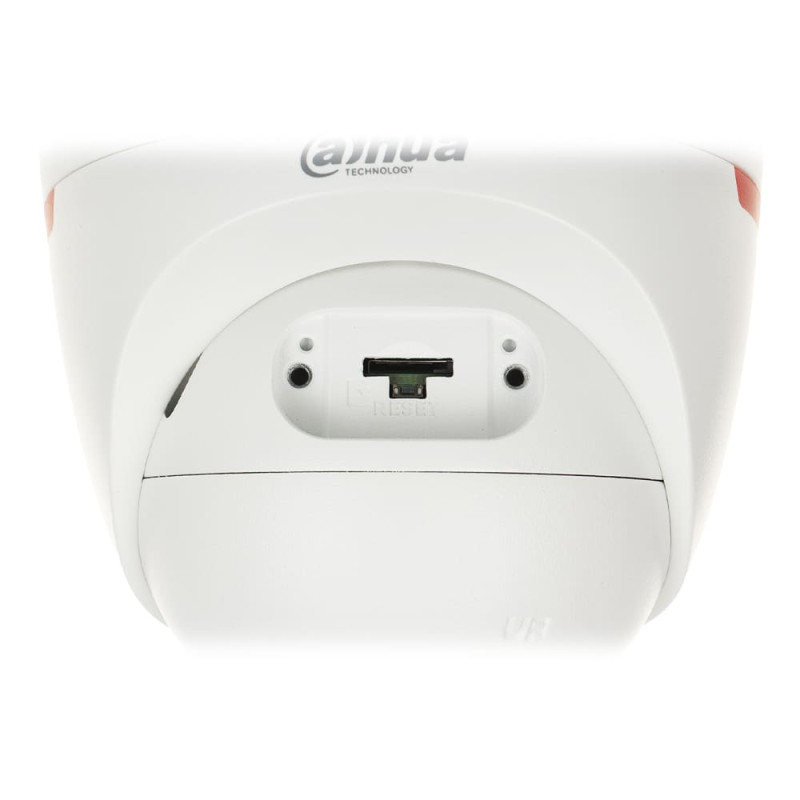
The built-in microphone records audio together with the video, and when an argument at the gate or a dispute over a dented car has to be resolved, a sentence on the recording often counts for more than extra megapixels. The microSD slot takes cards up to 256 GB, which is not a replacement for a recorder but an insurance policy: if the network or the NVR fails, the camera keeps writing locally and that stretch of footage survives. Smart H.265+ and Smart H.264+ cut the bitrate noticeably on a static scene, so continuous 4 MP recording in H.265 runs at roughly 3-4 Mbit/s, or around 30-40 GB per day from one camera. A 2 TB disk therefore holds about six to eight weeks of round-the-clock footage from a single camera of this type, or roughly two weeks from four of them; event-based recording multiplies that depth several times over but leaves gaps between events. The camera streams over RTSP and supports ONVIF, FTP, SFTP, CGI and P2P, so it fits third-party NVRs and VMS platforms as well as Dahua recorders such as the four-PoE-port DHI-NVR1104HS-P-S3/H, where it comes up with almost no configuration.
PoE power, an IP67 housing and a -40 to +60 degree range
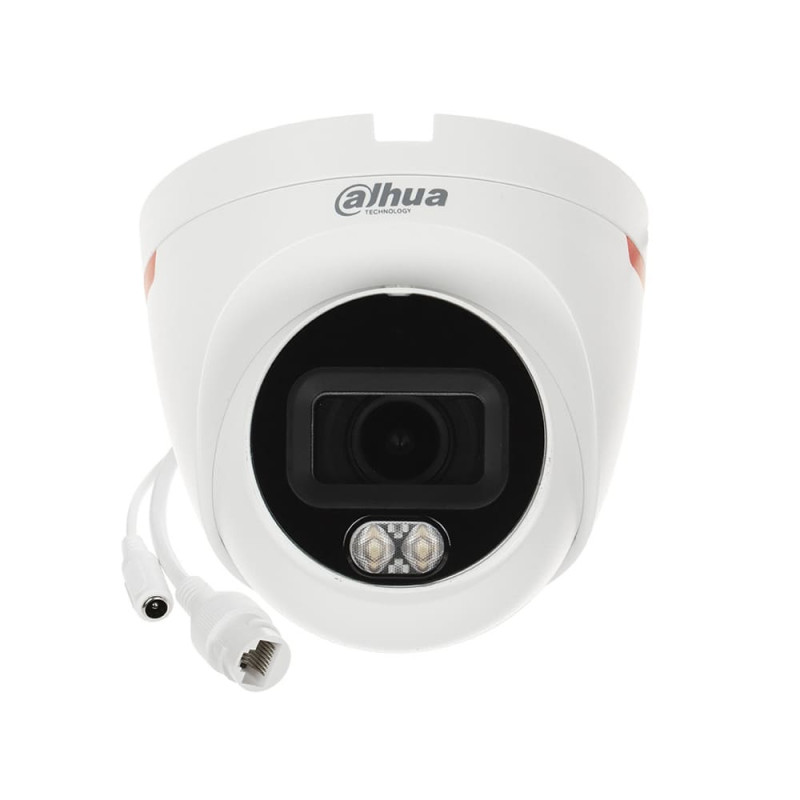
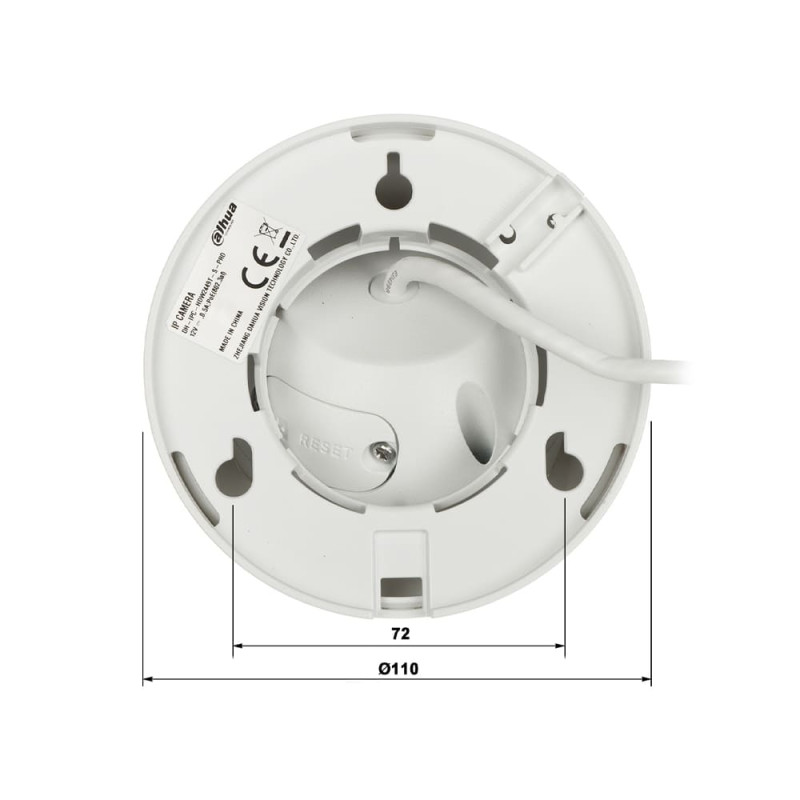
The camera runs on 12 V DC or PoE 802.3af and draws up to 6.4 W from a switch, so a single 802.3af port with its 15.4 W budget covers it with a wide margin. That makes system sizing simple arithmetic: eight of these cameras amount to about 52 W of useful load, which even an inexpensive switch rated for a 60-65 W total budget will carry, though you should always check a switch's datasheet for its aggregate budget rather than counting sockets. IP67 means complete dust protection plus resistance to brief immersion, so the camera can go on an exposed facade rather than only under a canopy or soffit. The -40 to +60 degree operating range comfortably covers a Ukrainian winter, where cheap cameras rated only to -10 degrees often refuse to boot after a power cut on a frosty night or lose focus as the optics deform with temperature. The metal-and-plastic body measures roughly 110 by 110 mm and weighs 420 g, mounts on a standard base without reinforcement, and carries a 24-month warranty — for a device that runs around the clock for years, double the usual twelve months is a real difference.
Where this camera belongs and which jobs it was built for
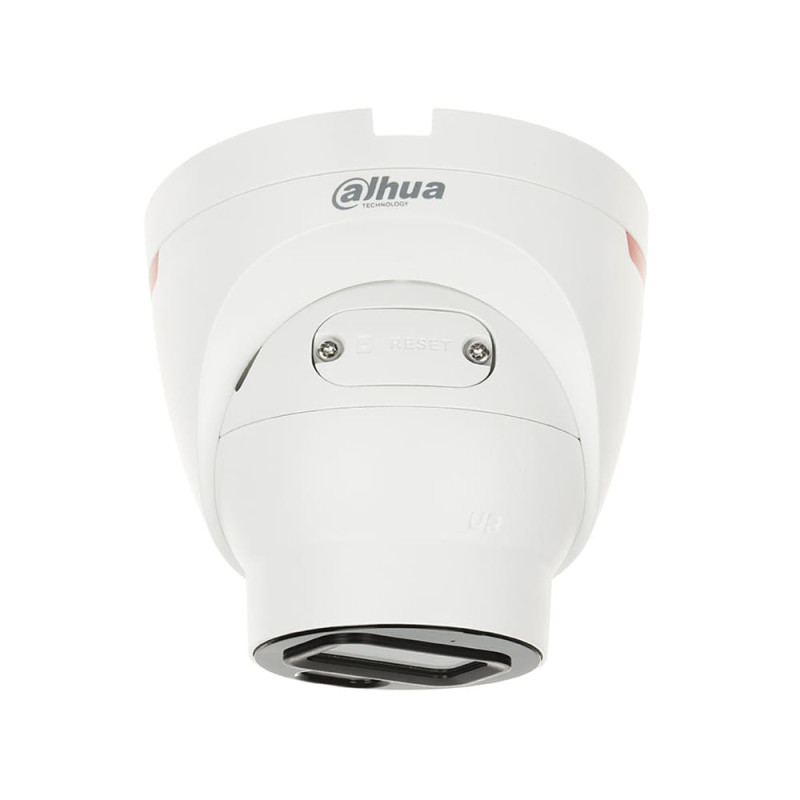
The eye-ball housing is a half sphere seated in a base: you aim it once during installation, and unlike a bullet camera on a long bracket it is hard to twist by hand or knock aside with a stick. The model is at its strongest where some ambient light exists at night and colour is what matters: a private yard with a lamp over the porch, an entrance gate under a street light, office parking, a shop frontage, a loading bay. Indoors it fits a sales floor, a till area, a corridor or a small warehouse with duty lighting, and the 112-degree angle lets one corner-mounted unit take in an entire room. Where it does not belong: a long fence or driveway beyond 30 metres, where the illuminator falls short and the wide angle thins out detail; a gate where plates must be read at distance; and any task where the light itself must stay invisible. On an elongated site, two of these facing each other beat one in the corner of the plot, because both sides of every subject end up on camera whichever way they walk.
How it differs from the neighbouring Dahua models in this catalogue
Its closest relative here is the Dahua DH-IPC-HDW2449T-S-IL: the same 4 MP eye-ball dome, but with Smart Dual Light, meaning infrared LEDs alongside warm white ones. That version is the cheaper one and draws only 5.2 W, it can watch unnoticed in IR mode, but it only gets colour at night once it switches on visible light, and on very weak natural light its picture is visibly noisier because the lens gathers less. If you want the same WizColor rendering over a longer distance, look at the Dahua DH-IPC-HFW2449TL-S-PRO — the bullet take on the same idea with warm illumination to 50 metres, right for a long yard or driveway, though more conspicuous and easier for an intruder to reach. The Dahua DH-IPC-HDW3441EM-S-S2 belongs to the higher 3xxx line with classic 50-metre infrared: it sees further in the dark but renders night in black and white, so choosing between the two is really a choice between reach and colour. If neither analytics nor colour night video matter and you simply want to see that something moved in the yard, the markedly more affordable Dahua DH-IPC-HDW1431T1 covers that at the same 4 MP, minus human and vehicle classification and with all the false alerts that implies. Conversely, if you need maximum daylight detail or a vandal-resistant shell, the 8 MP Dahua DH-IPC-HDBW2849E-S-IL in a protected dome is the logical pick — it wins by day and on physical protection, but it does not reproduce this model's F1.0 night sensitivity.
If you are unsure how many cameras your site needs and with which lenses, send us the length of the perimeter, the number of entrances and where any ambient light falls at night, and we will put together a layout showing exactly what each camera would capture.
Characteristics Dahua HDW2449T-S-PRO
Reviews about Dahua HDW2449T-S-PRO from real users
No reviews found







