
 m. Сміла, Незалежності, 67г. оф, 406/6























DAHUA DH-IPC-HDW1431T1 (4 MP/2.8 MM) - DOME PoE IP CAMERA

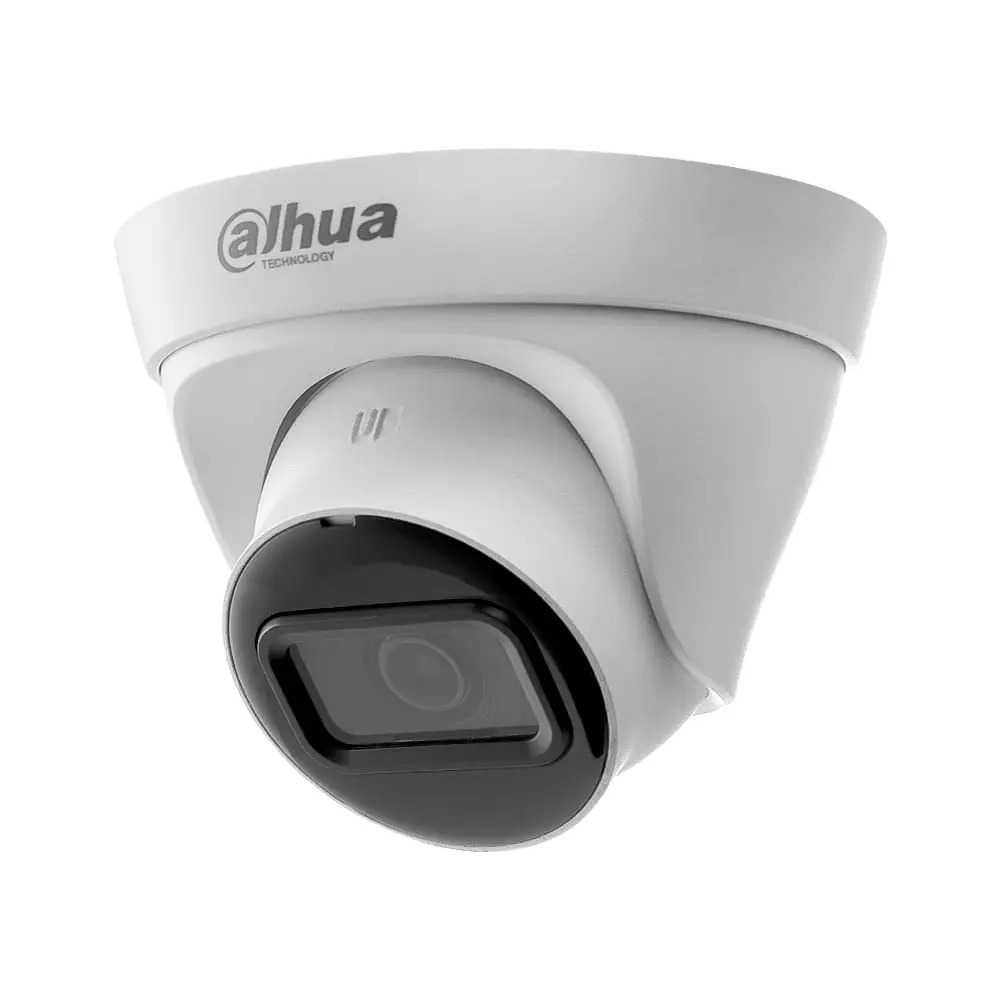
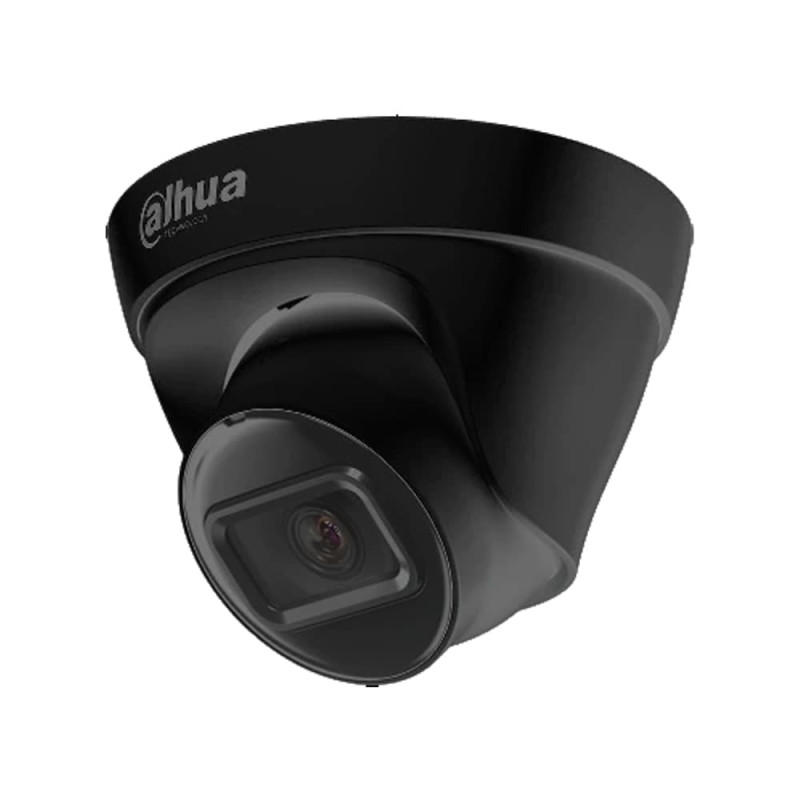


Description Dahua HDW1431T1
Four megapixels in the entry class: what you can actually make out
The sensor delivers 2560 × 1440 at 25 frames per second, with a maximum mode of 2688 × 1520 at 20 frames — a trade between smoother motion and extra detail that is worth deciding deliberately rather than leaving at whatever the installer left. Against the 2-megapixel cameras in the same Dahua line this is roughly twice the pixel count, and the difference never shows in the wide shot: it shows the moment you have to zoom into a recording. At 2 MP a face at ten metres collapses into a handful of grey squares, while 4 MP still lets you say whether it was a man or a woman, what colour the jacket was and whether there was a bag in the hand. What you cannot do is stretch those pixels across any distance you like — a 2.8 mm lens covering 104° scatters them over a very wide scene, so past roughly twenty metres facial detail is gone whatever the megapixel figure says. Use ten to twelve metres as the working range for identifying features, and treat everything beyond it as evidence that something happened rather than proof of who did it.
Infrared illumination to 30 metres, and a black-and-white night
The illuminator here is conventional infrared: the LEDs emit outside the visible spectrum, so the camera gives away no glow after dark, and the picture turns monochrome the moment the IR cut filter swings aside. The stated 30 metres is realistic over open ground, but a wall, a fence or a hedge close to the lens bounces part of the beam straight back and shortens the useful reach noticeably. Smart IR throttles the LEDs when somebody walks up close, and it is the reason a person standing two metres away does not burn out into a solid white silhouette. The limitation worth understanding before you buy is short to state: at night you get build, cut of clothing and behaviour, but not the colour of a coat or of a car — and colour is usually the first thing anyone asks about. If colour at night genuinely matters on this particular spot, the catalogue carries models with warm white light instead, at the cost of an illuminator plainly visible to whoever is standing in front of it.
Motion detection only, with no AI on board
Against people detection, vehicle detection and animal detection this model's spec sheet carries a dash: what it has is classic motion detection driven by pixel change inside the frame. The gap between that and the WizSense models is not cosmetic — with no neural network on board the camera reacts identically to a person at the gate, a branch in the wind, a cat, a cloud shadow and rain drifting through the IR beam. What follows is always the same sequence: for a few days the owner reads the notifications, within a week there are dozens of them a night, and then they get switched off, at which point the system stops being security and becomes a recorder you consult after the fact. There are two honest ways around it — hand the analytics to a recorder that has them, or narrow the detection zone in the settings down to the part of the frame that actually matters, such as the gate, the porch or the passage between buildings. Buy this camera as the eyes of a system whose brain lives in the NVR, not as a guard that thinks for itself.
No memory card slot: this camera lives and dies with the recorder
There is no microSD support in this model's specification, and it is the detail most often discovered after the brackets are already on the wall. In practice the camera keeps no archive of its own: everything it sees exists only for as long as the recorder or the receiving server is running. Cut the cable or kill the power in the house and recording stops in the same second, whereas a camera with a card would keep writing locally and hand over the missing fragment once the link came back. The same applies to brief network hiccups — a reboot of the switch leaves a clean few-minute hole in the archive that nothing will ever fill in. Plan around it: this camera belongs in a system that already has, or will definitely have, an NVR, and a small UPS on the router, the switch and the recorder turns a night-time blackout from a gap in the archive into a non-event.
PoE 802.3af at 5 W, an IP67 shell and a −40 to +60 °C range
Power comes either from a separate 12 V supply or over PoE 802.3af on the same cable that carries the video, and the second option is almost always the better one: no socket is needed at the mounting point, and the whole system can be backed up by a single UPS standing next to the recorder. Consumption is about 5 W at roughly 0.4 A, so a typical eight-port PoE switch with a 60–65 W budget carries eight of these cameras with room to spare, even on a winter night when every illuminator in the system is running. IP67 means complete protection from dust plus survival of short immersion, so the housing takes driving rain, ice and a hose aimed at the facade without complaint. The −40 to +60 °C operating range is not marketing copy but the practical difference from cheap cameras that simply refuse to boot in January after a power cut until they have warmed through. At 250 g and 109 × 86 mm the metal-and-plastic body goes up on ordinary plugs into concrete, brick or timber with no reinforcement of the surface.
Where this camera belongs and what it is built for
The eye-ball design — a ball seated in a fixed base — mounts flush against a ceiling or a soffit and is aimed by rotating the sphere, which makes it far harder to twist out of position by hand than a bullet on a long arm. Its natural places are the porch and entrance of a house, a small yard, a corridor or the sales floor of a small shop, a stairwell, or a storeroom of a few dozen square metres. The 104° angle takes in a whole room or a whole section of the yard, and between three and ten metres 4 MP leave enough detail to recognise someone you know and to follow what they were doing. Where it does not belong: long perimeters and vehicle entrances, because a wide lens will not give you a plate beyond ten to fifteen metres, and any site where colour at night or in-camera recognition of a human being is a real requirement rather than a preference. It should also stay out from behind glass — the IR beam bounces off the pane straight back into the lens and turns the night image into a milky fog.
How it differs from the neighbouring Dahua models in this catalogue
Its closest relative is [1614] DH-IPC-HDW1230T1 — the same eye-ball body, the same illuminator and the same absence of analytics, but 2 MP instead of 4; if the camera watches a porch from three metres and the job is to record the fact, the junior model covers it entirely. [1616] and [1617] DH-IPC-HFW1431S1 are effectively the same electronics in a bullet housing, so choosing between them is a question of mounting rather than of image: a bullet is easier to stand off a wall on its bracket, an eye-ball sits more discreetly under a soffit. If you specifically want the camera itself to tell a person from a vehicle rather than leaving it to the recorder, the catalogue has [1658] DH-IPC-HDW2449T-S-IL — the same eye-ball format but from the 2 Series, with two types of illumination, a card slot and real analytics. For longer distances [1603] DH-IPC-HDW3441EM-S-S2 doubles the illuminator to 50 metres, and where the camera sits within reach of unfriendly hands the vandal-resistant [1597] DH-IPC-HDBW1431EP-S4 in a hardened dome is the right answer. In short: this model earns its place when you need to cover many viewpoints at 4 MP without inflating the budget, in a system whose recorder carries both the analytics and the archive.
Tell us about the site — how many viewpoints, what distances, and whether a recorder is already in place — and we will work out where this model fits and where a camera with on-board analytics pays for itself.
Characteristics Dahua HDW1431T1
Reviews about Dahua HDW1431T1 from real users
No reviews found







