
 m. Сміла, Незалежності, 67г. оф, 406/6























DAHUA DH-C4K-P (4 MP) - IP CAMERA WITH TWO-WAY AUDIO AND AUTO-TRACKING

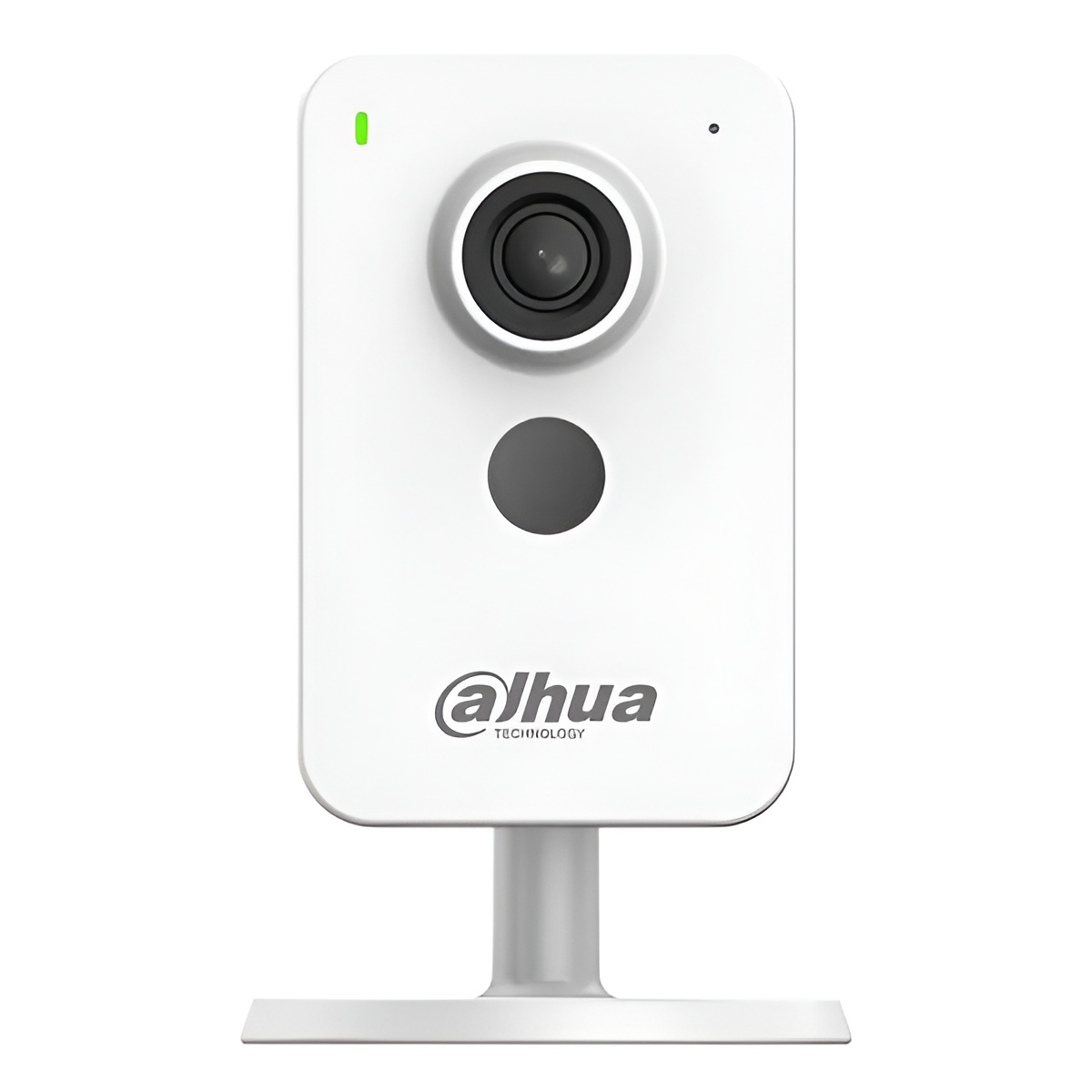
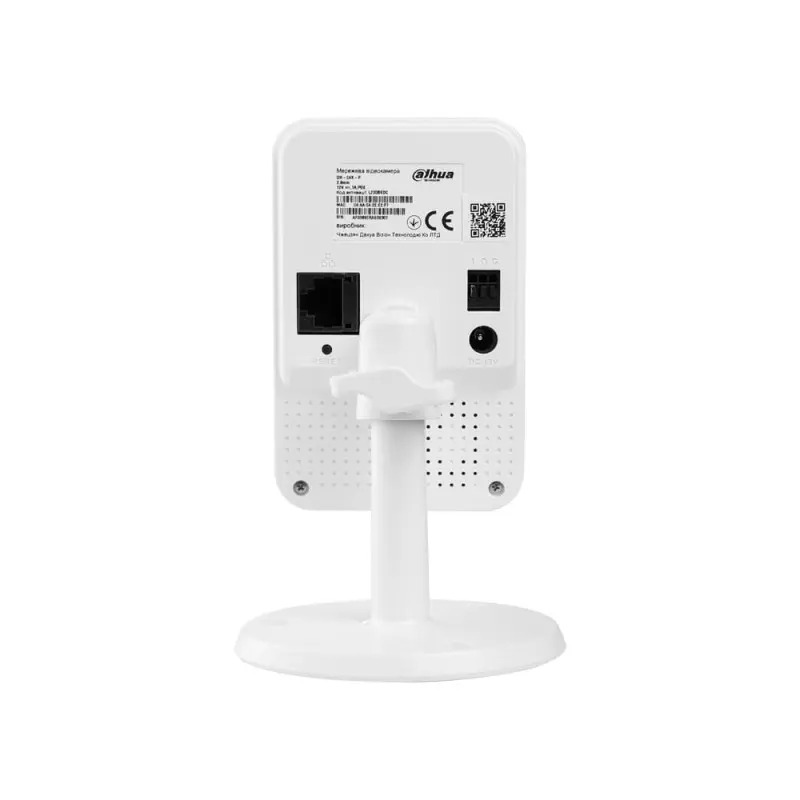
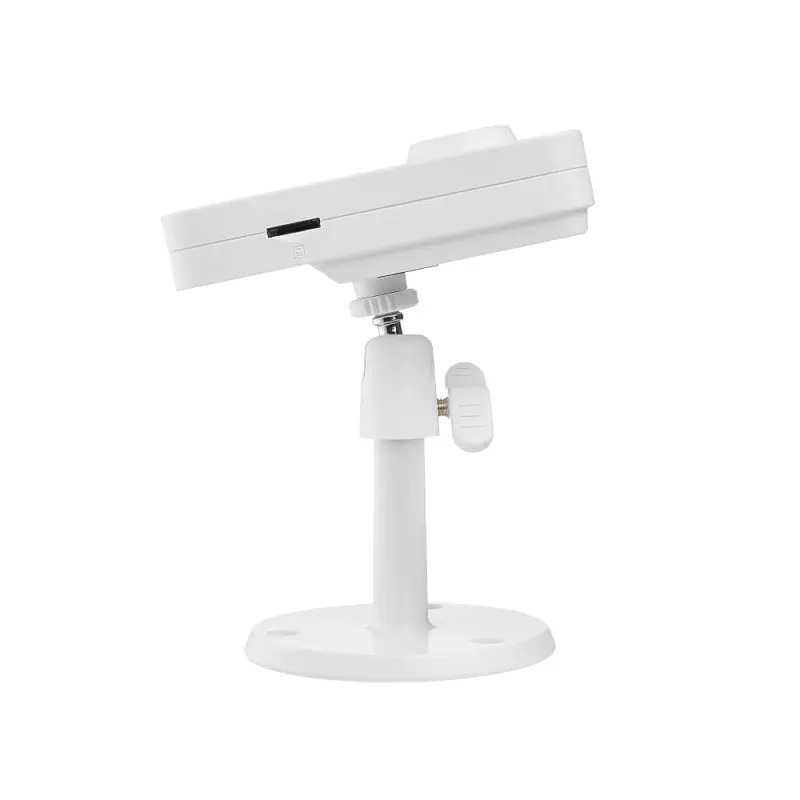
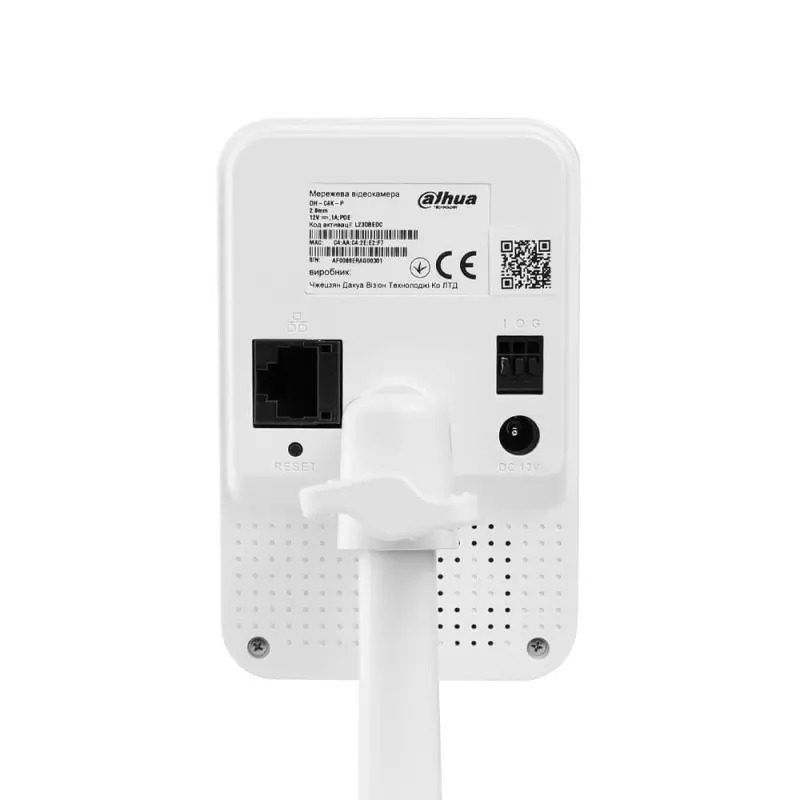


Description Dahua C4K-P
Wi-Fi and PoE in one body: the camera adapts to your network instead of dictating it
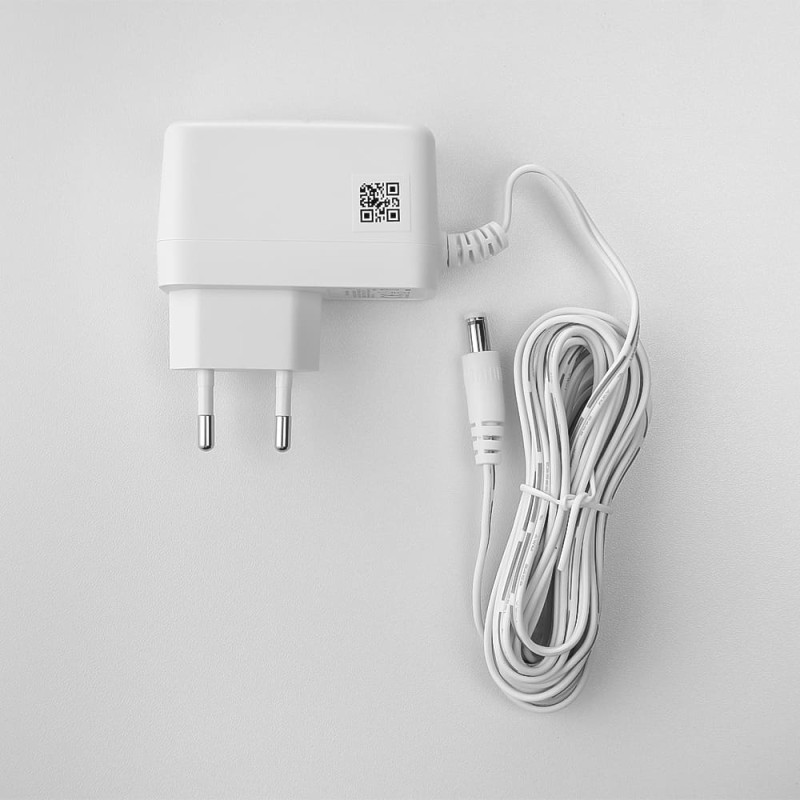
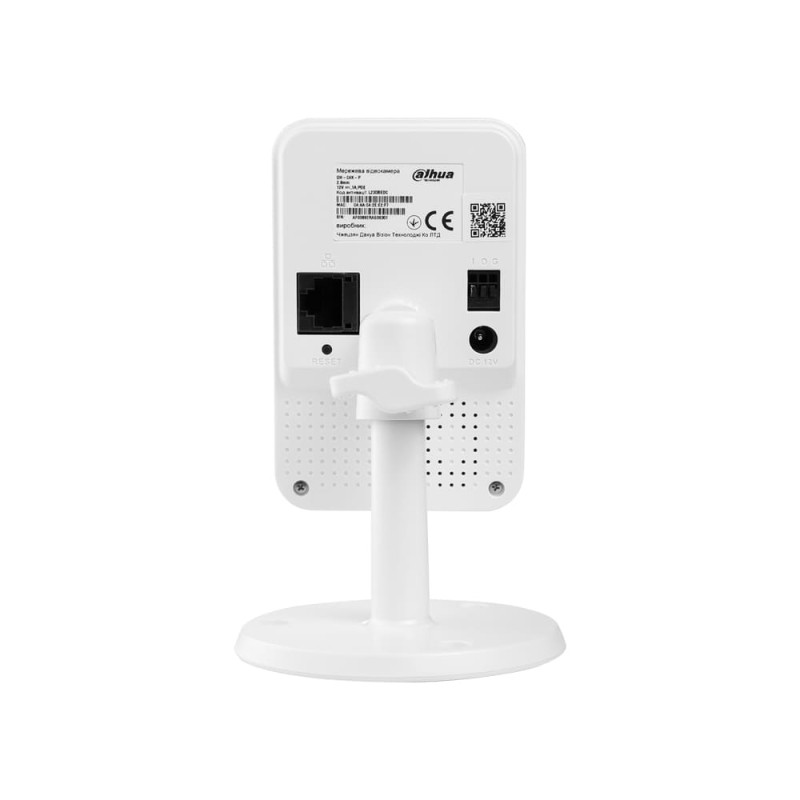
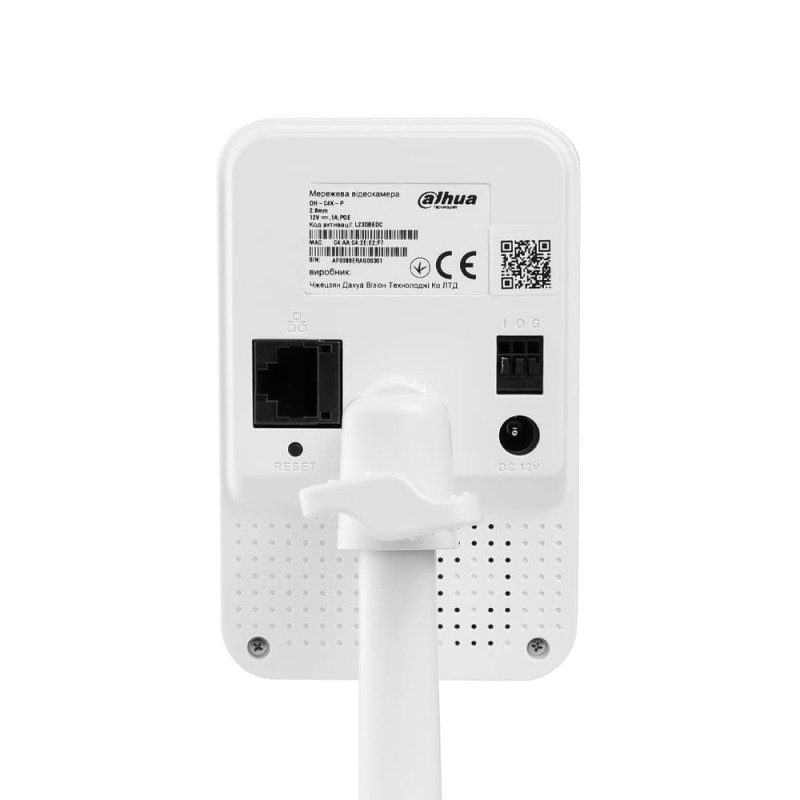
The DH-C4K-P carries both a full RJ-45 10/100 port with PoE support and an 802.11b/g/n/ax Wi-Fi radio, so it is not an "either wireless or wired" device — both options live in the same housing. That matters in a very common scenario: the camera goes onto a shelf in the sales area right now, powered by a 12 V adapter over Wi-Fi, and once someone finally pulls a cable, the very same unit moves to PoE — one cable instead of two, with no hardware swap and nothing bought twice. Initial setup runs through Bluetooth pairing in the DMSS app, so you never hunt for the camera's IP address or join it to a temporary network; holding the phone close is enough. Power draw is modest and depends on the source: around 2 W from a 12 V adapter and up to 5.85 W at peak over PoE, which means even an inexpensive four-port PoE switch handles this camera without stretching its budget. There is one honest limitation worth knowing in advance — the Wi-Fi is 2.4 GHz only, with no 5 GHz band, and in an apartment block or a shopping centre with dozens of access points on the air it will visibly drop bitrate and shed frames at peak hours, so for genuinely continuous recording a cable is always the safer path.
4 MP on a 1/3-inch sensor: what actually lands in the frame and what you can pull out of it
The 1/3" CMOS sensor delivers 2560×1440 pixels at 25 frames per second — roughly twice the detail of the widespread 2-megapixel cameras, and exactly the threshold where you can zoom into a recording and recognise a familiar face rather than merely establish that "someone came in". The lens is fixed at 2.8 mm with an F2.0 aperture and covers 92° horizontally and 107° diagonally, so a single camera takes in a whole room or a small shop floor, holding the entrance, the till and the aisle in one frame at once. For confident facial identification bring the chokepoint closer — somewhere within four to six metres of the camera; at twenty metres a person stays recognisable by clothing and gait, but not by features. Zoom here is digital only, meaning a crop of an image already captured rather than optical magnification: reading price tags on a far shelf or plates on a car outside is beyond a 2.8 mm lens, and that job belongs to a second camera with narrower optics. The H.265 codec compresses the stream noticeably harder than H.264 at the same picture quality, so a single memory card holds roughly twice as long an archive.
Night mode: infrared illumination up to 30 metres, and why the night image is monochrome
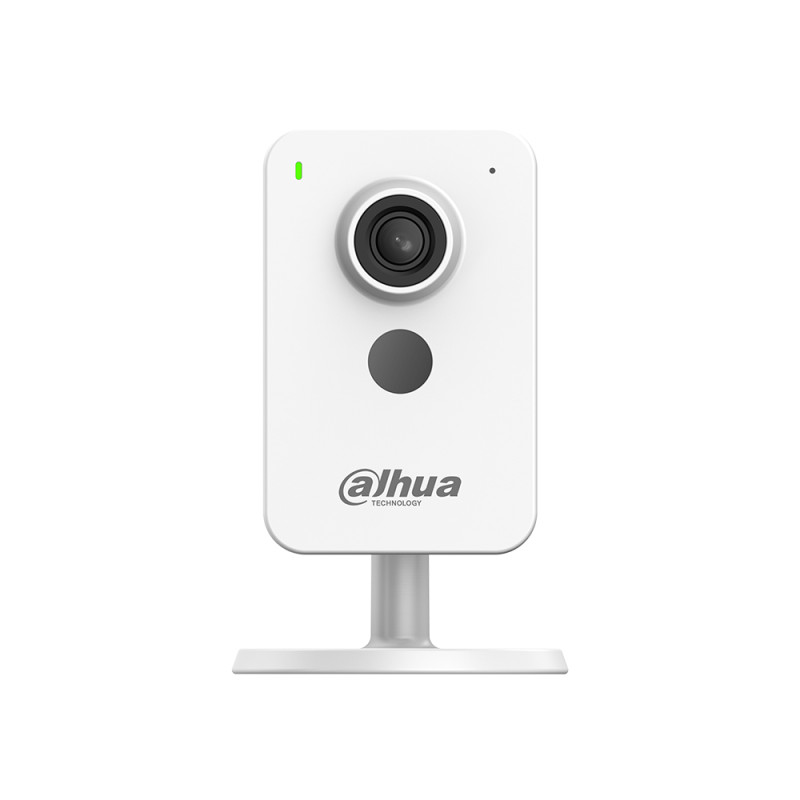
The camera has a single infrared LED rated for up to 30 metres and a mechanical IR-cut filter (ICR) that swings aside automatically as light levels fall, which is where the Auto, Colour and B/W modes come from. Thirty metres indoors is generous to the point of overkill: that reach lights a warehouse or a long corridor end to end, in places where ordinary consumer cameras already see darkness at ten metres. One point to settle before you buy: this is classic infrared illumination, not Smart Dual Light, so the night image is genuinely black and white — you will see a silhouette, posture and actions, but not the colour of a jacket or of a car. If colour footage after dark is critical to you, and for evidence it very often is, the same catalogue carries outdoor Dahua models with the -IL suffix and warm white light; this one simply is not built for that task. The second classic mistake with indoor IR cameras is aiming them straight at a window: infrared light bounces off the glass back into the lens, and instead of the yard you get a washed-out white blob, so either angle the camera away from the glass or switch the IR off and rely on ambient light.
Human and vehicle detection runs inside the camera itself, not in a cloud service
The C4K-P has a dedicated AI chip, and object classification happens on the camera — the verdict "this is a person" or "this is a vehicle" is reached before any notification leaves for your phone. The difference from a camera without analytics is not cosmetic: plain motion detection fires on any pixel change, which means an air-conditioned curtain, the cat, headlight reflections on the ceiling and an advert on the TV set, and within a week the owner simply turns notifications off, at which point the system stops doing security work at all. Here you can leave human detection alone enabled and get a push only when somebody genuinely appeared in a shop that was locked for the night. Conventional zone-based motion detection has not gone anywhere either — up to four rectangular areas in the frame, which is handy when you only care about the cash drawer or the stockroom door and want the rest of the room ignored. There is also abnormal-sound detection: the camera reacts to a sharp noise such as an impact or a shout and raises an alarm even when the source stayed outside the field of view.
Where the footage goes: a microSD card, an ONVIF recorder and life inside somebody else's system
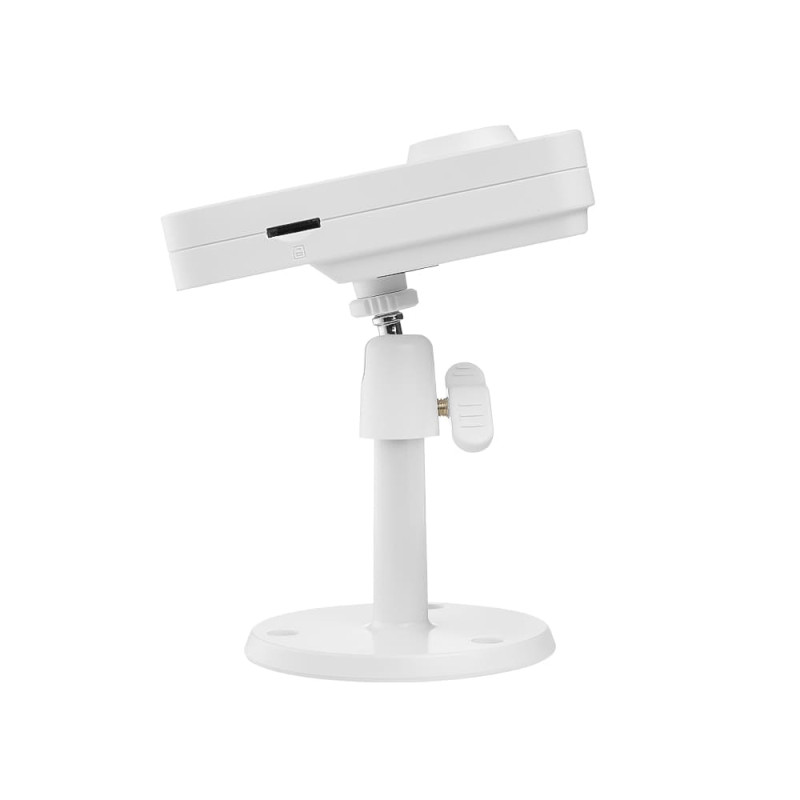
The camera records locally to a microSD card of up to 256 GB, and for a small site that is often enough: with H.265 and event-triggered recording a full card covers weeks, while continuous recording gives a few days depending on how busy the scene is. Local storage is also valuable because the recording survives an internet outage or an unplugged router — the camera keeps capturing the event on board, and the app fills in the archive once the link is back. For a full system the model drops into a recorder: ONVIF, RTSP, TCP/IP, CGI and P2P are all declared, so it becomes an ordinary NVR channel for any brand rather than a locked-down appliance, and the same stream can be handed to Home Assistant if your smart home is already built on it. Remote access and alerts work through DMSS on iOS and Android, with Smart PSS Lite for desktop work; both are free, and no "pay per feature" plan is needed for basic surveillance. One honest note about cards: video recording wears them out far faster than photography does, so buy cards rated for surveillance use and verify every few months that recording is actually happening.
Two-way audio, a cube-shaped body and where to physically put it
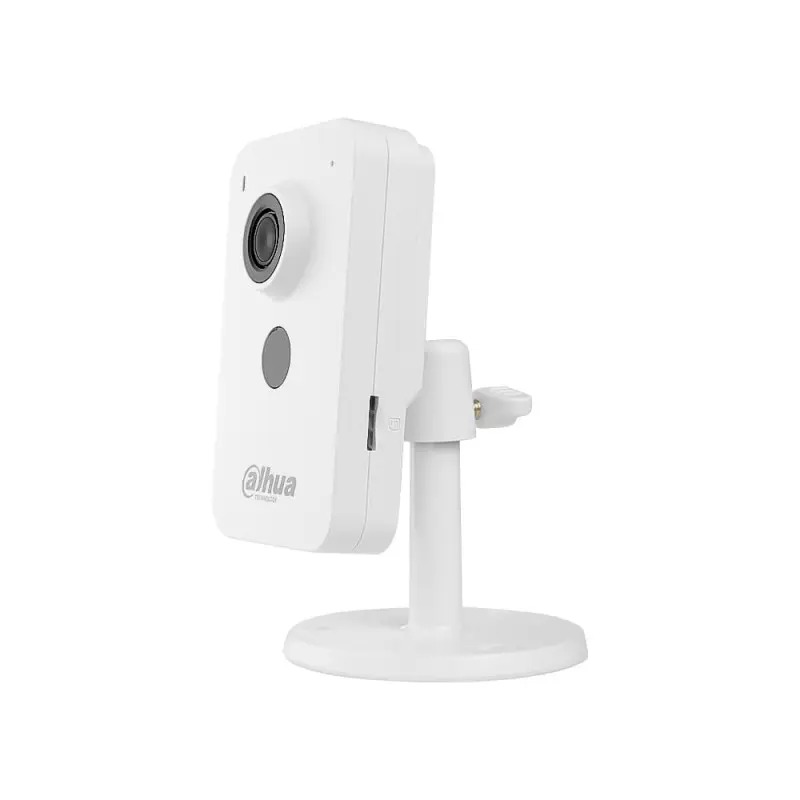
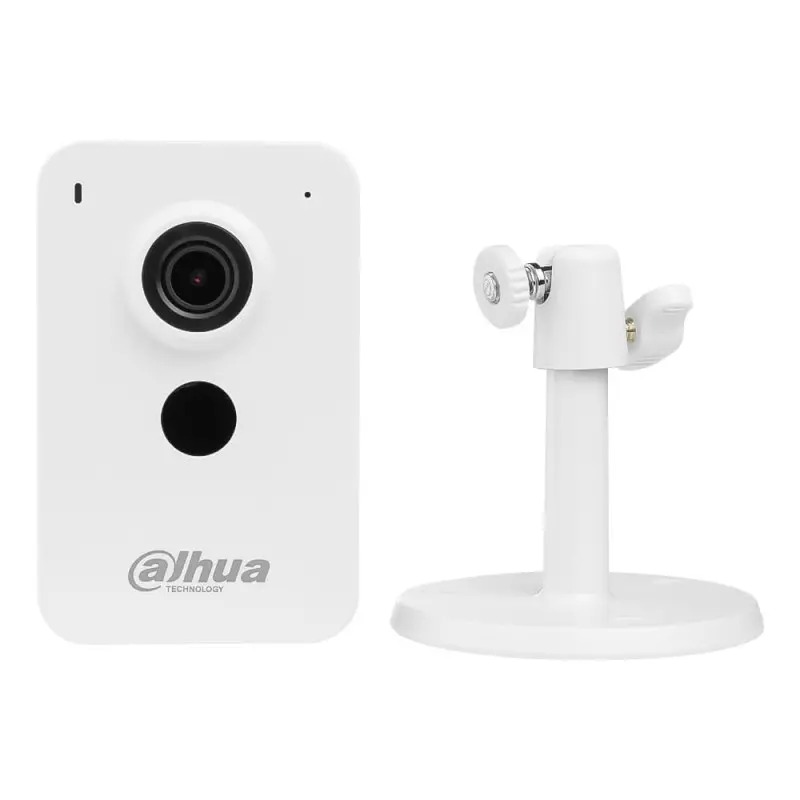
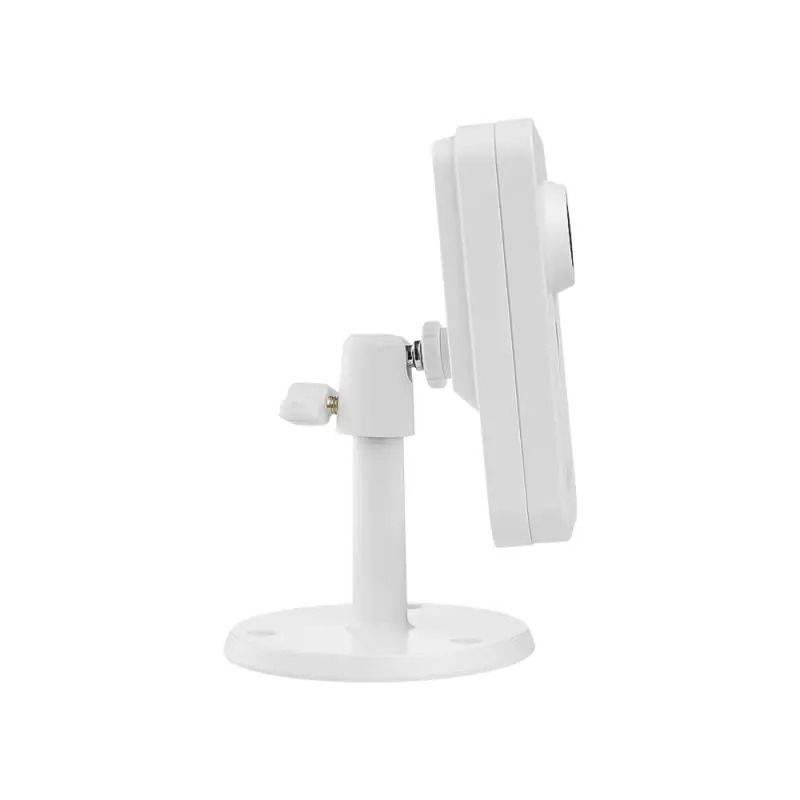
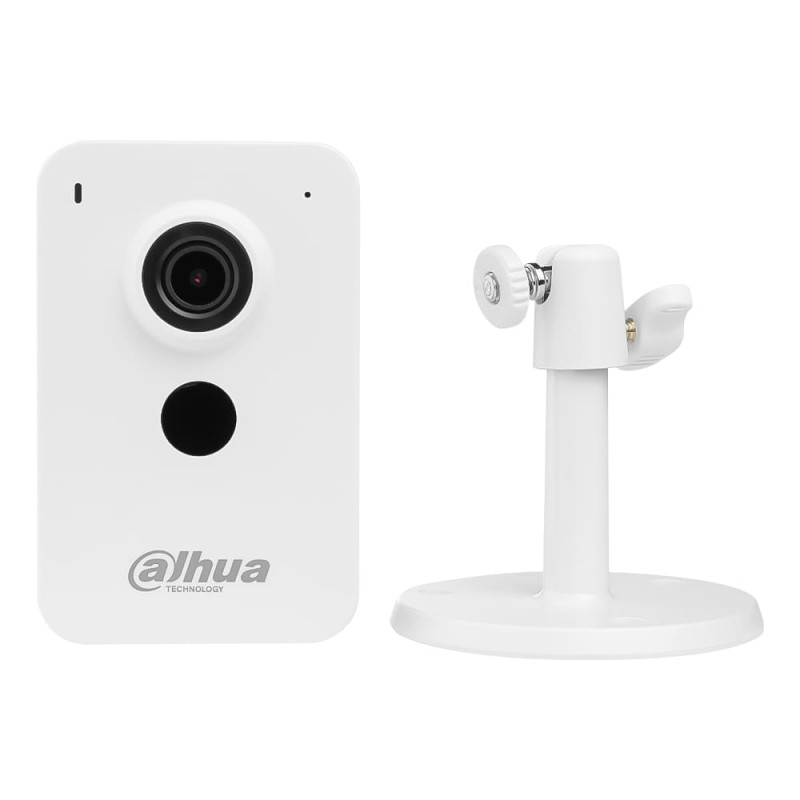
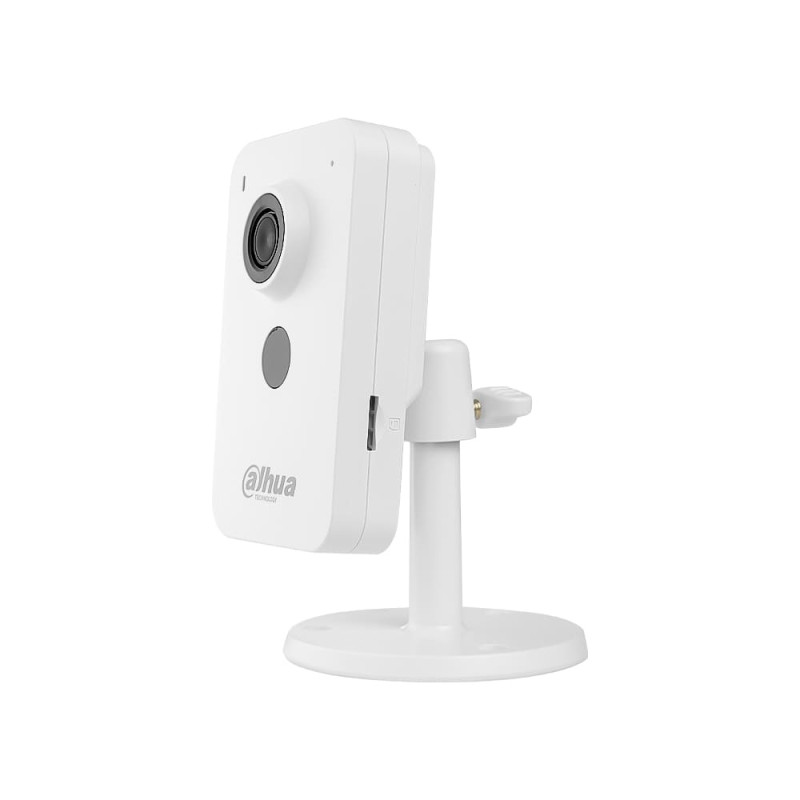
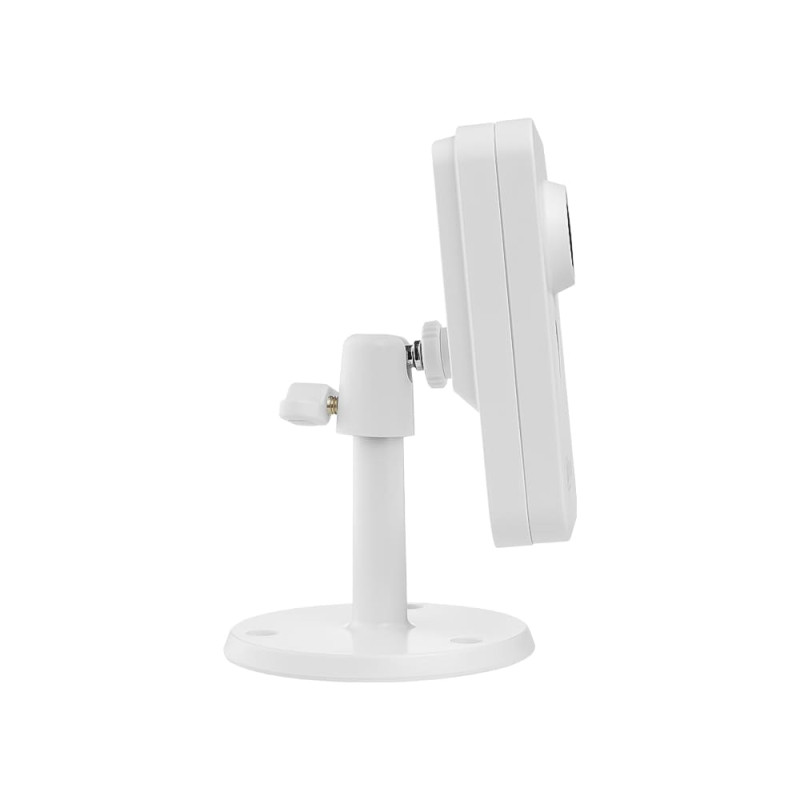
A microphone and a speaker are built in, so the intercom mode works: you do not merely see that someone is on the floor after closing time, you can speak to them from your phone — in a shop that often settles the matter without calling security, and at home it lets you talk to a child or call the dog. The body is a cube of 64×100×34 mm weighing 110 grams, and the bracket turns 360° horizontally and from -10° to 100° vertically, so one and the same camera stands on a shelf, screws onto a wall or hangs upside down from a ceiling with equal ease. The casing is plastic, there is no ingress rating at all and the operating range is -10…+45 °C: this is unambiguously an indoor camera, and moving it under an awning or into an unheated garage for the winter is a bad idea even when the spot looks sheltered. An alarm input and output interface is provided — a door contact or a siren wires into it, and the camera starts working as part of a rudimentary alarm system rather than on its own. When mounting, remember that the best angle for face recognition is slightly above head height and facing the direction of travel, not near-vertically down from the ceiling, where the frame mostly fills with the tops of heads.
Where this camera belongs and the tasks it genuinely suits
The primary scenario it was designed for is a small commercial space: a shop floor, the till area, a pharmacy, a coffee bar or a service salon, where you need to watch the entrance and the staff at once, hear what is going on and be able to speak up through the microphone. The second good fit is an office, a storeroom or a utility space: the IR illumination covers a dark room with plenty of margin, and human detection makes night alerts meaningful because it ignores ventilation and shadows. In a home the camera works too — a hallway, a living room, a child's or an elderly relative's room — and here two-way audio and the option of simply standing it on a shelf without drilling are what really help. Where it does not belong: any exposed outdoor mounting, given the absence of an ingress rating and a lower limit of only -10 °C; a driveway gate or a fence line, which need IP67 and longer optics; and licence-plate capture, which a wide 2.8 mm lens was never meant to do. Nor should it sit behind glass pointing into the yard: the IR reflection will ruin the night frame, and the correct answer in that case is an IP67 camera outside, not an indoor one looking out.
How it differs from neighbouring models in this catalogue, and when another one is the better buy
Its closest relative here is the Dahua DH-C5A: the same cube family, an even higher 5 MP resolution, but powered only by 5 V over Micro-USB, networked only by Wi-Fi, with just 10 metres of illumination and no declared ONVIF or RTSP. In other words the C5A is an app-based home camera, while the C4K-P adds the ability to become an ordinary recorder channel and to live on PoE — if you already own an NVR or plan one, that is where the real difference sits, not in the megapixel count. Among the indoor Wi-Fi cubes in this catalogue the Reolink E Series E331 also offers 5 MP, but it likewise has no PoE and works mainly inside its own ecosystem, while the second-generation Imou Ranger 2 is 3 MP and, more importantly, a model without human classification, which means notifications on every movement. If the camera is for outdoors, the comparison should not be with any of these but with the Dahua DH-T5A-PV (5 MP, Wi-Fi, IP67) or the wired DH-IPC-HDBW2449E-S-IL, which survive rain and frost in a way the C4K-P fundamentally cannot. Conversely, if the site is one room or one hall with a socket nearby and no recorder is planned, paying extra for the C4K-P's hybrid connectivity will not pay off and a simpler Wi-Fi cube will do.
If you are unsure how many cameras your space needs and with which optics, send us the floor area, the ceiling height and whether a recorder is planned, and we will put together a layout showing exactly what each camera will see.
Characteristics Dahua C4K-P
Reviews about Dahua C4K-P from real users
No reviews found







