
 m. Сміла, Незалежності, 67г. оф, 406/6
























IMOU S400 Dash Cam (4 MP, 2K) - car video recorder with a 3" screen and Wi-Fi





Description IMOU S400 Dash Cam
The IMOU S400: what this recorder is
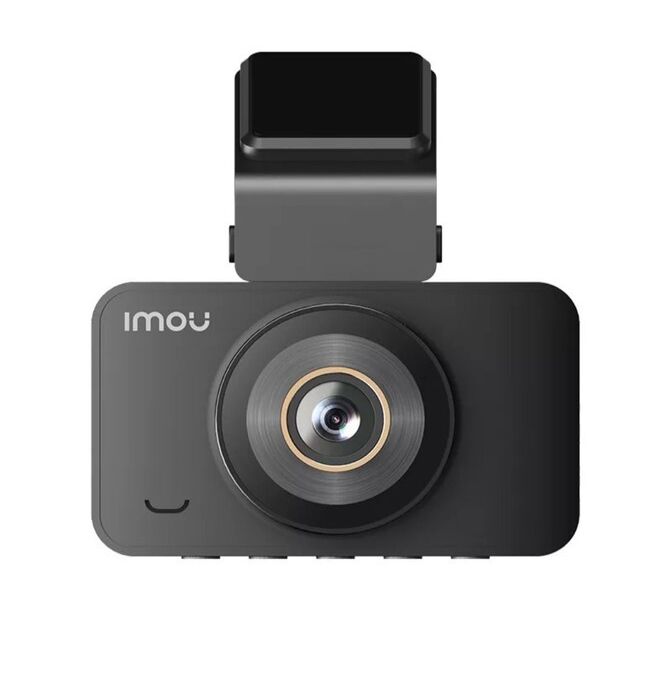
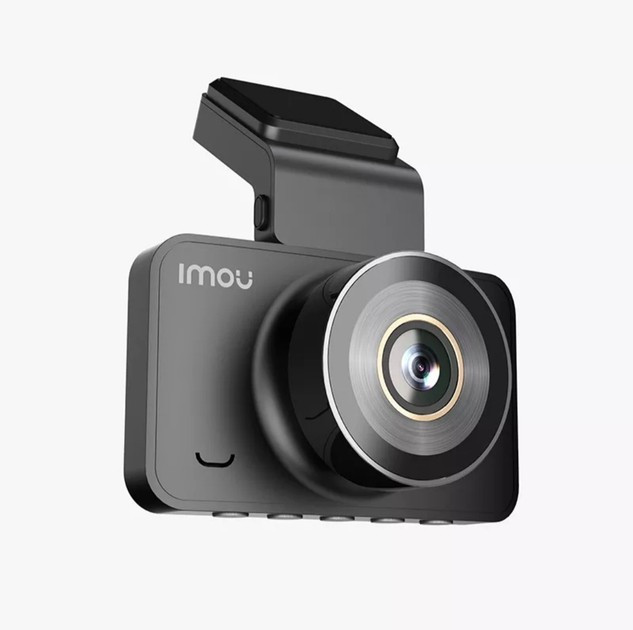
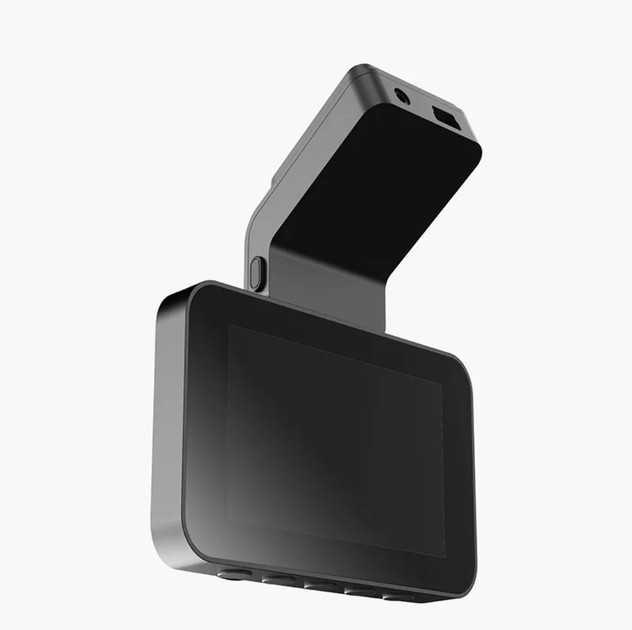
The IMOU S400 is a 4 MP car dash camera recording video at 2560 by 1440 pixels at 30 frames per second. The product card lists a 1/2.9 inch Sony IMX327 CMOS sensor, a 2.2 mm lens with a 123 degree field of view, a 3 inch IPS display at 854 by 480, a dual-core processor, WDR, a built-in microphone and speaker, and Wi-Fi with the IMOU GO app. Power comes from the car's 12 V supply, consumption is no more than 5 W, encoding is H.265, the enclosure is rated IP52, and the operating range runs from -20 to +70 degrees at up to 95 per cent humidity without condensation - so the device is designed both for winter parking and for a dashboard heated by the sun. Recording goes to a TF memory card: the manual specifies one slot and a maximum of 128 GB. In some markets the same model is sold under the index DHI-DAE-LC3300WV-S400, so that name may appear in the paperwork.
What a dash camera is actually for
A recorder's job is not to shoot beautiful video but to give you evidence where it is your word against someone else's. The classic case is a lane change without indicating followed by a collision in which both drivers are certain they were right: without a recording the matter comes down to a sketch and explanations, with one it is settled in a minute. The second scenario is a hit and run: even when the plate is unreadable, the footage gives the make, the colour, the time and the direction of travel, and that is often enough to find the car. The third is the insurer: time-stamped video speeds up the payout and removes suspicions of a staged claim. The fourth, mentioned less often, is a dispute in a car park when a neighbouring car hits your door and drives off; there everything depends on whether the recorder works while parked, not only while driving.
2K against Full HD: will the plate be readable
The main reason to pay for 2K rather than ordinary Full HD is the number of pixels on the car ahead - in other words, the chance of reading a number plate. Honestly about how this works: at 2560 by 1440 the plate of a car travelling in front of you at five to seven metres is usually readable, while an oncoming car at speed is far from always. Readability depends on more than resolution: closing speed, rain, spray from an oncoming lorry, a dirty windscreen and headlights at night cut detail far more than the difference between 1080p and 1440p. So a realistic expectation from any recorder of this class is reliable capture of the circumstances and the make, with the plate readable in favourable conditions rather than always. If you need a guaranteed plate from oncoming traffic, that is a different class of equipment, and such promises in product descriptions deserve caution.
Field of view: what really fits in the frame
Honesty matters here: the manufacturer's manual for the S400 states 123 degrees, while retail listings for the same model quote anything from 105 to 140. We go by the manufacturer's document, and 123 degrees is a sound working angle for a recorder: three lanes ahead, the verge and part of the pavement fit in the frame. Wider is not always better: the more degrees, the stronger the distortion at the edges and the fewer pixels fall on the car ahead, so the plate reads worse. For capturing a collision, an angle of around 120 degrees is considered the best compromise between coverage and detail. If seeing both kerbs in full matters for your work - for a taxi or deliveries, say - check it on a test recording in the first few days, while the device can still be returned.
Night footage and the windscreen
The 1/2.9 inch Sony IMX327 sensor with its 2.2 mm lens and WDR gives acceptable night images in a city with street lighting, but a dark country road will stay dark - that is physics, not a flaw in this particular model. Three things affect the night result most, and all of them concern the glass. The first is cleanliness: a film of grease on the inside scatters headlight beams and turns oncoming lights into large halos, so the glass in front of the recorder is wiped as regularly as the outside. The second is athermal film or a tinted top band: they can cut the light noticeably, and that is worth checking before the bracket is stuck down. The third is the position: the recorder goes behind the rear-view mirror, within the wiper's sweep and where it does not block the driver's view - which is both convenient and in line with the rules on objects fixed to a windscreen.
Memory card and loop recording
The card lists one microSD (TF) slot for up to 128 GB and the recording modes - loop, timelapse, automatic and manual - and the choice of memory card deserves more thought than it seems. A recorder writes continuously and overwrites the oldest files, so an ordinary card from a camera fails within a few months: it simply has no endurance for that cycle. What is needed is a high endurance card designed for constant rewriting, and this is the case where saving on a trifle destroys the point of the whole purchase. The second point is maintenance: the card is formatted in the recorder itself every month or two, and every few weeks you check that recording is actually happening, because a card's silent failure is usually discovered at the worst possible moment. The third is capacity: at 2K, 128 GB gives roughly a few hours of archive before overwriting, so important clips are saved to the phone at once rather than later.
The G-sensor and parking mode
The model has an impact sensor: on heavy braking or a collision the current file is locked against overwriting, so the very minute you need is not erased an hour later. According to the manual, parking mode captures and locks the video of an impact while the car is stationary - the answer to that most unpleasant scenario of a scratched wing in a car park. But there is a technical condition sellers usually keep quiet about: any recorder needs power while parked, and in most cars the cigarette lighter socket is dead once the ignition is off. For parking mode to work you need a connection to a permanent live feed - a hardwire kit with deep-discharge protection that cuts the camera when the voltage drops - and since the box contains only the recorder, the mount, a power adapter and a cable, that kit is bought separately. Without that protection a recorder can flatten the battery over two or three days of standing until the car will not start, and that is a real risk, not a theoretical one.
Control, the app and where this model sits in our catalogue
The S400 can be controlled three ways: by the 3 inch IPS screen on the device, by voice commands, and through the IMOU GO app over Wi-Fi, with the phone connecting directly to the camera to view and download clips. Voice control here is not a gimmick: saying "save video" is safer than reaching for a button while driving. As for its place in our catalogue, it is worth saying plainly: this is the only automotive-class device here, and comparing it with other IMOU cameras would be misleading. If your task is to watch a car parked by the house, the right answer is not a dash camera but a fixed camera with permanent power and an archive - the IMOU Floodlight Cam (item 1559), for instance, which records around the clock and does not depend on the car's battery. A recorder and a camera on the facade solve different problems and complement each other well: one travels with you, the other watches the yard.
Tell us how you plan to power the recorder - from the cigarette lighter or with a permanent live connection - and we will select a hardwire kit with discharge protection and a memory card of the right class. If you also need to watch the car while it is parked at home, we will show which fixed camera covers that.
Characteristics IMOU S400 Dash Cam
Reviews about IMOU S400 Dash Cam from real users
No reviews found







