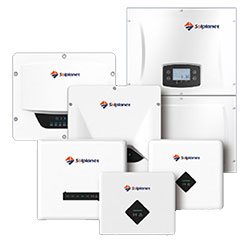
Hybrid inverters are the “control center” of a home energy system. They combine solar panels, batteries, and the utility grid into one clear logic: where to take energy from right now, where to send the surplus, and how to keep backup power when the grid goes down. For an online store, this is one of the most practical product categories because a hybrid inverter solves several tasks at once: savings, autonomy, and control.
What hybrid inverters are for
The inverter’s core job is to convert DC power from PV panels and the battery into AC 230 V to run household appliances. The “hybrid” part is that it doesn’t just convert power — it intelligently manages energy flows:
-
during the day it uses solar energy for the home;
-
surplus energy charges the battery;
-
when solar is low it blends in grid power or runs from the battery;
-
during a blackout it switches to backup mode and supplies critical circuits.
That’s why a hybrid inverter is usually installed for a specific purpose: to avoid dependence on outages and to reduce electricity bills.
Benefits you actually feel day to day
1) Backup power without hassle.
Many models have a dedicated backup output for essential loads. When the grid voltage disappears, the inverter automatically takes over using the battery and/or solar. This keeps the boiler controls, internet, lighting, refrigerator, security system, and cameras running.
2) Savings through self-consumption.
Solar energy is used for household loads first. If there’s more than needed, the battery is charged. In the evening and at night, the system uses stored energy and reduces grid imports. In simple terms: the home is powered by solar in the daytime and by the battery later.
3) Flexibility for different setups.
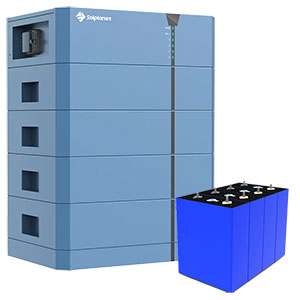
A roof facing two directions? Models with multiple MPPT trackers handle that well. Need a LiFePO4 battery with BMS? Most modern hybrids support it. Want clear monitoring and statistics? Typically you get Wi-Fi/LAN plus an app or portal.
4) Real control and understandable data.
It’s not just about “having solar”, but about seeing how it works: PV production, household consumption, battery state of charge, and whether the system is importing from the grid. This helps tune the setup to your lifestyle.
Common use cases
-
Apartment or house with frequent outages: inverter + battery keep critical circuits running (communications, lights, boiler, security).
-
Private house with higher consumption: solar covers daytime loads, the battery smooths evening peaks.
-
Tariff optimization (night/day): if needed, the battery charges during cheaper hours and is used during the day.
-
Small business or office: uninterrupted operation of POS, networking, CCTV, and server equipment without dips and downtime.
Smart home: Home Assistant, openHAB, Domoticz, and others
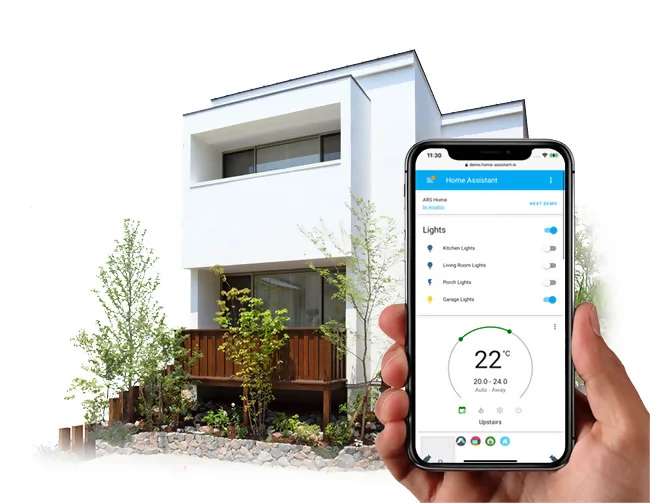
In a smart home, a hybrid inverter becomes both a data source and a “doer.” Automation platforms such as Home Assistant, openHAB, Domoticz, and others can read key values — PV power, consumption, battery SOC, grid import/export, operating modes — and use them to run practical automations.
Real-world examples:
-
Turn on a water heater when there is surplus solar, instead of exporting it for little benefit.
-
Shed non-essential loads when the battery is low, keeping only critical circuits.
-
Shift priorities: heat water during the day, preserve battery energy for the boiler and internet in the evening.
-
Send alerts about grid loss, overloads, inverter faults, or low SOC.
As a result, it’s no longer just “solar panels” — it’s an energy system that adapts to the home.
Working with generators
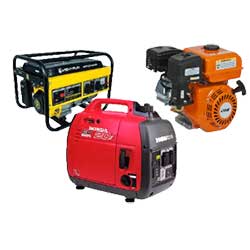
When maximum autonomy is required, hybrid inverters are often used together with a generator (through a dedicated generator input, an ATS, or a specific wiring scheme — depending on the model and design). The logic is straightforward:
-
the generator is a safety net for long periods with low solar;
-
it can power loads and charge the battery at the same time;
-
automation can start the generator when SOC drops below a set level and stop it once the charge is restored.
This reduces generator run time, saves fuel, and keeps the home powered.
Scaling: parallel operation
If consumption grows or new high-power devices are added, some models support parallel inverter operation. This makes it possible to increase total power without rebuilding the entire system. It’s convenient for step-by-step growth: add PV modules, increase battery capacity, and connect new load groups as needs expand.

 m. Сміла, Незалежності, 67г. оф, 406/6