








Fire safety of homemade battery assemblies versus branded ones.
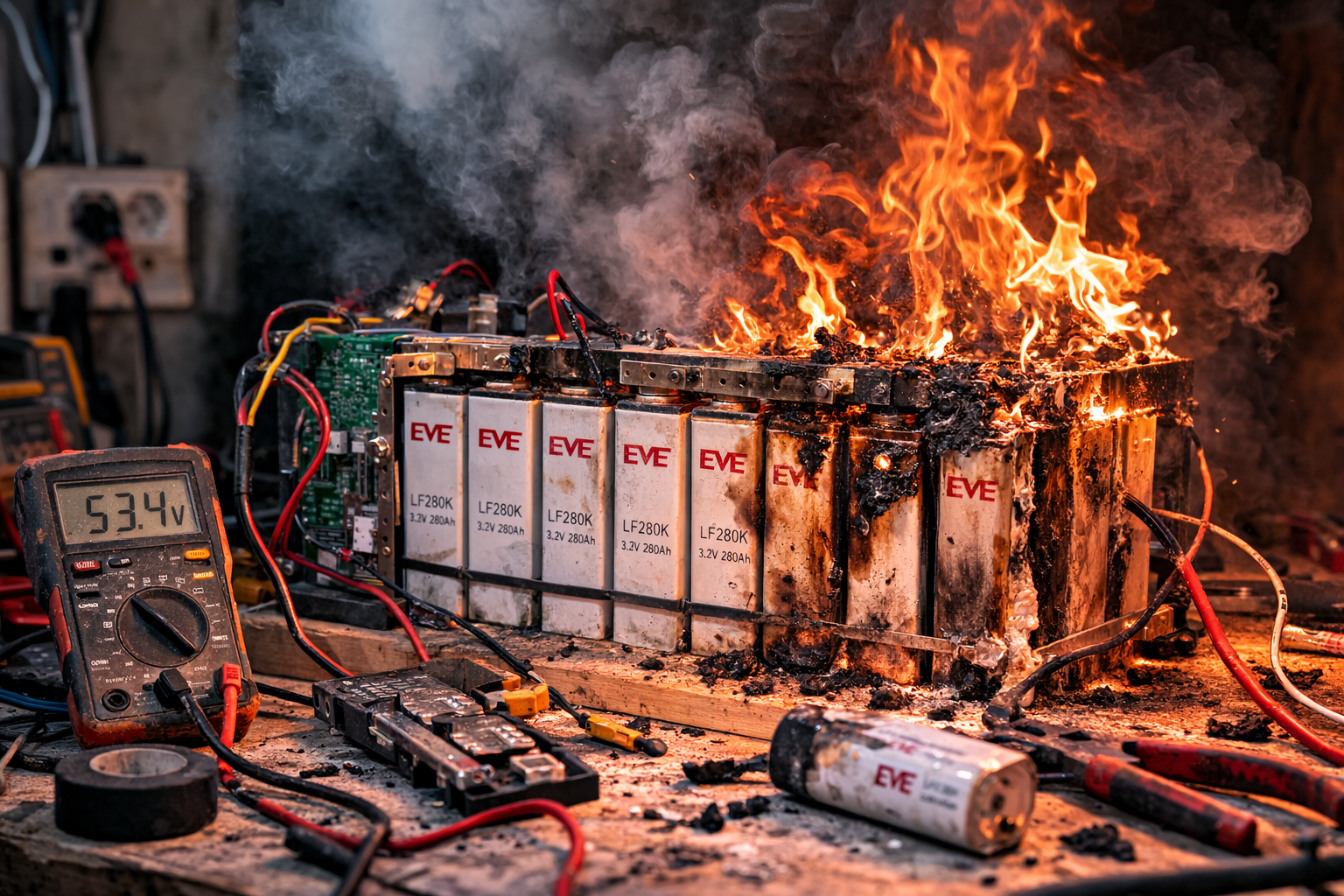
Solar energy in Ukraine is gaining momentum, and batteries for solar inverters are becoming a key element of autonomous or hybrid systems. The issue of fire safety is especially relevant - after all, a fire in a home power system can cost not only money, but also life. Many owners of solar stations are wondering: should they buy a ready-made branded battery or assemble a homemade LiFePO4 assembly? Let's analyze all the pros and cons from an economic and safety point of view, compare prices and fire risks. This will help you make an informed decision.
Why LiFePO4 is the primary choice for solar inverters
Lithium iron phosphate batteries (LiFePO4) have replaced gel and AGM batteries due to their high cycle life (6000+ cycles), voltage stability and relative safety. They work with most hybrid inverters (Solplanet, GoodWe, Growatt). But safety depends not only on chemistry, but also on the quality of assembly and protection.
Economy: homemade assemblies vs branded batteries
DIY kits are 16 cells (usually EVE LF280K or similar) + BMS + housing. The main plus is the price. At the beginning of 2026, a set of cells for 14 kWh (51.2 V, 280 Ah) costs 55–70 thousand UAH, a premium BMS (JBD or similar with Bluetooth) costs 5–12 thousand, housing and switching costs another 5–8 thousand. In total, it turns out 65–85 thousand UAH for 14 kWh, that is, about 4.5–6 UAH/Wh.
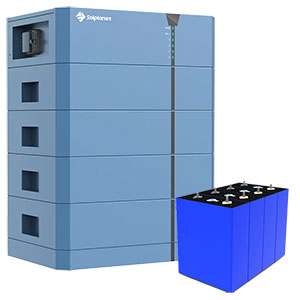
Branded batteries ( ASW5120-LB-E , Growatt AXE 5.0L , GoodWe Lynx A G3 LX A5.0-30 , Dyness DL5.0C Pro ) are ready-made modules of 5–5.12 kWh with built-in BMS. Price: 45–65 thousand UAH per piece. That is, 9–11 UAH/Wh. To gain 14 kWh, you will have to spend 130–160 thousand UAH.
Conclusion on the economy : a self-made assembly wins by 30–50% for the same capacity. If you assemble a system for 10–20 kWh, the savings can reach 50–80 thousand UAH. But this is provided that you can handle the installation yourself and do not buy a “Chinese no-name” for a penny.
Fire safety: where the real risk lies
LiFePO4 chemistry itself is resistant to thermal acceleration – the ignition temperature is over 270 °C, there is no such active “chain reaction” as in NMC. But fires still happen.
Causes of ignition in homemade assemblies :
- Bad or cheap BMS without balancing – one cell is overcharged to 3.8–4 V and goes into thermal overclocking.
- Uneven connections (weak busbars, poor soldering) – local heating and short circuit.
- Lack of fuses, overload relays, ventilation.
- Using second-hand or Grade B elements with microcracks.
- Incorrect inverter settings (charging voltage above 58.4 V).
The risk of fire in a quality DIY assembly is 1–2% over 5 years, provided the installer is experienced. If "a neighbor put it together for 5 thousand," the risk jumps to 10–15%.
Causes of ignition in branded batteries :
- Manufacturing defect (rare, but it happens – BMS factory defect).
- Incompatibility with the inverter (incorrect CAN settings).
- Physical damage (fall, puncture).
- Overheating due to lack of ventilation in a closed cabinet.
Certified batteries (CE, UL, UN38.3) have a fire risk of less than 0.5%. Many models have a built-in aerosol fire extinguisher or automatic shut-off.
Comparison table
| Parameter | Homemade assemblies | Branded batteries (Solplanet, GoodWe, etc.) |
|---|---|---|
| Price per 1 kWh | 4.5–6 UAH | 9–11 UAH |
| Savings of 14 kWh | 50–80 thousand UAH | – |
| Installation time | 2–5 days + customization | 1–2 hours |
| Guarantee | Usually up to 1 year for items | 5–10 years |
| Fire risk (if assembled correctly) | 1–2% over 5 years | <0.5% |
| BMS protection | Depends on the quality (can be top-notch) | Built-in premium + communication |
| Scalability | Easy to add in parallel | Limited by inverter protocol |
| Fire certification | Missing or homemade | Factory UL/CE |
In-depth analysis of fire risks in solar inverter batteries: LiFePO4 DIY vs branded
When it comes to fire safety, LiFePO4 chemistry is not just a “safer alternative” to NMC batteries. It’s truly on another level. The onset of thermal runaway in LFP exceeds 270°C, the electrolyte doesn’t burn as aggressively, and the chain reaction is almost non-existent. According to 2025 studies (including UL 9540A tests), even if one cell “runs over,” the fire rarely spreads further in proprietary systems. In a home environment, the probability of a fire from a home battery is very low. This is comparable to a fire in a clothes dryer, and 50 times lower than the average house fire.
But the risk is not zero. And this is where the difference between a homemade assembly and a branded battery becomes critical.
Precise ignition mechanisms in homemade assemblies
Most often, a fire in DIY starts not with a "cell explosion", but with a gradual accumulation of errors:
- Cell imbalance + weak BMS If the BMS is cheap (without active balancing or with a bad algorithm), one cell can slowly go beyond 3.65 V. When charging to 58.8–59 V (instead of 57.6–58.4 V), it gets an overcharge. Even LFP at 4.2+ V starts to release gas and heat. After 10–20 cycles — thermal runaway.
- Poor connections and local heating Weak bolted contacts, thin busbars, soldering with tin instead of welding - resistance increases, a current of 100–200 A creates a heating point of up to 150–200 °C. This is a classic short circuit due to an arc.
- Lack of external protection Without Class-T fuses (ANL, Class-T), overload relays or contactors, the inverter can “squeeze” 500+ A in a short. The cell bursts, the gas escapes — and if there is no ventilation, the concentration reaches the ignition limit.
- Grade B or restored elements Microcracks in the separator that are not visible visually. They progress during cycling → internal short.
- Inverter errors Incorrect CAN settings or charging voltage of 60 V instead of 58.4 V are the most common cause in Ukrainian DIY systems.
Real cases 2024–2025: fires in garages precisely because of a cheap JK-BMS without temperature sensors or because of the lack of a fuse on the battery positive. The risk in a “neighborhood assembly for 3 thousand” is 8–12% over 5 years. In a high-quality DIY with EVE Grade A + JK-BMS 200 A + Bluetooth + aerosol extinguisher — less than 1%.
Risks in branded batteries (Solplanet, GoodWe, SunGrow, Growatt...)
Here, a fire is possible only in extreme cases:
- Factory defect BMS (very rare - statistics <0.1%).
- Mechanical damage (falling cabinet, puncture).
- Protocol incompatibility → the inverter charges incorrectly (occurs when the CAN is connected incorrectly).
- Overheating due to lack of ventilation in a closed cabinet.
Branded batteries pass UL 1973 (cell/module) + UL 9540 (whole system) + UL 9540A (thermal acceleration propagation test). This means: even if one cell “explodes”, the neighboring cells will not heat up above 200 °C, the gas is vented, the fire is extinguished internally. In 2025, less than 10 serious fires were recorded in Europe and the USA for hundreds of thousands of home LFP systems. Most incidents were in gigawatt stations with old-generation NMC chemistry.
Updated risk comparison table
| Risk factor | Homemade assembly (quality) | Homemade (cheap) | Branded battery |
|---|---|---|---|
| Single cell thermal overclocking | Possible with bad BMS | High probability | Almost impossible (UL protection) |
| Spread to neighboring cells | Depends on the case (risky) | High | Not applicable (Test 9540A) |
| Cause #1 of the fire | Imbalance + contacts | BMS failure | Physical damage |
| Probability in 5 years | 0.8–1.5% | 8–15% | <0.3% |
| Fire certification | Missing | Missing | UL 9540 + 9540A |
| Insurance and permits | Problems | Refusals | No questions asked |
How to minimize risk (practical recommendations 2026)
Regardless of the choice :
- Install only BMS with active 2A balancing, Bluetooth and 3 temperature sensors.
- Required: Class-T fuse 200–300 A + DC contactor.
- Metal housing + ventilation + fire temperature sensor 70 °C + aerosol extinguisher (e.g. FirePro or similar).
- Inverter: charge 57.6 V, shutdown at 58.4 V, shutdown temperature 55 °C.
- 24/7 monitoring via the app.
- For DIY, it is mandatory to check all connections with a thermal imager after the first 10 cycles.
How to decide: expert recommendation
If you have experience in electrical installation, are ready to buy only Grade A elements, install a high-quality BMS with Bluetooth monitoring and add fire detectors - self-assembly is justified. The savings are real, and the risk can be minimized. Many of my friends with 5–7 years of experience work exactly like this and have no problems.
But if you are a beginner, value time and peace of mind – take a branded battery. The overpayment is paid off with a warranty, certificates and built-in protection. Especially when the system is located in a house or garage.
My advice : regardless of your choice, be sure to install:
- fire temperature + smoke sensor;
- automatic fire extinguisher for the battery cabinet;
- proper ventilation;
- adjust the inverter to the exact battery parameters.
Solar inverter batteries are not a place to skimp on safety. Consider your budget, experience, and willingness to service. If in doubt, start with one branded battery and then build DIY modules in parallel. This way you will save money and sleep soundly.
Conclusion for you
If you are willing to invest time, buy only Grade A elements and install a top BMS - a high-quality homemade assembly is close to a branded one in terms of fire risk (the difference is 3–4 times). But a branded battery gives peace of mind: factory tests, a 10-year warranty and full compatibility with the inverter. The overpayment pays off with the absence of headaches and problems with insurance.
Most fires in 2025 occurred precisely because of "savings" on BMS and installation. LFP chemistry forgives many mistakes, but not all. If the system is in a house or garage, I would personally choose a branded battery for myself.
Reservation!
If you don't want to become a victim of this:
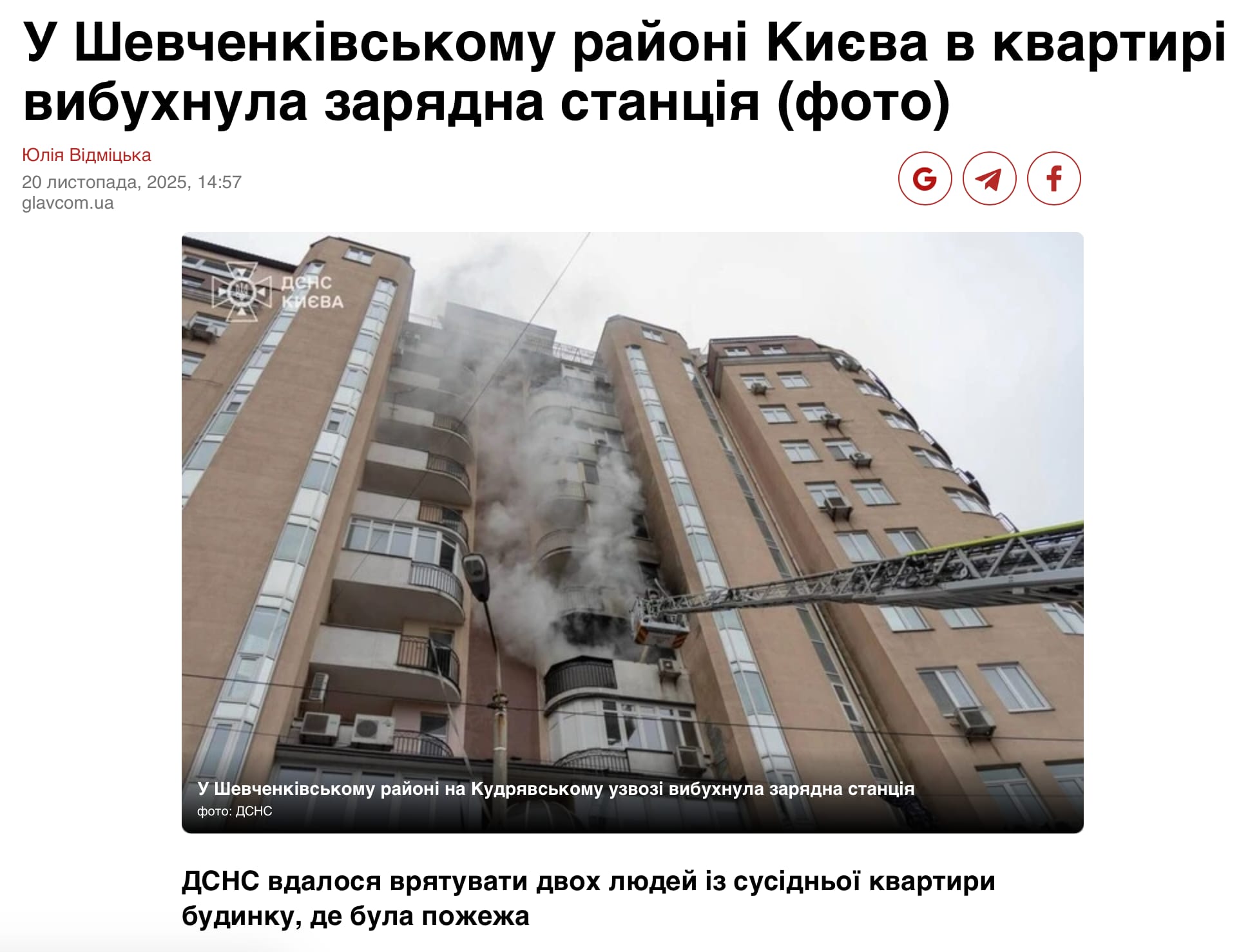
Do not use cheap kits, especially LiIon-based ones. No matter what "protection" the seller promises you, there is always a high probability of fire. Therefore, avoid using them, especially in apartments!

No posts found
Write a review-
17.03.2026Fire safety of homemade battery assemblies versus branded ones.
-
16.03.2026Industry overview
-
16.03.2026How to make an apartment building energy-independent in 2026
-
16.03.2026Alternative energy
-
14.03.2026Solplanet batteries: how to choose the right one?
-
13.03.2026The store offers installment payments from PrivatBank.
-
03.03.2026How to choose an inverter in 2026?
-
23.07.2025We have registered our own trademark
-
27.03.2025Why is TuyaSmart not a smart home?
-
05.03.2025About smart homes
Author

 m. Сміла, Незалежності, 67г. оф, 406/6
- View on map
 0 800 33 00 95 (free call)
 +380 (44) 334 41 22
Mon-Fr 9a.m.-6p.m.
+380 (44) 334 41 22
Mon-Fr 9a.m.-6p.m.
 +380 (99) 334 11 66
 +380 (98) 334 11 66
 +380 (93) 334 11 66
 |
 |
 |
 |
 |
 |















© 2023 - 2026 ComfortLife.MARKET.